
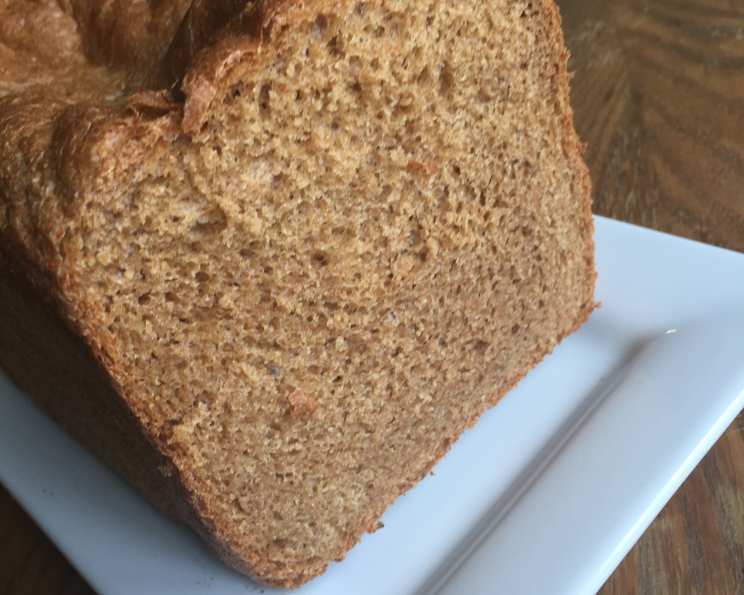
100% Whole Wheat Bread (Bread Machine)
I remember the yeasty, warm aroma that filled our kitchen every Sunday morning. My mom, a master of efficiency, would load up her trusty bread machine with ingredients before we even woke up. By the time we were stumbling downstairs for breakfast, a fresh loaf of whole wheat bread would be waiting, its crust a beautiful golden brown. Slathered with butter and homemade jam, it was the perfect way to start the day, and those memories are forever baked into my heart.
Recipe Overview
- Prep Time: 10 minutes
- Cook Time: 4 hours 10 minutes
- Total Time: 4 hours 20 minutes
- Yields: 2 pound loaf
- Serves: 12
- Dietary Type: Vegetarian
Ingredients
- 1 1/2 cups water
- 2 tablespoons powdered milk
- 2 tablespoons margarine
- 2 tablespoons honey
- 2 tablespoons molasses
- 1 1/2 teaspoons salt
- 3 1/3 cups whole wheat flour
- 1 1/2 teaspoons yeast
Equipment Needed
- Bread Machine
- Measuring cups and spoons
- Microwave (optional)
- Large zip lock bag
- Wire rack
Instructions
-
Follow the directions for your specific bread machine to bake a 2-pound loaf of whole wheat bread. This recipe is designed to work seamlessly with most standard bread machines.
-
Add all ingredients to the bread machine pan in the exact order listed: first the water, then the powdered milk, margarine, honey, molasses, salt, whole wheat flour, and finally the yeast. The order is crucial for proper gluten development and yeast activation.
-
Optional Step: For enhanced flavor and yeast activity, combine the water and powdered milk in a microwave-safe container. Heat in the microwave on high for approximately 30 seconds, or until slightly warmed (not hot!). This helps dissolve the powdered milk and provides a slightly warmer environment for the yeast to thrive. Add this mixture to the baking pan before adding the remaining ingredients.
-
Insert the baking pan into the bread machine and lock it into place, ensuring it is properly secured according to the manufacturer’s instructions.
-
Select the “Whole Wheat” setting on your bread machine. This setting is specifically calibrated for the unique characteristics of whole wheat flour, providing the optimal kneading and baking times for a perfect loaf.
-
Choose the “2 pound loaf” size option on your bread machine to ensure the correct baking time and temperature for the amount of dough you’ve prepared.
-
Press the “Start” button to begin the bread-making process. The bread machine will automatically knead, proof, and bake the bread according to the selected settings.
-
Once the baking cycle is complete, carefully remove the bread pan from the bread machine using oven mitts. The pan will be very hot!
-
Immediately transfer the baked loaf of bread to a large zip lock bag. Seal the bag tightly. This creates a steamy environment that helps to soften the crust, preventing it from becoming too hard and making the bread easier to slice.
-
Place the sealed bag containing the loaf on a wire rack to cool completely. Allowing the bread to cool completely before slicing is essential for preventing a gummy texture and ensuring clean, even slices. This process can take several hours, so be patient!
-
Once the bread is completely cool, remove it from the bag and slice with a serrated bread knife.
Expert Tips & Tricks
- Ingredient Temperature: While the recipe doesn’t explicitly require it, using room-temperature ingredients, particularly the margarine, can help create a more consistent dough.
- Yeast Freshness: Ensure your yeast is fresh! Old yeast can result in a loaf that doesn’t rise properly. A simple test is to dissolve a small amount of yeast in warm water with a pinch of sugar. If it foams up within 5-10 minutes, the yeast is active.
- Adjusting Moisture: Whole wheat flour can vary in its absorbency. If your dough seems too dry (crumbly and not forming a smooth ball), add a tablespoon of water at a time until the dough comes together. Conversely, if the dough is too sticky, add a tablespoon of flour until it forms a cohesive ball.
- Flavor Boost: For a richer, nuttier flavor, try adding 1/4 cup of chopped walnuts, sunflower seeds, or flax seeds to the dough. You can also add a teaspoon of cinnamon or other spices to enhance the aroma and taste.
- Crust Control: If you prefer a softer crust, brush the top of the loaf with melted butter or olive oil immediately after removing it from the bread machine.
Serving & Storage Suggestions
This 100% whole wheat bread is incredibly versatile. Enjoy it fresh, warm, and sliced with butter, jam, or honey. It makes excellent sandwiches, toast, or even croutons. For serving, consider slicing the bread into even, consistent slices using a serrated bread knife.
To store leftover bread, keep it in a tightly sealed zip lock bag or bread box at room temperature. It will stay fresh for 2-3 days. For longer storage, you can freeze the bread. Slice the loaf before freezing for easy access to individual slices. Wrap the slices tightly in plastic wrap and then place them in a freezer bag. Frozen bread will keep for up to 2-3 months. To thaw, simply remove the desired number of slices and let them thaw at room temperature for 15-20 minutes, or toast them directly from frozen.
Nutritional Information
| Nutrient | Amount per Serving | % Daily Value |
|---|---|---|
| Calories | 158.8 kcal | N/A |
| Calories from Fat | 28g | N/A |
| Total Fat | 3.1 g | 4% |
| Saturated Fat | 0.8 g | 3% |
| Cholesterol | 1.3 mg | 0% |
| Sodium | 321 mg | 13% |
| Total Carbohydrate | 30.1 g | 10% |
| Dietary Fiber | 3.7 g | 14% |
| Sugars | 5.4 g | N/A |
| Protein | 5 g | 9% |
Note: Nutritional information is an estimate and may vary based on specific ingredients and serving sizes.
Variations & Substitutions
- Sweetness Adjustment: If you prefer a less sweet bread, reduce the amount of honey and molasses by half or omit them altogether. You can substitute with a tablespoon of maple syrup or agave nectar for a different flavor profile.
- Flour Blend: For a slightly lighter texture, try substituting 1/2 cup of the whole wheat flour with bread flour or all-purpose flour. Be aware that this will change the nutritional profile of the bread.
- Dairy-Free: While this recipe already uses powdered milk, you can easily make it completely dairy-free by substituting the powdered milk with an equal amount of soy milk powder or by simply omitting it and adding an extra 2 tablespoons of water.
- Herbed Bread: Add 1-2 tablespoons of dried herbs like rosemary, thyme, or oregano to the dough for a savory twist.
- Seeded Bread: Incorporate 1/4 – 1/2 cup of mixed seeds (sunflower, pumpkin, flax) for added texture and nutritional benefits.
FAQs (Frequently Asked Questions)
Q: Why is my bread dense and doesn’t rise well?
A: This is often due to using old or inactive yeast. Make sure your yeast is fresh. Also, ensure that the water temperature isn’t too hot, as it can kill the yeast.
Q: My bread has a gummy texture. What did I do wrong?
A: The most common cause is slicing the bread before it has cooled completely. Allow the loaf to cool completely on a wire rack before slicing.
Q: Can I use a different type of flour?
A: While this recipe is specifically designed for 100% whole wheat flour, you can experiment with substituting a portion of it with bread flour for a lighter texture. However, using all bread flour will result in a different bread.
Q: How do I prevent the crust from becoming too hard?
A: Placing the loaf in a zip lock bag immediately after baking helps to soften the crust. You can also brush the top of the loaf with melted butter or olive oil for a softer crust.
Q: Can I add nuts or seeds to the bread?
A: Absolutely! Adding nuts or seeds can enhance the flavor and texture of the bread. Add them to the bread machine pan along with the other ingredients.
Final Thoughts
There’s nothing quite like the satisfaction of baking your own bread, especially when it fills your home with that irresistible, comforting aroma. This 100% Whole Wheat Bread recipe is a simple and reliable way to create a delicious and nutritious loaf that your family will love. So, dust off your bread machine, gather your ingredients, and give this recipe a try. I encourage you to experiment with different variations and find what works best for you. Don’t forget to share your creations and feedback – happy baking!