
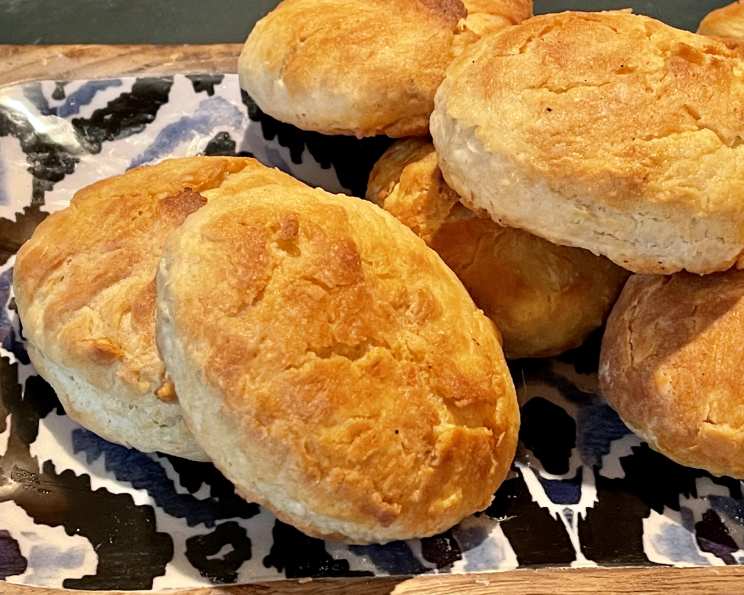
1960 Original Kentucky Buttermilk Biscuits
The scent of freshly baked biscuits always transports me back to my grandmother’s cozy kitchen. I remember standing on a rickety stool, mesmerized as she expertly mixed flour and buttermilk, transforming simple ingredients into golden, fluffy clouds of comfort. These weren’t just biscuits; they were edible hugs, warm reminders of family and tradition, and the perfect vessel for homemade jams and honey. This recipe evokes that same nostalgia and delivers that same soul-satisfying goodness.
Recipe Overview
- Prep Time: 10 minutes
- Cook Time: 15-25 minutes
- Total Time: 25-35 minutes
- Servings: Varies depending on biscuit size
- Yields: 1 pan
- Dietary Type: Vegetarian
Ingredients
- 2 cups flour
- 2 teaspoons baking powder
- 1/4 teaspoon baking soda
- 1 teaspoon salt
- 1/4 cup shortening
- 1 cup buttermilk (if out of buttermilk, just add a tablespoon of vinegar to a cup of milk and mix well)
- Optional: Melted butter for brushing
Equipment Needed
- Large mixing bowl
- Measuring cups and spoons
- Pastry blender or fork (optional, for cutting in shortening)
- Lightly sprayed baking pan or sheet
- Rolling pin (optional)
Instructions
- Preheat your oven to 450°F (232°C). Make sure your oven rack is positioned in the center.
- In a large mixing bowl, combine the flour, baking powder, baking soda, and salt. Whisk the dry ingredients together until they are well combined.
- Add the shortening to the flour mixture. Using a pastry blender or your fingertips, cut the shortening into the flour until the mixture resembles coarse crumbs. The smaller the pieces of shortening, the flakier your biscuit will be.
- Pour the buttermilk into the bowl. Mix gently until just combined. Be careful not to overmix the dough. The key is to work it as little as possible.
- The dough should have a texture like “velvet”. If the dough is too sticky to handle, lightly dust your hands and the dough with flour and gently work it until it becomes smooth, like velvet.
- On a lightly floured surface, either pat the dough out by hand or use a rolling pin to roll it to a thickness of about ½ inch.
- Use a biscuit cutter or a sharp knife to cut out the biscuits. If you don’t have a biscuit cutter, you can use a drinking glass. Press straight down – avoid twisting, which can seal the edges and prevent the biscuits from rising properly.
- Place the biscuits onto a lightly sprayed baking pan. Arrange them so that they are almost touching – this will help them rise higher.
- Bake in the preheated oven for 15-25 minutes, or until the biscuits are golden brown on top. Keep a close eye on them during the last few minutes of baking, as oven temperatures can vary.
- (Optional) Once the biscuits are out of the oven, brush the tops with melted butter for a richer flavor and a beautiful, glossy finish.
Expert Tips & Tricks
- Cold Ingredients are Key: Make sure your buttermilk and shortening are cold. This helps create a flakier biscuit.
- Don’t Overmix: Overmixing develops the gluten in the flour, resulting in tough biscuits. Mix just until the ingredients are combined. A few streaks of flour are fine.
- Folding Technique (optional): For even flakier biscuits, after mixing in the buttermilk, gently fold the dough over itself a few times before patting it out.
- High Heat is Essential: Baking at 450°F ensures a good rise and a golden-brown crust.
- Rest the Dough (optional): After mixing, you can let the dough rest for 10-15 minutes before rolling and cutting. This allows the gluten to relax, resulting in a more tender biscuit.
Serving & Storage Suggestions
Serve these classic buttermilk biscuits warm, straight from the oven. They are delicious on their own, or split and topped with butter, jam, honey, gravy, or your favorite savory toppings. They’re perfect alongside scrambled eggs, fried chicken, or a hearty stew.
Leftover biscuits can be stored at room temperature in an airtight container for up to 2 days. For longer storage, refrigerate them for up to 5 days or freeze them for up to 2 months. To reheat, wrap the biscuits in foil and warm them in a 350°F (175°C) oven for about 10-15 minutes, or until heated through. You can also microwave them for a quicker reheat, but they may become slightly softer.
Nutritional Information
| Nutrient | Amount per Serving | % Daily Value |
|---|---|---|
| Calories | 366 kcal | N/A |
| Total Fat | 14 g | 21% |
| Saturated Fat | 3.6 g | 18% |
| Cholesterol | 2.5 mg | 0% |
| Sodium | 907.1 mg | 37% |
| Total Carbohydrate | 51.2 g | 17% |
| Dietary Fiber | 1.7 g | 6% |
| Sugars | 3.1 g | N/A |
| Protein | 8.5 g | 16% |
Note: Nutritional information is an estimate and may vary based on specific ingredients and serving sizes.
Variations & Substitutions
- Gluten-Free: Use a gluten-free flour blend designed for baking. You may need to add a binder like xanthan gum to improve the texture.
- Dairy-Free: Substitute the buttermilk with a plant-based milk (like almond or soy) mixed with a tablespoon of lemon juice or vinegar. Use a plant-based shortening or vegan butter alternative.
- Herb Biscuits: Add a tablespoon of chopped fresh herbs, such as rosemary, thyme, or chives, to the dry ingredients.
- Cheese Biscuits: Add ½ cup of shredded cheese (cheddar, Gruyere, or Parmesan) to the dry ingredients.
- Sweet Biscuits: Add 2 tablespoons of sugar to the dry ingredients and brush the baked biscuits with honey or maple syrup.
FAQs (Frequently Asked Questions)
Q: Why are my biscuits flat and dense?
A: This is likely due to overmixing the dough or using old baking powder. Make sure your baking powder is fresh and avoid overworking the dough.
Q: Can I make the dough ahead of time?
A: Yes, you can prepare the dough, cut out the biscuits, and refrigerate them for up to 24 hours before baking. This can actually improve the flavor and texture.
Q: What is shortening, and can I substitute it?
A: Shortening is a solid vegetable fat. It contributes to the biscuits’ tenderness. You can substitute it with cold butter, but the texture might be slightly different.
Q: My biscuits are browning too quickly. What should I do?
A: If your biscuits are browning too fast, lower the oven temperature by 25 degrees and continue baking until they are cooked through. You can also tent them with foil to prevent further browning.
Q: How do I get my biscuits to rise higher?
A: Using cold ingredients, avoiding overmixing, and placing the biscuits close together on the baking sheet will all contribute to a better rise. Also, make sure your oven is fully preheated.
Final Thoughts
There’s a simple, timeless magic in transforming basic ingredients into something truly special, and these 1960 Original Kentucky Buttermilk Biscuits are a perfect example. They’re a reminder that the best things in life are often the simplest. Don’t be afraid to experiment with variations, share them with loved ones, and most importantly, enjoy the process. I hope you give this recipe a try and discover the warmth and comfort that these biscuits bring. I can’t wait to hear about your baking adventures and the delicious memories you create!