
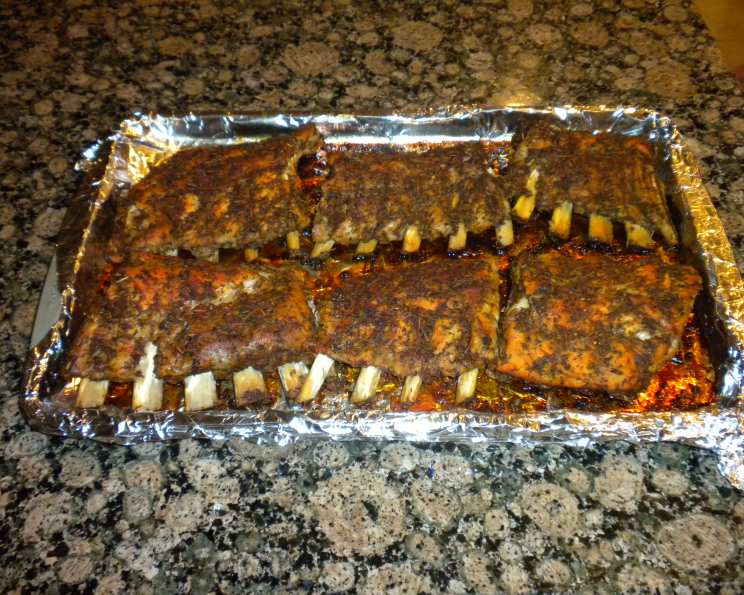
Adam’s Dry Rub Ribs – Low Carb
My grandfather, a man who measured success in the perfect sear on a steak and the smoky tang of ribs, taught me everything I know about barbecuing. I remember standing beside him, barely tall enough to see over the grill, as he meticulously seasoned ribs with a blend of spices that seemed magical. The aroma alone, a symphony of smoked paprika and herbs, was enough to make my mouth water. Though he passed away some years ago, I think of him every time I prepare ribs, and this dry rub recipe, inspired by his classic flavors, always brings back those cherished memories.
Recipe Overview
- Prep Time: 15 minutes
- Cook Time: 2 hours 5 minutes to 3 hours 5 minutes (including boiling and baking)
- Total Time: 2 hours 20 minutes to 3 hours 20 minutes
- Servings: 6
- Yield: 2 rib racks
- Dietary Type: Low Carb
Ingredients
- 2 baby back rib racks
- 1 tablespoon garlic salt
Dry Rub:
- 2 tablespoons Spanish smoked paprika
- 2 tablespoons dried rosemary
- 2 tablespoons dried thyme
- 1 tablespoon garlic salt
- 1 tablespoon lemon pepper
- ⅓ cup cider vinegar (or ⅓ cup distilled vinegar)
Equipment Needed
- Large pot
- Shallow baking dish
- Aluminum foil
- Grill or broiler
Instructions
-
Begin by parboiling the ribs. Fill a large pot with water and add 1 tablespoon of garlic salt. Bring the water to a boil, then carefully add the rib racks. Boil for 5 minutes. This step helps tenderize the ribs and allows the flavors to penetrate more easily.
-
While the ribs are boiling, prepare the dry rub. In a bowl, combine 2 tablespoons of Spanish smoked paprika, 2 tablespoons of dried rosemary, 2 tablespoons of dried thyme, 1 tablespoon of garlic salt, and 1 tablespoon of lemon pepper. Mix thoroughly to ensure the spices are evenly distributed.
-
Once the ribs have boiled for 5 minutes, carefully drain them and pat them dry with paper towels. This will help the dry rub adhere better.
-
Cut each rib rack into four sections. This makes them easier to handle and cook evenly.
-
Generously coat all sides of each rib section with the dry rub, pressing it gently into the meat. Make sure every inch is covered for maximum flavor.
-
Line a shallow baking dish with aluminum foil. This will make cleanup much easier. Place the seasoned ribs in the foil-lined dish.
-
Pour ⅓ cup of cider vinegar (or distilled vinegar) into the bottom of the pan. The vinegar will create steam during baking, keeping the ribs moist and tender.
-
Cover the pan tightly with aluminum foil, sealing it securely. This will trap the steam and allow the ribs to slow-cook in their own juices.
-
Bake the ribs, sealed in the foil, in a preheated oven at 275 degrees Fahrenheit (135 degrees Celsius) for 2 to 3 hours. Check for doneness after 2 hours and adjust the baking time as needed. The ribs are done when they are very tender and the bones start to loosen from the meat. If you need more time just lower the temperature.
-
Once the ribs are tender, carefully remove them from the oven and preheat your grill to medium-low heat.
-
Grill the ribs over medium-low flame for a few minutes per side, just enough to caramelize the dry rub and add a touch of smoky flavor. Alternatively, you can broil them in the oven for a similar effect. Be careful not to burn them.
-
Remove from the grill or broiler and let rest for a few minutes before serving.
Expert Tips & Tricks
- For a deeper smoky flavor, add a teaspoon of liquid smoke to the vinegar in the baking dish.
- If you’re short on time, you can skip the boiling step, but the ribs may not be as tender.
- Don’t overcrowd the grill. Cook the ribs in batches if necessary to ensure even cooking.
- If the ribs are browning too quickly on the grill, move them to a cooler part of the grill or reduce the heat.
- For extra tender ribs, let them rest, covered, for 15-20 minutes after grilling before slicing.
- You can make the dry rub ahead of time and store it in an airtight container for up to 6 months.
- Experiment with different types of vinegar. Apple cider vinegar adds a slightly sweeter flavor than distilled vinegar.
- Add a pinch of cayenne pepper to the dry rub for a little heat.
- Make sure your ribs are in a single layer in your baking dish. You want them all to have maximum contact with the heat.
Serving & Storage Suggestions
Serve these delicious dry-rubbed ribs hot off the grill or broiler. They are fantastic on their own, without sauce, as the dry rub provides plenty of flavor. For a complete meal, pair them with low-carb sides like coleslaw, grilled vegetables, or a fresh salad.
Leftover ribs can be stored in an airtight container in the refrigerator for up to 3-4 days. To reheat, wrap them in foil and bake in a preheated oven at 350 degrees Fahrenheit (175 degrees Celsius) until heated through. You can also reheat them on the grill or in the microwave, but they may become slightly drier. Leftover ribs can also be frozen for up to 2-3 months. Thaw them in the refrigerator overnight before reheating.
Nutritional Information
| Nutrient | Amount per Serving | % Daily Value |
|---|---|---|
| Calories | 450 kcal | 23% |
| Total Fat | 30g | 46% |
| Saturated Fat | 10g | 50% |
| Cholesterol | 150mg | 50% |
| Sodium | 1200mg | 52% |
| Total Carbohydrate | 5g | 2% |
| Dietary Fiber | 1g | 4% |
| Sugars | 1g | |
| Protein | 40g | 80% |
Please note: Nutritional information is an estimate and may vary based on specific ingredients and preparation methods.
Variations & Substitutions
- Spicy Ribs: Add 1-2 teaspoons of cayenne pepper to the dry rub for a spicy kick.
- Herby Ribs: Experiment with different herbs in the dry rub, such as oregano, basil, or marjoram.
- Smoked Ribs: If you have a smoker, smoke the ribs at 225 degrees Fahrenheit (107 degrees Celsius) for 4-5 hours, or until tender.
- Korean-Inspired Ribs: Add 1 tablespoon of gochugaru (Korean chili powder) to the dry rub and brush with a mixture of soy sauce, sesame oil, and honey (omit the honey for a stricter low-carb version) during the last few minutes of grilling.
- Using Country Style Ribs: The cooking time may need to be adjusted. They require more cooking time, so consider lowering the oven temperature or increase cooking time in the foil.
FAQs (Frequently Asked Questions)
Q: Can I use a different type of vinegar?
A: Yes, apple cider vinegar, white wine vinegar, or even balsamic vinegar can be used in place of the cider or distilled vinegar. Each will impart a slightly different flavor to the ribs.
Q: Can I make the ribs ahead of time?
A: Yes, you can bake the ribs ahead of time and then grill or broil them just before serving. This is a great way to save time when entertaining.
Q: How do I know when the ribs are done?
A: The ribs are done when they are very tender and the bones start to loosen from the meat. You should be able to easily pull the meat away from the bone with a fork.
Q: Can I use this dry rub on other meats?
A: Absolutely! This dry rub is delicious on chicken, pork shoulder, or even steak.
Q: Can I freeze leftover dry rub?
A: While you can technically freeze dry rub, it is best to store dry. Keep it in an airtight container in a cool, dark place, like your pantry, and it will keep for months.
Final Thoughts
These low-carb dry rub ribs are a testament to the fact that you don’t need sugary sauces to create incredibly flavorful and satisfying barbecue. The combination of smoky paprika, fragrant herbs, and tender, juicy meat is simply irresistible. So, fire up the grill, gather your friends and family, and prepare to be amazed by these easy and delicious ribs. I encourage you to try them and share your feedback – and maybe even a photo – of your own masterpiece! Pair them with a crisp, dry rosé for the perfect summer meal.