
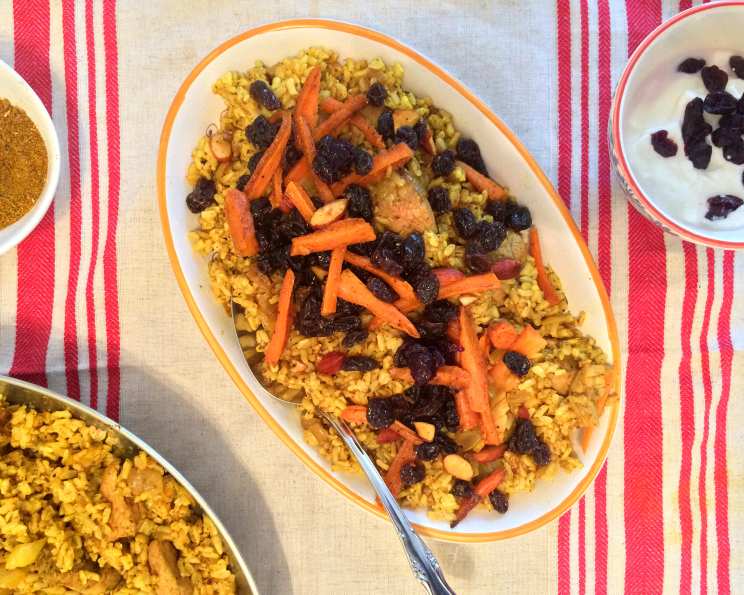
The Jewel of Afghan Cuisine: Kabuli Pulao
The aroma of Kabuli Pulao instantly transports me back to my travels through Central Asia. I remember sitting on intricately woven carpets in a family’s home in Kabul, the scent of cardamom and caramelized carrots filling the air. The host, a warm and generous woman, placed a steaming platter of this magnificent rice dish before us. It was more than just food; it was a symbol of hospitality, celebration, and connection. The glistening rice, studded with jewels of sweet carrots and raisins, alongside tender lamb, tasted like pure comfort and joy. That meal cemented my love for Afghan cuisine, and Kabuli Pulao remains one of my all-time favorite dishes to prepare and share.
Recipe Overview
- Prep Time: 15 minutes
- Cook Time: 25 minutes
- Total Time: 40 minutes
- Servings: 8
- Dietary Type: Gluten-Free
Ingredients
- 7 cups basmati rice
- 2 large onions, diced
- 3 ounces pistachios
- 3 ounces slivered almonds
- 2 large carrots, scraped and julienned
- 10 ounces raisins
- 1/3 cup sugar, divided
- Vegetable oil
- Olive oil
- Salt and pepper
- Lamb stock
- Afghan Pulao spices
Equipment Needed
- Large colander
- Large bowl
- Large saucepan
- Frying pan
- Large wooden spoon
- Large platter
Instructions
-
Earlier in the Day: Place the basmati rice in a large colander and run cold water over it to rinse it well. This removes excess starch and helps prevent the rice from becoming sticky.
-
Pour the rinsed rice into a large bowl and cover it with cold water to soak for 4 to 5 hours. Soaking the rice allows it to absorb moisture, which results in a fluffier and more evenly cooked pulao.
-
Pour 1/6 cup of the sugar into a large, hot saucepan over medium heat and keep shaking the pan until the sugar caramelizes. Caramelizing the sugar creates a deep, rich flavor that forms the base of the dish. Be careful not to burn the sugar; it should be a deep amber color.
-
Add 1 cup of the reserved lamb stock, the Afghan Pulao Spices, salt, and pepper to taste, if needed, to the caramelized sugar. Bring to a boil, remove from heat, and set aside. The lamb stock adds richness and depth of flavor, while the spices provide the characteristic aroma of Kabuli Pulao.
-
Drain the soaked rice. Then, following the cooking directions on the package, boil it until just soft. Drain again and pour the rice over the caramelized sugar mixture and stir until the rice is well coated. The rice should be slightly undercooked at this stage, as it will continue to cook in the next steps.
-
Using a frying pan, heat 1 tablespoon of vegetable oil over medium-high heat. Add the carrots and the remaining sugar and stir for 5 minutes or until caramelized and glossy. The carrots should be tender and slightly browned, with a sweet and savory flavor.
-
Add the raisins to the caramelized carrots and cook for another minute. Remove from heat and set aside. The raisins will plump up and become even sweeter.
-
With the underside of a large wooden spoon, punch holes all over the rice allowing the steam to escape. This helps to ensure that the rice cooks evenly and doesn’t become mushy.
-
Drizzle the rice with olive oil. The olive oil adds flavor and helps to keep the rice from sticking together.
-
Now, top the rice with the carrot mixture and the prepared lamb.
-
Cover with a tea towel and the lid of the pan. Make sure the towel is under the lid so it doesn’t burn. This helps to trap the steam and keep the rice moist.
-
Now turn the heat to high and cook the rice mixture for 5 minutes. Reducing the heat to low, cook for another 10 minutes. Cooking on high heat for the first 5 minutes helps to create a slightly crispy crust on the bottom of the rice.
-
Remove from heat and keep it covered for 10 more minutes. Allowing the rice to rest after cooking allows the steam to redistribute, resulting in a more evenly cooked and flavorful pulao.
-
To serve, cover a large platter with a layer of the rice, spoon the lamb over it, and then all the remaining rice. Top with the carrot mixture and finally with the almonds and pistachios. This serves a large family, as is traditional with Afghan communities.
Expert Tips & Tricks
- Rice Selection: Using high-quality basmati rice is crucial for the best texture and flavor. Look for long-grain rice that is aged, as it tends to cook up fluffier.
- Caramelization Control: Keep a close eye on the caramelizing sugar. If it starts to burn, it will become bitter. You want a rich, amber color.
- Spice Blend: Adjust the amount of Afghan Pulao spice blend to your preference. Some blends are more potent than others. You can also create your own blend using spices like cardamom, cumin, coriander, and cloves.
- Meat Options: While lamb is traditional, you can substitute it with chicken or beef. For a vegetarian option, you can use chickpeas or lentils.
- Make-Ahead Tip: The lamb and carrot mixture can be prepared a day in advance and stored in the refrigerator. This will save you time on the day you plan to serve the pulao.
Serving & Storage Suggestions
Serve Kabuli Pulao hot, right after it’s finished cooking. The aroma alone is enough to make everyone’s mouth water! Garnish generously with the caramelized carrots, raisins, almonds, and pistachios for a beautiful presentation.
Leftover Kabuli Pulao can be stored in an airtight container in the refrigerator for up to 3 days. To reheat, add a splash of water or broth to prevent the rice from drying out. You can reheat it in the microwave or on the stovetop over low heat.
Freezing is not recommended as it can change the texture of the rice.
Nutritional Information
| Nutrient | Amount per Serving | % Daily Value |
|---|---|---|
| Calories | 350 kcal | 18% |
| Total Fat | 15g | 23% |
| Saturated Fat | 3g | 15% |
| Cholesterol | 50mg | 17% |
| Sodium | 200mg | 8% |
| Total Carbohydrate | 45g | 15% |
| Dietary Fiber | 2g | 8% |
| Sugars | 15g | – |
| Protein | 10g | 20% |
Note: Nutritional information is an estimate and may vary based on specific ingredients and cooking methods.
Variations & Substitutions
- Vegetarian Kabuli Pulao: Replace the lamb with chickpeas, lentils, or a combination of vegetables like cauliflower, potatoes, and eggplant.
- Nut-Free Version: Omit the pistachios and almonds, or substitute with toasted sunflower seeds or pumpkin seeds.
- Spicier Pulao: Add a pinch of cayenne pepper or a chopped green chili to the spice blend.
- Fruity Twist: Incorporate dried apricots or cranberries along with the raisins for a more complex flavor.
- Citrus Infusion: Add a teaspoon of orange zest to the rice while it’s cooking for a bright, citrusy aroma.
FAQs (Frequently Asked Questions)
Q: Why is it important to soak the rice before cooking?
A: Soaking the rice helps to remove excess starch, which prevents the rice from becoming sticky and results in a fluffier final product. It also allows the rice to cook more evenly.
Q: Can I use brown rice instead of basmati rice?
A: While you can use brown rice, it will significantly change the texture and cooking time. Brown rice requires a longer cooking time and will result in a denser, chewier pulao.
Q: What can I substitute for lamb stock?
A: If you don’t have lamb stock, you can use chicken or vegetable broth. The flavor will be slightly different, but it will still add depth to the dish.
Q: How can I prevent the rice from burning on the bottom of the pan?
A: Using a heavy-bottomed pot and layering the tea towel under the lid helps to distribute the heat evenly and prevent burning. Also, be sure to reduce the heat to low after the initial 5 minutes on high.
Q: Can I make this dish in a rice cooker?
A: While it’s possible, it’s not recommended as it’s difficult to achieve the caramelized sugar and layered flavors in a rice cooker. The traditional method yields the best results.
Final Thoughts
Kabuli Pulao is a labor of love, but the result is well worth the effort. This dish is a testament to the rich culinary heritage of Afghanistan, and it’s a perfect way to share a taste of Central Asia with your friends and family. So, gather your ingredients, embrace the process, and prepare to be transported to another world with every bite. Don’t be afraid to experiment with variations and make it your own! And please, share your experience and any tips you discover along the way – happy cooking!