
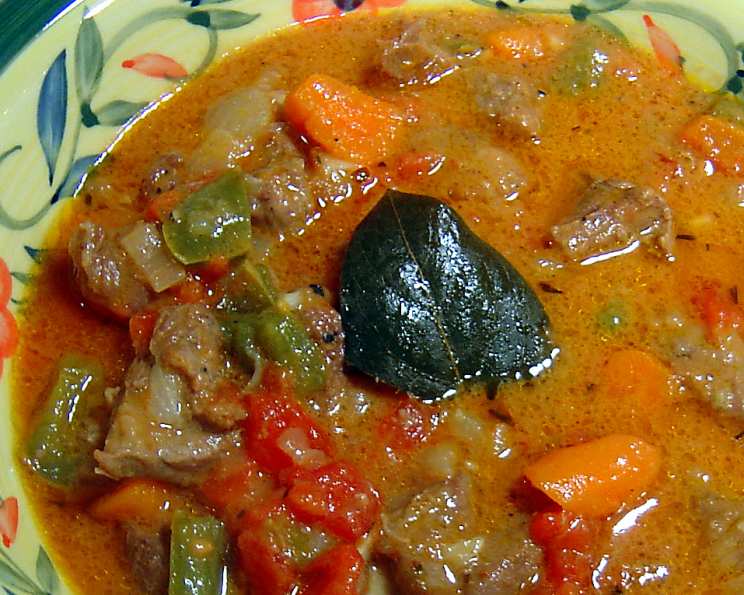
Hearty African Beef Stew: A Taste of Home
The aroma alone takes me back. I remember my grandmother’s kitchen, filled with the comforting scents of simmering spices and slow-cooked meat. The rich, earthy fragrance of peanut butter mingled with savory beef, creating a symphony of flavors that promised warmth and satisfaction. This African Beef Stew, a recipe she passed down, is more than just a meal; it’s a memory, a connection to family, and a taste of home.
Recipe Overview
- Prep Time: 20 minutes
- Cook Time: 1 hour 30 minutes
- Total Time: 1 hour 50 minutes
- Servings: 6
- Dietary Type: Dairy-Free
Ingredients
- ½ cup creamy peanut butter
- 2 cups beef broth
- 2 tablespoons canola oil
- 1 cup onion, chopped
- 4 cloves garlic, minced
- 1 cup green bell pepper, chopped
- 1 cup carrot, chopped
- 2 lbs beef stew meat, cut into 1 ½ inch cubes
- Salt and pepper to taste
- 28 ounces diced tomatoes
- ½ teaspoon dried thyme
- 1 bay leaf
Equipment Needed
- Medium bowl
- Whisk
- Large saucepan or stew pot
- Measuring cups and spoons
Instructions
-
In a medium bowl, whisk together the creamy peanut butter and the beef broth until well blended. Set aside this luscious, creamy mixture; it will be the soul of our stew.
-
Prepare the beef stew meat by cutting it into 1 ½ inch cubes if it isn’t already. This size ensures even cooking and tender results.
-
Generously season the beef with salt and pepper. Don’t be shy; this is your opportunity to build a foundation of flavor.
-
In a large saucepan or stew pot, heat the canola oil over medium heat. Let the oil shimmer before adding the vegetables.
-
Add the chopped onion, minced garlic, chopped green bell pepper, and chopped carrots to the pot.
-
Sauté the vegetables until the onions are translucent, about 5-7 minutes. Stir frequently to prevent burning, releasing their natural sweetness.
-
Add the beef to the pot and continue to cook, stirring often, until it is browned on all sides. Browning the meat is crucial for developing rich, complex flavors, a process known as the Maillard reaction.
-
Pour in the peanut butter and broth mixture, followed by the diced tomatoes and their liquid. The tomatoes will add acidity and depth.
-
Add the dried thyme and bay leaf. These herbs will infuse the stew with their aromatic essence.
-
Stir well to combine all the ingredients, ensuring the meat and vegetables are coated in the flavorful sauce. Bring the mixture to a boil.
-
Once boiling, reduce the heat to low and simmer, stirring often, for about 1 ½ hours, or until the meat is tender. The slow simmering process allows the flavors to meld together beautifully and the beef to become incredibly tender. If the sauce becomes too thick, add a little more beef broth.
-
Taste and add additional salt and pepper if desired. Adjust the seasoning to your personal preference.
-
Remove the bay leaf and discard. The bay leaf has done its job, imparting its subtle flavor to the stew.
-
Serve the hot stew over rice, couscous, or mashed potatoes.
-
Slow Cooker Option: For a hands-off approach, cook on Low for 7 hours in your slow cooker. This method results in incredibly tender beef.
Expert Tips & Tricks
- For an even richer flavor, brown the beef in batches to avoid overcrowding the pot. Overcrowding lowers the temperature and prevents proper browning.
- If you prefer a smoother sauce, you can use smooth peanut butter instead of creamy.
- To deepen the flavor profile, add a teaspoon of smoked paprika along with the thyme.
- Don’t skip the simmering step! This is essential for tenderizing the beef and allowing the flavors to meld.
- If you find the peanut butter flavor too strong, you can reduce the amount slightly.
- For added heat, add a pinch of cayenne pepper or a diced chili pepper to the stew.
- If your stew is too thin at the end of cooking, you can thicken it by simmering it uncovered for a few minutes or by stirring in a slurry of cornstarch and water (1 tablespoon cornstarch mixed with 2 tablespoons cold water).
Serving & Storage Suggestions
Serve this hearty African Beef Stew hot over a bed of fluffy rice, creamy mashed potatoes, or fluffy couscous. Garnish with a sprinkle of fresh parsley or cilantro for a pop of color and freshness. Leftovers can be stored in an airtight container in the refrigerator for up to 3-4 days. For longer storage, freeze the stew in freezer-safe containers for up to 2-3 months. Thaw frozen stew in the refrigerator overnight before reheating. Reheat gently on the stovetop over medium-low heat, stirring occasionally, until heated through. You can also reheat it in the microwave, but be sure to stir it occasionally to ensure even heating. It is not recommended to leave the stew at room temperature for more than 2 hours.
Nutritional Information
| Nutrient | Amount per Serving | % Daily Value |
|---|---|---|
| Calories | 755.7 kcal | N/A |
| Calories from Fat | 494 g | 65% |
| Total Fat | 55 g | 84% |
| Saturated Fat | 18.1 g | 90% |
| Cholesterol | 157.6 mg | 52% |
| Sodium | 688.2 mg | 28% |
| Total Carbohydrate | 18.9 g | 6% |
| Dietary Fiber | 4.5 g | 18% |
| Sugars | 9.5 g | N/A |
| Protein | 48.1 g | 96% |
Note: Nutritional information is an estimate and may vary based on specific ingredients and cooking methods.
Variations & Substitutions
- Vegetarian Option: Substitute the beef with hearty vegetables like sweet potatoes, butternut squash, and chickpeas for a delicious vegetarian stew.
- Spicy Version: Add a diced scotch bonnet pepper for a fiery kick. Be sure to remove the seeds for a milder heat.
- Coconut Milk Variation: For a creamier and slightly sweeter flavor, substitute half of the beef broth with coconut milk.
- Sweet Potato Addition: Dice one large sweet potato and add it to the stew along with the carrots for added sweetness and nutrition.
- Different Protein: Substitute beef with lamb, chicken, or even tofu for a different take on this classic dish.
- Nut-Free: Replace peanut butter with sunflower seed butter, almond butter, or tahini.
FAQs (Frequently Asked Questions)
Q: Can I make this stew ahead of time?
A: Absolutely! In fact, this stew tastes even better the next day after the flavors have had time to meld together. Prepare it a day or two in advance and store it in the refrigerator until ready to reheat and serve.
Q: Can I use a different type of peanut butter?
A: Yes, you can use natural peanut butter, but be sure to stir it well before adding it to the stew, as the oil tends to separate. Avoid using peanut butter with added sugars or artificial ingredients for the best flavor.
Q: How do I know when the beef is tender enough?
A: The beef should be easily pierced with a fork and should fall apart with gentle pressure. If it’s still tough, continue simmering the stew until it reaches the desired tenderness.
Q: Can I add other vegetables to this stew?
A: Absolutely! Feel free to add your favorite vegetables, such as potatoes, parsnips, or zucchini. Just be sure to adjust the cooking time accordingly.
Q: Is this stew gluten-free?
A: Yes, this recipe is naturally gluten-free as long as you use gluten-free beef broth. Always check the labels of your ingredients to ensure they are gluten-free if you have a gluten intolerance or sensitivity.
Final Thoughts
I hope this recipe brings as much joy to your kitchen as it has to mine. African Beef Stew is more than just a dish; it’s a celebration of flavors, a tribute to family traditions, and a comforting reminder of home. So gather your ingredients, invite your loved ones, and embark on this culinary adventure. Don’t hesitate to add your own personal touches and share your feedback. And if you’re looking for the perfect accompaniment, try pairing it with a crisp, dry white wine or a refreshing glass of ginger beer. Enjoy!