
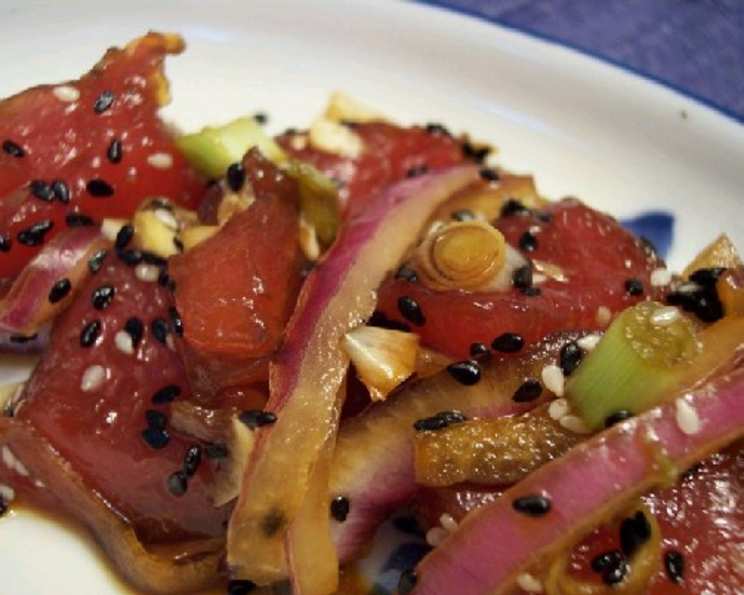
Ahi Shoyu Poke with Limu/Onion: A Taste of the Islands
The first time I tasted true Ahi Shoyu Poke, I was standing barefoot on a black sand beach in Maui, the warm Pacific breeze carrying the scent of plumeria. A local fisherman, weathered and kind, offered me a small bowl of the glistening, ruby-red tuna, marinated simply yet perfectly. The explosion of flavors – the rich, buttery fish, the salty shoyu, the pungent onion, and the slightly briny seaweed – was unlike anything I had ever experienced. It was pure, unadulterated island life in a single bite. From that moment on, I was hooked, forever chasing that authentic taste of Aloha.
Recipe Overview
- Prep Time: 15 minutes
- Cook Time: 0 minutes
- Total Time: 15 minutes
- Servings: 4-8
- Yield: Varies based on serving size
- Dietary Type: Gluten-Free (check shoyu ingredients), Dairy-Free
Ingredients
- 2 lbs ahi tuna, sushi grade
- 1 whole round onion
- ½ cup green onion, chopped
- 1 tablespoon sesame seed oil
- 1 tablespoon sesame seeds
- 1 tablespoon minced garlic
- ½ teaspoon minced ginger
- 1 cup ogo seaweed (limu), finely chopped
- ¾ cup shoyu (soy sauce)
Ingredient Notes:
- Ahi Tuna: Ensure your tuna is sushi-grade and sourced from a reputable supplier. This is crucial for safety, as the fish is consumed raw.
- Round Onion: Maui onions are ideal if you can find them, but any sweet or yellow onion will work well.
- Ogo Seaweed (Limu): Ogo provides a distinctive briny flavor. If you cannot find ogo, wakame or another edible seaweed can be substituted, though the flavor profile will differ. Dried seaweed will need to be rehydrated according to package directions before chopping.
- Shoyu: Tamari is a good gluten-free alternative to shoyu. Be mindful of sodium content when choosing your shoyu.
- Sesame Seeds: Toasted sesame seeds offer a richer flavor. You can toast them lightly in a dry pan over medium heat, watching carefully to prevent burning.
Equipment Needed
- Large mixing bowl
- Sharp knife
- Cutting board
Instructions
- Prepare the Tuna: Using a sharp knife, carefully cut the ahi tuna into roughly 3/4-inch cubes. Place the cubed tuna into a large mixing bowl. Be sure to cut against the grain for a more tender bite.
- Prepare the Onions: Thinly slice the round onion. Chop the green onions. Add both the sliced round onion and chopped green onions to the bowl with the tuna.
- Chop the Ogo: Finely chop the ogo seaweed. This step is important, as large pieces of seaweed can be tough to chew. If using dried seaweed, rehydrate as directed on the package before chopping.
- Combine Ingredients: Add the sesame seed oil, sesame seeds, minced garlic, minced ginger, chopped ogo, and shoyu to the bowl with the tuna and onions.
- Mix Gently: Gently toss all the ingredients together until the tuna is evenly coated with the marinade. Avoid over-mixing, as this can make the tuna mushy.
- Marinate: Let the poke stand for at least 15 minutes at room temperature. This allows the flavors to meld together. For a more intense flavor, you can marinate it in the refrigerator for up to an hour.
Expert Tips & Tricks
- Don’t Over-Marinate: While marinating enhances the flavor, prolonged marination (more than an hour) can cure the tuna and change its texture.
- Spice It Up: Add a pinch of chili flakes or a few drops of sriracha to the marinade for a touch of heat.
- Freshness is Key: The quality of the ahi tuna is paramount. Seek out the freshest, highest-quality fish you can find.
- Adjust to Taste: Feel free to adjust the amount of shoyu, garlic, or ginger to suit your personal preferences.
- Keep it Cold: If serving outdoors, keep the poke chilled in a bowl nested inside a larger bowl filled with ice.
Serving & Storage Suggestions
Serving:
Serve the Ahi Shoyu Poke chilled, garnished with extra sesame seeds and a sprig of green onion. It’s fantastic as an appetizer, a light lunch, or a part of a larger Hawaiian-themed meal. Traditionally, it’s served in small bowls, but you can also present it on lettuce cups or with crispy wonton chips for a delightful textural contrast. Consider pairing it with a refreshing Hawaiian beer or a crisp white wine.
Storage:
Ahi Shoyu Poke is best enjoyed fresh. However, leftovers can be stored in an airtight container in the refrigerator for up to 24 hours. Be aware that the texture of the tuna may change slightly. It is not recommended to freeze Ahi Shoyu Poke, as freezing will significantly degrade the texture of the raw fish. Discard any poke that has been left at room temperature for more than two hours.
Nutritional Information
| Nutrient | Amount per Serving | % Daily Value |
|---|---|---|
| Calories | 414.6 kcal | N/A |
| Calories from Fat | N/A | 34% |
| Total Fat | 15.8 g | 24% |
| Saturated Fat | 3.5 g | 17% |
| Cholesterol | 86.4 mg | 28% |
| Sodium | 2787.6 mg | 116% |
| Total Carbohydrate | 8.5 g | 2% |
| Dietary Fiber | 1.5 g | 6% |
| Sugars | 2.3 g | 9% |
| Protein | 57.1 g | 114% |
Note: Nutritional information is an estimate and may vary based on specific ingredients and serving sizes.
Variations & Substitutions
- Spicy Poke: Add a tablespoon of gochujang (Korean chili paste) or a finely chopped jalapeno for a fiery kick.
- Avocado Poke: Dice a ripe avocado and gently fold it into the poke just before serving for added creaminess.
- Furikake Poke: Sprinkle furikake (a Japanese seasoning blend with seaweed, sesame seeds, and other ingredients) over the poke for extra flavor and texture.
- Tofu Poke: For a vegetarian option, substitute the ahi tuna with firm or extra-firm tofu, pressed to remove excess water and then cubed.
- Shrimp Poke: Use cooked shrimp instead of tuna.
FAQs (Frequently Asked Questions)
Q: Can I use frozen ahi tuna?
A: Yes, you can use frozen ahi tuna, but make sure it is sushi-grade and has been properly thawed in the refrigerator before using.
Q: What if I can’t find ogo seaweed?
A: If you can’t find ogo, wakame seaweed or another edible seaweed can be substituted. The flavor profile will be slightly different, but it will still add a nice briny element.
Q: How long can I store Ahi Shoyu Poke in the refrigerator?
A: It is best to consume Ahi Shoyu Poke within 24 hours of making it. The texture of the tuna may change if stored longer.
Q: Can I use a different type of onion?
A: While Maui onions are traditional, you can use any sweet or yellow onion. Avoid using stronger onions like red onions, as they can overpower the other flavors.
Q: Can I make this ahead of time?
A: While the poke is best served fresh, you can chop the onions and seaweed ahead of time. Just before serving, combine all the ingredients and let marinate for 15 minutes.
Final Thoughts
Ahi Shoyu Poke with Limu/Onion is more than just a recipe; it’s a taste of the islands, a celebration of fresh ingredients, and a reminder of simpler times. I urge you to try this recipe, close your eyes, and let the flavors transport you to the warm, sunny shores of Hawai’i. Don’t be afraid to experiment with the ingredients and make it your own. Share your creations with friends and family, and spread the Aloha spirit! And please, let me know what you think – I’m always eager to hear your feedback and learn about your own culinary adventures.