
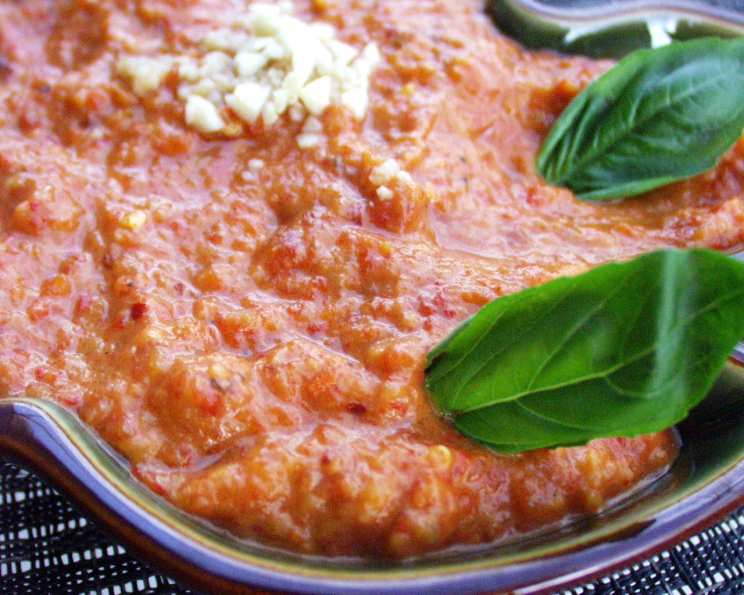
Ajvar: A Taste of Home
I remember visiting my grandmother’s small village in the Balkans one autumn. The air was crisp, filled with the smoky scent of roasting peppers, and her kitchen was a flurry of activity. Jars lined the countertops, gleaming ruby red in the afternoon light. She was making ajvar, a vibrant roasted red pepper spread, her hands moving with a practiced grace honed over decades. More than just a condiment, it was a taste of home, a connection to our heritage, and a symbol of her love, carefully preserved in each jar.
Recipe Overview
- Prep Time: 20 minutes
- Cook Time: 30 minutes
- Total Time: 50 minutes
- Servings: 12
- Yield: About 3 cups
- Dietary Type: Vegan, Gluten-Free, Dairy-Free
Ingredients
- 6 red bell peppers
- 1 small eggplant
- 1-2 garlic cloves, depending on taste
- 4 tablespoons olive oil (optional)
- 2 tablespoons white vinegar, or to taste
- Salt and pepper, to taste
- ½ – 1 teaspoon dried red pepper flakes (optional)
- 3 basil leaves, for garnish (optional)
Equipment Needed
- Baking sheets
- Foil (optional)
- Large bowl
- Clean dishcloth or paper bag
- Food processor or blender
- Spoon
- Knife
Instructions
-
Preheat your oven to broil. Halve each red bell pepper, discarding the stems and seeds. Place the peppers, cut side down, on an old baking sheet or one lined with foil for easier cleanup.
-
Cut the eggplant in half lengthwise and score the cut surfaces with a knife. Drizzle it with about 2 tablespoons of olive oil (if using) and a little salt. Place the prepared eggplant on a separate baking sheet.
-
Position one of the oven racks roughly 3 to 4 inches below the broiler. Place the baking sheet with the red bell peppers on this rack. The baking sheet with the eggplant should sit on a lower rack.
-
Broil the peppers and eggplant, turning the peppers occasionally, until they are well roasted on all sides. This should take roughly 15 to 20 minutes. Keep a close eye on them to prevent burning. The eggplant might be done first; if so, remove it from the oven and set it aside to cool. To test the eggplant for doneness, press on it with a fork to make sure it’s soft all the way through. Chef’s Note: For an even smokier flavor, you can also roast the peppers and eggplant on an outdoor grill. Make sure most of the skin on the peppers is blackened.
-
When you remove the peppers from the oven, immediately place them in a bowl. Sprinkle them with a little water (about 1-2 tablespoons), and cover the bowl tightly with a clean dishcloth. Leave it for about 10 minutes. This steaming process helps to loosen the skins, making it much easier to peel the peppers once they’ve cooled slightly. Alternative Method: Another method to loosen the skins is to place the hot peppers in a paper sack, fold the top over to close, and leave it for 15 minutes.
-
While waiting for the red pepper skin to lift, use a large spoon to remove the pulp of the eggplant, leaving the skin behind. Discard the thickest seeds from the eggplant, but don’t worry about removing every single seed.
-
Put the eggplant pulp in a food processor or a blender. (A stick blender used in a deep bowl also works well). Add the remaining 2 tablespoons of olive oil (if using) and the garlic cloves (smashed and chopped). Pulse the eggplant a few times so that it’s chopped with the other ingredients but not totally pureed. Transfer this mixture to a bowl and set aside.
-
Once the peppers are cool enough to handle, peel them with your fingers or a knife. It should be relatively easy to slip the skins off now. Add the peeled peppers to the food processor or blender. Pulse 5 to 8 times to chop them coarsely.
-
Add the eggplant mixture to the chopped peppers. Season to taste with salt, pepper, white vinegar, and dried chili flakes (if using). Pulse 3 or 4 times to mix everything together. Be careful not to over-process; you want some texture in the ajvar, not a completely smooth puree.
-
If you wish, garnish the ajvar with more finely diced garlic and a few scattered basil leaves before serving.
Expert Tips & Tricks
- Roasting variations: If you don’t have a broiler, you can roast the peppers and eggplant in a 400°F (200°C) oven for about 40-45 minutes, or until the skins are blackened and the flesh is soft.
- Smoked paprika: For an even smokier flavor, add a teaspoon of smoked paprika to the ajvar along with the other seasonings.
- Adjusting the heat: Control the spiciness by carefully adding the dried red pepper flakes to your liking. Remember, you can always add more, but you can’t take it away!
- Vinegar type: Feel free to experiment with different types of vinegar, such as apple cider vinegar or balsamic vinegar, for a slightly different flavor profile. Add it gradually and taste as you go.
- Don’t rinse the peppers: Avoid rinsing the peppers under water after roasting. This will wash away some of the smoky flavor. Instead, gently wipe them with a paper towel to remove any stubborn skin.
Serving & Storage Suggestions
Serve the ajvar with toasted bread slices drizzled with olive oil and sprinkled with salt, or as a flavorful accompaniment to grilled meats, fish, or vegetables. It’s also delicious as a spread for sandwiches and wraps.
- Storage: Ajvar can be stored in an airtight container in the refrigerator for up to a week.
- Freezing: For longer storage, freeze the ajvar in freezer-safe containers for up to 3 months. Thaw it in the refrigerator overnight before serving.
- Serving: The ajvar is best served at room temperature or slightly chilled.
Nutritional Information
| Nutrient | Amount per Serving | % Daily Value |
|---|---|---|
| Calories | 27 kcal | N/A |
| Total Fat | 0.3g | 0% |
| Saturated Fat | 0.1g | 0% |
| Cholesterol | 0mg | 0% |
| Sodium | 2.3mg | 0% |
| Total Carbohydrate | 6.3g | 2% |
| Dietary Fiber | 2.8g | 11% |
| Sugars | 3.6g | N/A |
| Protein | 1.1g | 2% |
Note: Nutritional information is an estimate and may vary based on specific ingredients and portion sizes.
Variations & Substitutions
- Spicy Ajvar: Increase the amount of dried red pepper flakes, or add a finely chopped fresh chili pepper, such as a jalapeño or serrano, for a spicier version.
- Ajvar with Tomatoes: Add 1-2 roasted tomatoes to the mix for a slightly sweeter and tangier flavor.
- Ajvar with Feta: Crumble feta cheese over the ajvar just before serving for a salty and creamy contrast.
- Ajvar with Walnuts: Toast some walnuts and chop them finely. Stir them into the ajvar for added texture and nutty flavor.
FAQs (Frequently Asked Questions)
Q: Can I use a gas stove to char the peppers instead of broiling or grilling?
A: Yes, you can char the peppers directly over a gas flame on your stovetop. Use tongs to rotate them until the skin is blackened on all sides.
Q: Do I have to peel the peppers?
A: Yes, peeling the peppers is essential for a smooth and flavorful ajvar. The charred skins can be bitter and detract from the overall taste.
Q: Can I make ajvar without eggplant?
A: While the traditional recipe includes eggplant, you can omit it if you prefer. The texture and flavor will be slightly different, but it will still be delicious.
Q: How long does homemade ajvar last?
A: Properly stored in an airtight container in the refrigerator, homemade ajvar will last for up to one week. Freezing extends its shelf life to about 3 months.
Q: Can I use other types of peppers besides red bell peppers?
A: While red bell peppers are the most common choice, you can experiment with other types of sweet peppers, such as yellow or orange bell peppers. The color and flavor will vary slightly.
Final Thoughts
Ajvar is more than just a recipe; it’s a culinary tradition, a celebration of simple ingredients, and a taste of home. I encourage you to try this recipe and experience the rich flavors and vibrant colors for yourself. Don’t be afraid to experiment with the seasonings and customize it to your liking. And when you do, I hope you’ll share your creations and your memories with me. Bon appétit!