
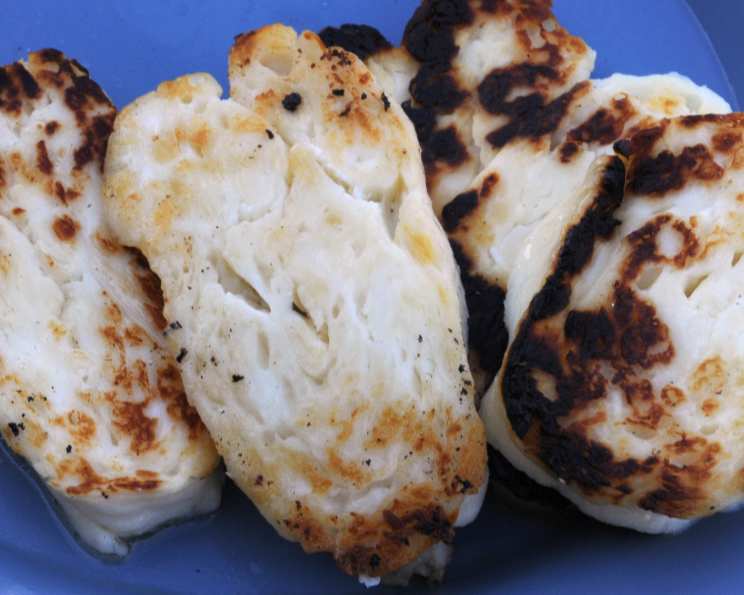
Akrotiri: Sizzling Halloumi, a Taste of the Mediterranean
My first encounter with halloumi was a revelation. I was backpacking through Greece, far from the bustling tourist traps, and stumbled upon a tiny taverna clinging to the side of a cliff overlooking the turquoise Aegean Sea. The owner, a woman with eyes as deep and knowing as the ocean itself, insisted I try her fried halloumi. The first bite – the salty tang of the cheese, the satisfying squeak against my teeth, and the golden-brown crust – transported me. It was simple, honest food, a perfect reflection of the sun-drenched landscape and the warmth of the Greek people. This recipe, while originating from Akrotiri, a British Overseas Territory on the island of Cyprus, echoes that same simplicity and sunshine.
Recipe Overview
- Prep Time: 2 minutes
- Cook Time: 7 minutes
- Total Time: 9 minutes
- Servings: 4-6
- Yield: Variable, depending on slice thickness
- Dietary Type: Vegetarian
Ingredients
- 1 (8 ounce) package halloumi cheese
- ½ teaspoon olive oil
Equipment Needed
- Cutting board
- Knife
- Non-stick skillet or frying pan
- Spatula or tongs
Instructions
- Begin by preparing the halloumi. Remove the cheese from its packaging. Place the cheese on a cutting board and, using a sharp knife, slice the halloumi into pieces approximately 3/8 inch (about 1 cm) thick. Slicing it too thin will make it difficult to handle in the pan.
- In a small bowl, or directly onto the sliced halloumi, brush both sides of each slice with olive oil. This will help the cheese develop a beautiful golden-brown crust and prevent it from sticking to the pan.
- Place a non-stick skillet or frying pan over medium-high heat. Allow the pan to heat up completely. The pan should be hot enough that a drop of water flicked onto the surface sizzles and evaporates almost immediately.
- Carefully place the halloumi slices into the hot pan, making sure not to overcrowd it. Overcrowding the pan will lower the temperature and prevent the cheese from browning properly. Work in batches if necessary.
- Sear the halloumi for approximately 1-2 minutes per side, or until it develops a deep golden-brown color. Use a spatula or tongs to carefully flip each slice. The cheese should release easily from the pan when it’s ready to be flipped.
- Continue to cook the halloumi on the second side for another 1-2 minutes, or until it is also golden-brown and slightly softened.
- Remove the fried halloumi from the pan and serve immediately.
Expert Tips & Tricks
- Don’t overcook it! Halloumi is best when it’s golden brown and slightly softened, but still retains its shape. Overcooking will make it rubbery.
- Pat the halloumi dry: Before slicing, pat the block of halloumi dry with paper towels. This removes excess moisture, encouraging better browning in the pan.
- Even slices are key: Aim for uniform slice thickness to ensure even cooking. Uneven slices will cook at different rates.
- Experiment with herbs and spices: Before frying, sprinkle the halloumi with dried oregano, mint, or a pinch of red pepper flakes for added flavor.
- Use a well-seasoned pan: A well-seasoned cast iron skillet will work wonders and impart a fantastic flavour.
- Deglaze the pan (optional): After removing the halloumi, deglaze the pan with a squeeze of lemon juice or a splash of white wine vinegar for a simple pan sauce.
Serving & Storage Suggestions
Fried halloumi is best served immediately while it’s still warm and squeaky. It can be served as an appetizer, a side dish, or as part of a larger mezze platter. Pair it with fresh vegetables, grilled bread, olives, and dips like hummus or tzatziki. It’s also delicious in salads or tucked into pita bread with tomatoes, cucumbers, and a drizzle of olive oil.
Leftover fried halloumi can be stored in an airtight container in the refrigerator for up to 3 days. However, it will lose its squeaky texture and become somewhat firmer. To reheat, pan-fry it briefly over medium heat until warmed through. Reheating in the microwave is not recommended, as it will make the cheese rubbery.
Nutritional Information
| Nutrient | Amount per Serving | % Daily Value |
|---|---|---|
| Calories | 150 kcal | 8% |
| Total Fat | 12g | 18% |
| Saturated Fat | 8g | 40% |
| Cholesterol | 45mg | 15% |
| Sodium | 400mg | 17% |
| Total Carbohydrate | 1g | 0% |
| Dietary Fiber | 0g | 0% |
| Sugars | 0g | 0% |
| Protein | 10g | 20% |
Note: Nutritional information is an estimate and may vary based on specific ingredients and preparation methods.
Variations & Substitutions
- Grilled Halloumi: Instead of pan-frying, grill the halloumi slices over medium heat until golden brown and slightly softened.
- Halloumi Fries: Cut the halloumi into thick strips instead of slices, and fry them until crispy on the outside and soft on the inside.
- Flavored Olive Oil: Infuse the olive oil with garlic, chili flakes, or fresh herbs for added flavor.
- Vegan Halloumi: While traditional halloumi is made from sheep’s and goat’s milk, some vegan versions are available. Look for them in specialty stores or online. Keep in mind that vegan halloumi may behave differently when cooked.
- Halloumi Skewers: Thread halloumi cubes onto skewers with vegetables like cherry tomatoes, bell peppers, and zucchini, and grill until cooked through.
- Honey Drizzle: After frying, drizzle the halloumi with a small amount of honey for a sweet and savory combination.
FAQs (Frequently Asked Questions)
Q: What is halloumi cheese?
A: Halloumi is a semi-hard, brined cheese traditionally made from a mixture of goat’s and sheep’s milk. It has a high melting point, which makes it ideal for grilling or frying.
Q: Why does halloumi squeak when you eat it?
A: The squeaky texture of halloumi is due to its unique protein structure and the way it’s brined. The proteins bind together, creating a slightly rubbery texture that squeaks against your teeth.
Q: Can I use a different type of oil instead of olive oil?
A: Yes, you can use other oils with a high smoke point, such as avocado oil or grapeseed oil. However, olive oil adds a distinct flavor that complements the halloumi.
Q: How can I prevent the halloumi from sticking to the pan?
A: Make sure your pan is hot before adding the halloumi, and brush both sides of the cheese with olive oil. A non-stick pan is also helpful.
Q: Is halloumi gluten-free?
A: Yes, halloumi cheese is naturally gluten-free, as it is made from milk, salt, and rennet.
Final Thoughts
Fried halloumi is a deceptively simple dish that delivers a burst of Mediterranean flavor. Its salty, savory taste and unique squeaky texture make it an unforgettable culinary experience. I urge you to give this recipe a try and transport yourself to the sun-drenched shores of the Mediterranean. Don’t be afraid to experiment with different flavors and toppings to create your own signature halloumi dish. Share your creations with friends and family, and let them experience the magic of this delightful cheese. Consider pairing it with a crisp, dry white wine for a truly authentic experience.