
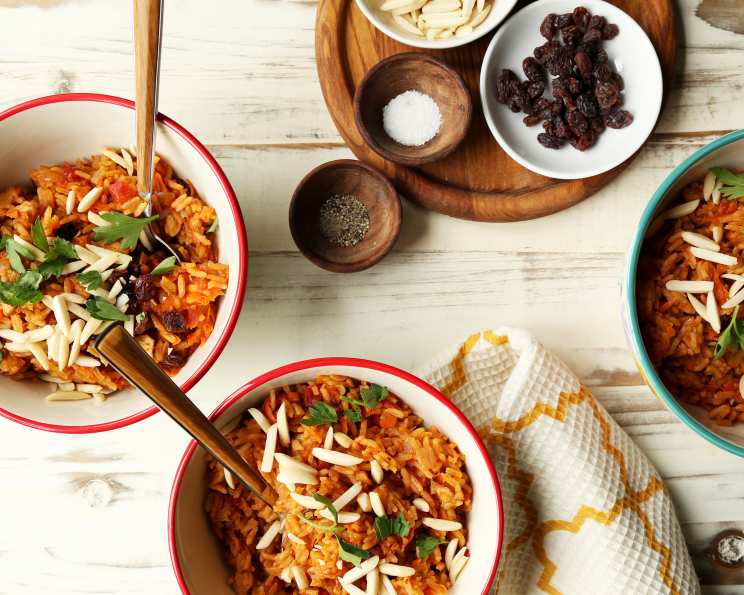
Al Kabsa: Aromatic Saudi Rice and Chicken
The first time I tasted Kabsa, I was wandering through a bustling Riyadh market, the air thick with the scent of spices and grilling meats. A kind vendor, noticing my wide-eyed curiosity, offered me a plate piled high with fragrant rice and tender chicken. The explosion of flavors – saffron, cardamom, cinnamon mingling with the savory chicken and subtle sweetness of raisins – transported me. It was more than just a meal; it was an invitation into the heart of Saudi hospitality, a memory etched forever in my culinary journey.
Recipe Overview: Kabsa
- Prep Time: 20 minutes
- Cook Time: 1 hour 20 minutes
- Total Time: 1 hour 40 minutes
- Servings: 8-10
- Yield: 1 large pot
- Dietary Type: Varies based on stock cube, typically contains dairy
Ingredients
Kabsa Dish
- ¼ cup butter
- 3 lbs chicken, cut into 8-10 pieces
- 1 large onion, finely chopped
- 6 cloves garlic, minced
- ¼ cup tomato puree
- 14 ounces canned chopped tomatoes, un-drained (or fresh)
- 3 medium carrots, grated
- 2 whole cloves
- 1 pinch grated nutmeg
- 1 pinch ground cumin
- 1 pinch ground coriander
- Salt & freshly ground black pepper to taste
- 4 cups hot water
- 1 chicken stock cube (check ingredients for dairy if needed)
- 2 ¼ cups basmati rice (do not rinse or soak)
- ¼ cup raisins
- ¼ cup slivered almonds, toasted
Kabsa Spice Mix
- ½ teaspoon saffron
- ¼ teaspoon ground green cardamoms
- ½ teaspoon ground cinnamon
- ½ teaspoon ground allspice
- ¼ teaspoon white pepper
- ½ teaspoon ground dried limes
Equipment Needed
- Large stock pot, casserole dish, or Dutch oven
- Large serving platter
Instructions
-
Begin by melting the butter in your large stock pot, casserole dish, or Dutch oven over medium heat.
-
Add the chicken pieces, onion, and garlic to the pot. Sauté until the onion is tender and translucent, usually about 5-7 minutes.
-
Stir in the tomato puree and simmer over low heat for about 2 minutes, allowing the flavors to meld.
-
Add the canned chopped tomatoes (undrained, or fresh tomatoes if using), grated carrots, cloves, and all the Kabsa Spice Mix ingredients (saffron, cardamom, cinnamon, allspice, white pepper, and dried limes). Season generously with salt and pepper to taste.
-
Cook the mixture for a couple of minutes, stirring occasionally, to bloom the spices and release their aromas.
-
Pour in the hot water and add the chicken stock cube. Stir to dissolve the cube.
-
Bring the mixture to a boil, then reduce the heat to low, cover the pot tightly, and simmer gently for 30 minutes. This will allow the chicken to cook through and the flavors to deepen.
-
After 30 minutes, add the basmati rice to the pot. Gently stir to ensure the rice is evenly distributed and submerged in the liquid. Be careful not to over-stir, as this can release too much starch from the rice.
-
(Optional Oven Browning Step) If you desire a browned and crisped chicken, carefully remove the pieces from the pot at this stage and place them in a preheated oven at 350°F (180°C).
-
Re-cover the pot and simmer over low heat for another 35-40 minutes, or until the rice is tender and the liquid has been absorbed. During the last 10 minutes of cooking, sprinkle the raisins evenly over the rice.
-
Once the rice is cooked, remove the pot from the heat and let it rest, covered, for 5-10 minutes. This allows the rice to fully absorb any remaining moisture and achieve a perfect fluffy texture.
-
If you chose to brown the chicken in the oven, it should be ready after about 25-30 minutes. Make sure the chicken is cooked through (internal temperature of 165°F or 74°C) before removing it from the oven.
-
To serve, fluff the rice gently with a fork and transfer it to a large serving dish. Arrange the chicken pieces on top of the rice.
-
Garnish generously with the toasted slivered almonds.
-
Serve hot with a fresh mixed salad, preferably with a light lime vinaigrette. A spicy hot sauce, known as “Shattah” in Saudi Arabia, is also a common and delicious accompaniment.
Expert Tips & Tricks
- Don’t Rinse the Rice: The recipe specifically states not to rinse the basmati rice. This helps the rice retain some of its starch, contributing to the desired texture of the Kabsa. Rinsing is usually done to remove excess starch, but in this case, it’s beneficial.
- Spice is Nice: Don’t be afraid to adjust the spices to your preference. If you like a spicier dish, add a pinch of cayenne pepper or a small dried chili to the spice mix.
- Saffron Infusion: For a more intense saffron flavor and color, soak the saffron threads in a tablespoon of warm water for about 30 minutes before adding them to the spice mix. This will help to extract the color and aroma.
- Even Cooking: Ensure even cooking of the rice by using a heavy-bottomed pot or Dutch oven. This will help to distribute the heat evenly and prevent scorching.
Serving & Storage Suggestions
Serve Al Kabsa immediately while it’s hot and fragrant. The aroma alone is enough to make mouths water! For an authentic touch, serve it with a side of plain yogurt or a simple cucumber and tomato salad dressed with lemon juice and olive oil.
Leftovers can be stored in an airtight container in the refrigerator for up to 3 days. To reheat, add a splash of water or broth to the rice before microwaving or gently warming it in a covered pot on the stovetop. The chicken is best reheated in the oven or a skillet to maintain its texture. Al Kabsa can also be frozen for longer storage (up to 2 months), but the texture of the rice may change slightly upon thawing.
Nutritional Information
Note: Nutritional information is an estimate and may vary based on specific ingredients and portion sizes.
| Nutrient | Amount per Serving | % Daily Value |
|---|---|---|
| Calories | 678.5 kcal | N/A |
| Calories from Fat | 314 g | 46% |
| Total Fat | 34.9 g | 53% |
| Saturated Fat | 11.5 g | 57% |
| Cholesterol | 142.9 mg | 47% |
| Sodium | 344.5 mg | 14% |
| Total Carbohydrate | 52.6 g | 17% |
| Dietary Fiber | 4.5 g | 17% |
| Sugars | 6.9 g | 27% |
| Protein | 38 g | 75% |
Variations & Substitutions
- Lamb Kabsa: While this recipe uses chicken, you can easily substitute it with lamb. Use the same weight of lamb, cut into similar-sized pieces, and follow the same cooking instructions. Lamb Kabsa is a classic variation!
- Vegetarian Kabsa: To make a vegetarian version, omit the chicken and use vegetable broth instead of chicken broth. Add chickpeas or other beans for protein. You can also add more vegetables like bell peppers, zucchini, or eggplant.
- Spice Level: Adjust the amount of spices to your liking. If you prefer a milder flavor, reduce the amount of cinnamon, allspice, and white pepper. For a spicier kick, add a pinch of cayenne pepper or a small chopped chili.
- Nut-Free Kabsa: Omit the almonds for a nut-free version. You can still garnish with other toppings like chopped fresh parsley or cilantro.
FAQs (Frequently Asked Questions)
Q: Can I use brown rice instead of basmati rice?
A: While you can, it will significantly change the texture and cooking time. Brown rice requires more liquid and a longer cooking time. You’ll need to adjust the liquid and cooking time accordingly, and the final result will be chewier.
Q: Can I prepare the Kabsa spice mix in advance?
A: Absolutely! In fact, preparing the spice mix ahead of time is a great way to streamline the cooking process. Simply combine all the spices in a jar and store it in a cool, dry place until ready to use.
Q: How do I prevent the rice from sticking to the bottom of the pot?
A: Using a heavy-bottomed pot or Dutch oven helps distribute the heat evenly and prevents scorching. Also, ensure the heat is on low simmer after adding the rice and avoid stirring too much during the cooking process.
Q: Can I use fresh tomatoes instead of canned?
A: Yes, you can substitute fresh tomatoes for canned. Use about 1 pound of fresh tomatoes, peeled and chopped.
Q: How do I know when the rice is cooked through?
A: The rice is cooked through when it is tender and has absorbed all the liquid. You should be able to run a fork through the rice easily. If there is still liquid in the pot, continue to simmer, covered, for a few more minutes until the liquid is absorbed.
Final Thoughts
Al Kabsa is more than just a recipe; it’s an experience. It’s the warmth of Saudi hospitality, the aroma of exotic spices, and the satisfaction of a truly comforting meal. So, gather your ingredients, embrace the process, and transport yourself to the heart of Saudi Arabia with every flavorful bite. Don’t hesitate to experiment with the spices to create your own unique twist on this classic dish. And most importantly, share it with loved ones – good food is always best enjoyed together. Sahtain! (Bon appétit!)