
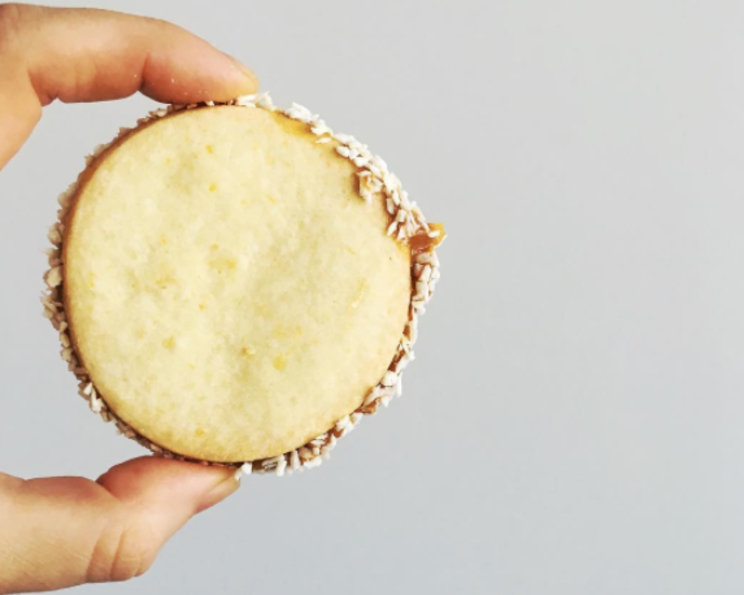
Alfajores: Argentina’s Irresistible Dulce de Leche Sandwich Cookies
The memory is etched in my mind: a bustling Buenos Aires market, the air thick with the scent of spices and freshly baked bread. But what truly captivated me was a small stand overflowing with delicate, snow-dusted cookies. One bite of those alfajores, the creamy dulce de leche oozing between the crumbly layers, and I was transported. It was a taste of Argentina, a sweet and unforgettable moment that I’ve been trying to recreate ever since.
Recipe Overview
- Prep Time: 30 minutes
- Cook Time: 15 minutes
- Total Time: 45 minutes
- Servings: 20
- Yield: 40 cookies (20 sandwiches)
- Dietary Type: Not specified in original recipe
Ingredients
- 1/2 cup butter, softened
- 1 cup sugar
- 1 egg
- 2 egg yolks
- 1 teaspoon vanilla extract
- 2 teaspoons lemon rind, grated
- 1 1/2 cups cornstarch
- 1/2 cup all-purpose flour
- 1 teaspoon baking powder
- 1/4 teaspoon salt
- 1 cup dulce de leche, store-bought or homemade
- Powdered sugar, for dusting (optional)
Equipment Needed
- Electric mixer or whisk
- Large mixing bowl
- Small mixing bowl
- Measuring cups and spoons
- Grater
- Sifter
- Baking sheets
- Parchment paper or silicone baking mats
- Cooling rack
Instructions
- Begin by creaming the softened butter in a large mixing bowl for about a minute, using an electric mixer or a whisk. You want the butter to be smooth and light.
- Gradually add the sugar to the creamed butter and continue to beat until the mixture is light and fluffy. This step is crucial for achieving a tender cookie.
- Add the egg and egg yolks, one at a time, to the butter and sugar mixture, ensuring that each is thoroughly beaten in before adding the next. This incorporates air into the batter and helps bind the ingredients.
- Beat in the vanilla extract and grated lemon rind. The lemon rind adds a subtle citrusy aroma that complements the sweetness of the dulce de leche.
- In a separate small bowl, sift together the cornstarch, flour, baking powder, and salt. Sifting ensures that there are no lumps and that the dry ingredients are evenly distributed.
- Gradually add the sifted dry ingredients to the wet ingredients, mixing well until a smooth dough forms. Be careful not to overmix, as this can result in tough cookies.
- Drop the batter by small spoonfuls onto a well-buttered baking sheet or a baking sheet lined with parchment paper or a silicone baking mat. Try to keep your cookie size uniform, as this will make building the sandwiches easier. A small cookie scoop can be helpful for this.
- Bake in a preheated oven at 350 degrees Fahrenheit (175 degrees Celsius) for approximately 15 minutes. The cookies should be lightly golden around the edges.
- Remove the baking sheet from the oven immediately and transfer the cookies to a cooling rack to cool completely. Allowing them to cool completely prevents them from sticking and breaking.
- Once the cookies are completely cool, it’s time to assemble the alfajores. Spread a generous amount of dulce de leche on the flat side of one cookie and top with another cookie, flat side down, to create a sandwich.
- Optionally, dust the assembled alfajores with powdered sugar for an elegant finishing touch.
Expert Tips & Tricks
- For a richer, more intense lemon flavor, try using lemon zest instead of lemon rind. Zest contains the flavorful oils of the lemon peel.
- Don’t overbake the cookies! They should be pale and slightly soft to the touch when they come out of the oven. They will firm up as they cool.
- If the dough is too sticky to work with, chill it in the refrigerator for about 30 minutes before shaping the cookies.
- Homemade dulce de leche adds an extra layer of love to these cookies. While store-bought works perfectly well, making your own is a rewarding experience.
- Use an offset spatula to evenly spread the dulce de leche for neater sandwiches.
- For a touch of elegance, dip the edges of the filled alfajores in shredded coconut or finely chopped nuts.
Serving & Storage Suggestions
Serve alfajores at room temperature for the best texture. They are perfect with a cup of coffee, tea, or a glass of milk. They also make a delightful addition to a dessert platter or as a sweet treat to bring to a party.
Store leftover alfajores in an airtight container at room temperature for up to 3 days. If you live in a warm or humid climate, it’s best to store them in the refrigerator to prevent the dulce de leche from becoming too soft. In the refrigerator, they will last for up to a week. Alfajores can also be frozen for up to 2 months. Wrap them individually in plastic wrap before placing them in a freezer-safe container. Thaw at room temperature before serving.
Nutritional Information
| Nutrient | Amount per Serving | % Daily Value |
|---|---|---|
| Calories | 68.3 kcal | N/A |
| Calories from Fat | 23 g | 35% |
| Total Fat | 2.6 g | 4% |
| Saturated Fat | 1.6 g | 7% |
| Cholesterol | 19.1 mg | 6% |
| Sodium | 46.5 mg | 1% |
| Total Carbohydrate | 10.7 g | 3% |
| Dietary Fiber | 0.1 g | 0% |
| Sugars | 5 g | 20% |
| Protein | 0.5 g | 0% |
Note: Nutritional information is an estimate and may vary based on specific ingredients and serving sizes.
Variations & Substitutions
- Gluten-Free Alfajores: Substitute the all-purpose flour with a gluten-free flour blend. Ensure the blend contains xanthan gum for binding.
- Citrus Variations: Experiment with different citrus zests, such as orange or lime, for a unique flavor profile.
- Chocolate Alfajores: Add cocoa powder to the dough for a chocolatey twist.
- Different Fillings: While dulce de leche is traditional, you can also use other fillings such as Nutella, fruit preserves, or even peanut butter.
FAQs (Frequently Asked Questions)
Q: Can I make the dough ahead of time?
A: Yes, you can prepare the dough, wrap it tightly in plastic wrap, and store it in the refrigerator for up to 2 days. Allow the dough to come to room temperature slightly before rolling out.
Q: Why are my cookies spreading too much during baking?
A: This could be due to the butter being too soft or the oven temperature being too low. Ensure your butter is softened but not melted, and double-check your oven temperature.
Q: My dulce de leche is too thick to spread easily. What can I do?
A: Gently warm the dulce de leche in a saucepan over low heat or in the microwave in short intervals, stirring frequently, until it reaches a spreadable consistency.
Q: How do I prevent the alfajores from becoming soggy?
A: Store the alfajores in an airtight container to prevent them from absorbing moisture from the air. If you live in a humid environment, consider adding a layer of parchment paper between the cookies.
Q: Can I use a stand mixer instead of a hand mixer?
A: Absolutely! A stand mixer works great for making the alfajores dough. Just be sure to scrape down the sides of the bowl occasionally to ensure even mixing.
Final Thoughts
Alfajores are more than just cookies; they are a taste of South American culture, a little bite of happiness. Don’t be intimidated by the recipe – it’s simpler than it looks. Gather your ingredients, follow the steps, and most importantly, have fun! I encourage you to experiment with different flavors and fillings to create your own unique twist on this classic treat. And when you do, please share your creations and experiences. I’d love to hear how they turned out! Perhaps pair your alfajores with a strong cup of Argentine coffee or a glass of Malbec for a truly authentic experience. Enjoy!