
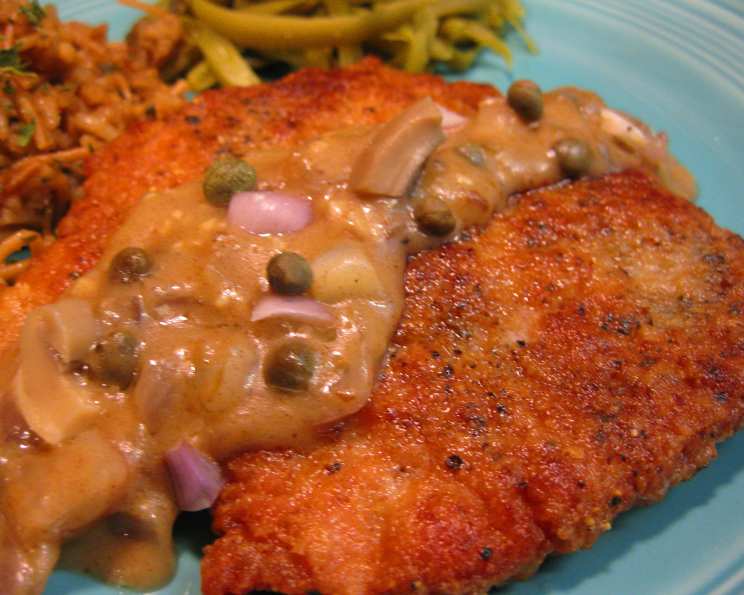
Alligator Scallopini With Caper Mushroom Sauce
I remember the first time I tasted alligator. I was a wide-eyed culinary student on a field trip to the Louisiana bayou. The earthy, almost sweet taste of the gator, combined with the tang of the capers and the richness of the mushroom sauce, was a revelation. It was a dish that managed to be both comforting and exotic, a true testament to the versatility of Southern cuisine. This recipe, a simplified yet equally delicious version, brings those bayou flavors straight to your kitchen.
Recipe Overview
- Prep Time: 15 minutes
- Cook Time: 15 minutes
- Total Time: 30 minutes
- Servings: 4
- Dietary Type: Varies, see substitutions.
Ingredients
- 1-2 tablespoons butter
- 1-2 tablespoons olive oil
- 1 lb alligator fillets or 1 lb center-cut pork loin, thinly sliced and pounded
- 2 tablespoons shallots, finely chopped
- 2 tablespoons capers
- 1/4 cup white wine
- 1 (10 ounce) can cream of mushroom soup
- 1/2 cup flour
- 1/2 teaspoon season salt
- 1/2 teaspoon garlic powder
Equipment Needed
- Meat mallet
- Plastic wrap
- Large skillet
- Shallow dish for dredging
Instructions
- Begin by preparing the alligator (or pork). Slice the meat into approximately 1/2 inch thick pieces.
- Place the slices between two sheets of plastic wrap. Use a meat mallet to pound the meat until it’s thin and even, about 1/4 inch thick. This tenderizes the meat and helps it cook quickly.
- In a shallow dish, combine the flour, season salt, and garlic powder. This is your seasoned flour for dredging.
- Lightly dredge each piece of alligator (or pork) in the seasoned flour mixture, ensuring it’s evenly coated. Shake off any excess flour to prevent the sauce from becoming too thick.
- Heat the butter and olive oil in a large skillet over medium-high heat. The combination of butter and oil adds richness and prevents the butter from burning.
- Carefully add the dredged alligator (or pork) to the hot skillet, being careful not to overcrowd the pan. Sauté quickly, about 1-2 minutes per side, until the meat is lightly browned and cooked through. Alligator should be cooked to an internal temperature of 160°F (71°C), and pork to 145°F (63°C).
- Remove the cooked meat from the skillet and set aside, keeping it warm. You can place it in a low oven (around 200°F or 93°C) or cover it loosely with foil.
- Add the finely chopped shallots to the same skillet and sauté for about 2 minutes, or until they are softened and fragrant.
- Pour the white wine into the skillet. Use a wooden spoon or spatula to deglaze the pan, scraping up any browned bits from the bottom. This adds a depth of flavor to the sauce.
- Stir in the cream of mushroom soup and capers. Mix well to combine.
- Reduce the heat to low and simmer the sauce, stirring occasionally, until it is smooth and thickened, about 5-7 minutes. If the sauce becomes too thick, add a splash of white wine or water to thin it out.
- Spoon the caper mushroom sauce generously over the alligator (or pork) fillets. Serve immediately.
Expert Tips & Tricks
- For a richer flavor, use brown butter instead of regular butter. Heat the butter in the skillet until it turns a nutty brown color before adding the olive oil.
- If you want to add a bit of heat, include a pinch of red pepper flakes to the flour mixture or a dash of hot sauce to the sauce.
- If you don’t have cream of mushroom soup on hand, you can make a similar sauce by sautéing sliced mushrooms with shallots and deglazing with white wine. Then, add cream or half-and-half and simmer until thickened.
- To prevent the meat from drying out, avoid overcooking. Alligator and pork are best when they are slightly pink in the center.
- Make ahead tip: The sauce can be made a day in advance and stored in the refrigerator. Simply reheat it before serving.
Serving & Storage Suggestions
Serve the Alligator Scallopini with Caper Mushroom Sauce immediately while it’s hot. It pairs wonderfully with creamy mashed potatoes, rice pilaf, or steamed green beans. Garnish with a sprinkle of fresh parsley or a lemon wedge for added brightness.
Leftovers should be stored in an airtight container in the refrigerator. They will keep for up to 3 days. To reheat, gently warm in a skillet over low heat or microwave until heated through. The sauce may thicken upon refrigeration, so you may need to add a little water or broth to thin it out when reheating. Freezing is not recommended, as the sauce may separate and become grainy upon thawing.
Nutritional Information
(Estimated values, will vary based on specific ingredients)
| Nutrient | Amount per Serving | % Daily Value |
|---|---|---|
| Calories | 350 kcal | 18% |
| Total Fat | 20g | 31% |
| Saturated Fat | 8g | 40% |
| Cholesterol | 80mg | 27% |
| Sodium | 800mg | 33% |
| Total Carbohydrate | 20g | 7% |
| Dietary Fiber | 2g | 8% |
| Sugars | 3g | — |
| Protein | 25g | 50% |
Variations & Substitutions
- Gluten-Free: Use a gluten-free flour blend for dredging the meat. Ensure that the cream of mushroom soup is also gluten-free, or substitute with a homemade mushroom sauce using gluten-free thickener.
- Dairy-Free: Substitute the butter with olive oil or a dairy-free butter alternative. Use a dairy-free cream of mushroom soup, or make a homemade sauce using a plant-based milk like almond or cashew milk.
- Vegetarian: While this recipe traditionally uses alligator or pork, you can substitute it with thick slices of portobello mushrooms. Marinate the mushrooms in a mixture of olive oil, garlic, and herbs before dredging and sautéing.
- Regional Adaptation: If you are in Louisiana, consider using Creole seasoning instead of season salt for a more authentic flavor. You could also add a splash of Tabasco sauce to the sauce for a spicy kick.
- Seasonal Adaptation: In the fall, you can add a few chopped wild mushrooms to the sauce for an earthy flavor. In the spring, use fresh asparagus or green peas as a garnish.
FAQs (Frequently Asked Questions)
Q: Can I use other types of meat besides alligator or pork?
A: Yes, chicken breast or veal scallopini would also work well in this recipe. Adjust cooking times accordingly to ensure the meat is cooked through.
Q: What if I don’t have white wine?
A: You can substitute the white wine with chicken broth or vegetable broth. The wine adds acidity and flavor, but the broth will still help deglaze the pan.
Q: Can I make the cream of mushroom soup from scratch?
A: Absolutely! There are many recipes available online for homemade cream of mushroom soup. Using a homemade version will elevate the flavor of the dish even further.
Q: The sauce is too thick. How can I thin it out?
A: Add a splash of white wine, chicken broth, or water to the sauce while it’s simmering. Stir well to incorporate the liquid and adjust the consistency.
Q: How do I know when the alligator is cooked properly?
A: Alligator should be cooked to an internal temperature of 160°F (71°C). The meat should be opaque and slightly firm to the touch. Avoid overcooking, as it can become tough.
Final Thoughts
This Alligator Scallopini with Caper Mushroom Sauce is more than just a meal; it’s an invitation to explore the rich and diverse flavors of Southern cuisine. Don’t be intimidated by the alligator; its mild flavor makes it a surprisingly versatile ingredient. Whether you’re a seasoned cook or a kitchen novice, I encourage you to give this recipe a try. Share your creations and experiences – I’d love to hear your thoughts and any unique twists you might add! Pair this dish with a crisp Sauvignon Blanc or a light-bodied Pinot Noir for a truly memorable dining experience.