
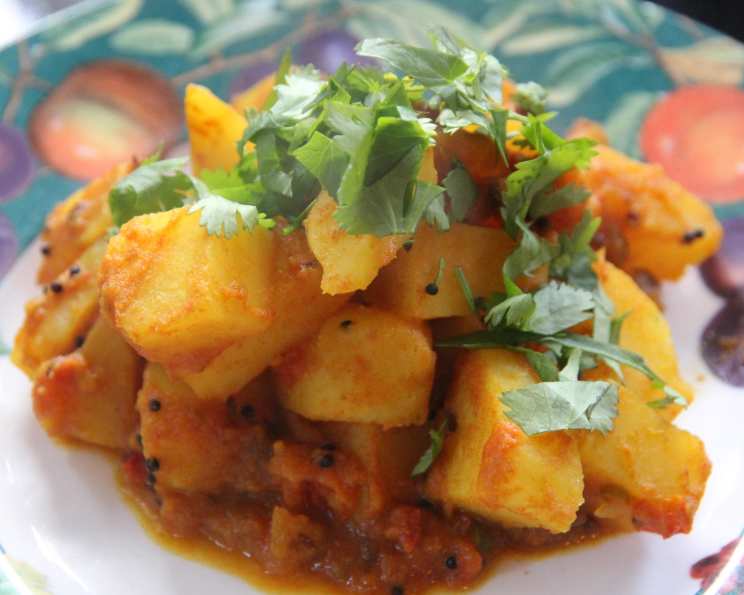
Aloo Tamatar Sabzi: A Taste of Home
The aroma of spices sizzling in hot oil always transports me back to my grandmother’s kitchen. I can almost see her now, deftly tossing potatoes and tomatoes into a bubbling pot, the air thick with the promise of a comforting, flavorful meal. Aloo Tamatar Sabzi, a simple yet deeply satisfying dish, was a staple at her table, a testament to the magic that can be created with humble ingredients and a generous heart. Every spoonful was like a warm hug, a reminder of family, tradition, and the simple joys of life.
Recipe Overview
- Prep Time: 15 minutes
- Cook Time: 25 minutes
- Total Time: 40 minutes
- Servings: 4
- Dietary Type: Vegan
Ingredients
- 1 tablespoon high-heat vegetable oil
- ½ teaspoon cumin seed
- ½ teaspoon mustard seeds
- ½ teaspoon fenugreek seeds (optional)
- 1 cup finely chopped tomatoes or ½ cup tomato sauce
- ½ teaspoon ground turmeric
- 3 medium potatoes, boiled, peeled, and cut into 1-inch dice
- 1 teaspoon salt
- 2 teaspoons ground coriander
- ¼ teaspoon cayenne pepper (optional)
- 2 cups water
- 1 tablespoon fresh cilantro, roughly chopped (optional)
Equipment Needed
- Heavy saucepan
- Measuring spoons and cups
- Cutting board
- Knife
Instructions
- Heat the vegetable oil in a heavy saucepan over medium heat. It’s crucial to use a high-heat oil here, as the initial spices need to bloom quickly without burning.
- Add the cumin seeds, mustard seeds, and fenugreek seeds (if using). Listen carefully; you want to hear them splutter and pop in the hot oil. This process, which takes about 30 seconds to 1 minute, releases their essential oils and infuses the dish with their characteristic flavors.
- Add the finely chopped tomatoes (or tomato sauce) and cook for about 2 minutes, until the tomatoes soften and begin to break down. This step helps to create a rich, flavorful base for the sabzi. If using tomato sauce, adjust the cooking time to prevent it from scorching.
- Stir in the ground turmeric and the diced potatoes. Ensure the potatoes are evenly coated with the turmeric and tomato mixture.
- Add the salt, ground coriander, and cayenne pepper (if using). Mix everything thoroughly to combine the spices and potatoes.
- Pour in the water, cover the saucepan, and reduce the heat to low. Let the sabzi simmer gently for about 10 minutes. Simmering allows the flavors to meld together and the potatoes to absorb the spices. Check occasionally to make sure the liquid isn’t evaporating too quickly; add a splash more water if needed.
- Once the sabzi has simmered, transfer it to a serving dish.
- Garnish with fresh cilantro, if desired, for a pop of color and fresh flavor.
Expert Tips & Tricks
- Boosting the Flavor: To deepen the flavor profile, consider adding a small pinch of asafoetida (hing) to the hot oil along with the other seeds. Asafoetida has a pungent aroma that mellows out during cooking, adding a savory, umami note.
- Potato Perfection: While the recipe calls for boiled potatoes, roasting them before adding them to the sabzi can add another layer of flavor. Toss the diced potatoes with a little oil and salt and roast at 400°F (200°C) until lightly browned before adding them to the tomato mixture.
- Tomato Time Saver: In a pinch, you can use canned diced tomatoes instead of fresh. Just be sure to drain them well before adding them to the pan.
- Spice Level Adjustment: If you’re sensitive to spice, omit the cayenne pepper altogether. You can also add a pinch of red pepper flakes at the end for a touch of heat, allowing you to control the intensity.
- Make-Ahead Magic: Aloo Tamatar Sabzi is a great make-ahead dish. The flavors actually improve as it sits, so feel free to prepare it a day or two in advance and store it in the refrigerator. Reheat gently on the stovetop before serving.
Serving & Storage Suggestions
Aloo Tamatar Sabzi is best served hot, alongside freshly made roti, paratha, or naan. It’s also delicious served over a bed of steamed rice. A dollop of plain yogurt or raita (yogurt with cucumber and mint) can provide a cooling contrast to the warmth of the spices.
Leftovers can be stored in an airtight container in the refrigerator for up to 3 days. To reheat, simply warm the sabzi in a saucepan over medium heat, adding a splash of water if needed to prevent it from drying out. You can also microwave it, but be sure to cover it to prevent splattering. Freezing is not recommended, as the potatoes can become mushy upon thawing. Do not leave the sabzi at room temperature for more than 2 hours to prevent bacterial growth.
Nutritional Information
| Nutrient | Amount per Serving | % Daily Value |
|---|---|---|
| Calories | 167 kcal | N/A |
| Calories from Fat | N/A | N/A |
| Total Fat | 4g | 6% |
| Saturated Fat | 0.5g | 2% |
| Cholesterol | 0mg | 0% |
| Sodium | 597.6mg | 24% |
| Total Carbohydrate | 30.5g | 10% |
| Dietary Fiber | 4.5g | 18% |
| Sugars | 2.5g | N/A |
| Protein | 3.9g | N/A |
Note: Percent Daily Values are based on a 2,000 calorie diet. N/A indicates data not available.
Variations & Substitutions
- Gluten-Free: This recipe is naturally gluten-free, as it doesn’t contain any wheat-based ingredients.
- Spice It Up: For a spicier version, add a chopped green chili along with the other spices.
- Seasonal Twist: In the winter, you can add other root vegetables like carrots or turnips to the sabzi for extra heartiness.
- Regional Adaptation: Try adding a pinch of garam masala at the end of cooking for a more complex flavor profile, similar to some North Indian variations.
- Creamy Version: For a richer, creamier texture, stir in a tablespoon of cashew cream or coconut milk at the end of cooking.
- Greens Addition: Stir in a handful of chopped spinach or kale during the last few minutes of cooking for added nutrition and flavor.
FAQs (Frequently Asked Questions)
Q: Can I use pre-boiled potatoes to save time?
A: Yes, using pre-boiled potatoes is perfectly fine and can significantly reduce the preparation time. Just make sure they are not overcooked, as they will become mushy during the simmering process.
Q: What if I don’t have fenugreek seeds?
A: Fenugreek seeds add a unique, slightly bitter flavor, but they are optional. If you don’t have them on hand, you can simply omit them without significantly altering the overall taste of the dish.
Q: Can I use tomato paste instead of chopped tomatoes or tomato sauce?
A: Yes, you can use about 2 tablespoons of tomato paste diluted with a little water as a substitute. Just be sure to cook the tomato paste for a minute or two to remove its raw flavor before adding the other ingredients.
Q: How can I prevent the potatoes from sticking to the bottom of the pan?
A: Using a heavy-bottomed saucepan and stirring the sabzi occasionally will help prevent sticking. Also, make sure the heat is not too high during the simmering process.
Q: Is it necessary to peel the potatoes?
A: Peeling the potatoes is a matter of personal preference. You can leave the skins on for added texture and nutrients, but make sure to scrub them thoroughly before boiling.
Final Thoughts
Aloo Tamatar Sabzi is more than just a recipe; it’s a taste of tradition, a symbol of home, and a celebration of simple ingredients transformed into something extraordinary. I encourage you to try this recipe and experience the magic for yourself. Feel free to adjust the spices to your liking and add your own personal touch. And don’t forget to share your creations and feedback – I’d love to hear how it turns out! Perhaps serve it alongside a cool cucumber raita and some warm naan bread for a complete and satisfying meal.