
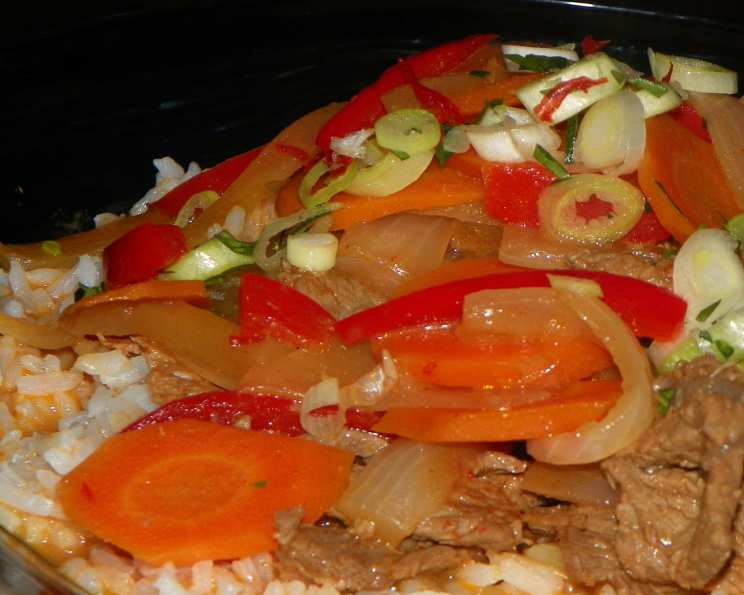
Mastering the Art of Thai Curry: An American Kitchen Classic
The first time I tasted a truly authentic Thai curry, it wasn’t in a fancy restaurant, but in a small, bustling market stall in Bangkok. The air was thick with fragrant spices, and the vibrant colors of the ingredients were captivating. I remember the explosion of flavors – the heat of the chilies, the sweetness of coconut milk, and the earthy notes of galangal – a symphony that danced on my tongue. It was a revelation, and it sparked a lifelong love affair with Thai cuisine. Now, I’m thrilled to share this simplified, accessible version of a classic Thai curry, perfect for any American kitchen.
Recipe Overview
- Prep Time: 35 minutes
- Cook Time: 15 minutes
- Total Time: 50 minutes
- Servings: 4
- Dietary Type: Adaptable (see Variations)
Ingredients
Curry Base (choose one curry paste)
- 1 (14 ounce) can coconut milk
- ¼ cup yellow curry paste OR ¼ cup panang curry paste
- 1 cup low sodium chicken broth OR 1 cup vegetable broth
Aromatics (choose up to three)
- 6 whole fresh lime leaves (fresh or thawed)
- 1 lime, zest of
- ½ inch fresh ginger OR ½ inch fresh galangal, sliced thinly
- 3 stalks lemongrass (trim off spiky top and the base, remove discard outer layers, bruise stalks lightly crushing with a utensil)
Protein (choose up to 3 totaling 1 lb)
- 1 lb firm white fish, cut into bite-size pieces (sea bass or halibut) OR 1 lb squid, tubes cut into ½ inch rings, tentacles cut into bite-size pieces
Vegetables and Fruit I (choose 2-4 totaling 3 cups)
- 3 cups mushrooms, stemmed, cut into slices OR 3 cups fresh baby corn, cut into bite-size pieces
Vegetables and Fruit II
- 3 cups pineapple, cut into bite-size pieces OR 3 cups bok choy, cut into 2 inch pieces
Simmer
- 2 tablespoons light brown sugar OR 2 tablespoons light palm sugar, more as needed
- 1 teaspoon Thai fish sauce OR 1 teaspoon vegan fish sauce, more as needed
Stir-in (choose one)
- ¾ cup fresh basil leaf, whole (Italian or Thai)
- ¼ cup fresh cilantro leaves, minced
- 1 tablespoon fresh lime leaves, sliced (fresh or thawed)
Garnishes
- Fresh cilantro (garnish)
- Fresh red chili pepper, cut into thin rings (garnish)
- Coconut milk, small drizzle (garnish)
- Fresh basil leaf, whole (garnish)
- Lime wedge, squeezed (garnish)
- Cucumber, strips wedges (garnish)
Equipment Needed
- 3-4 qt saucepan or wok
- Whisk
- Cutting board
- Knife
- Measuring cups and spoons
Instructions
-
Start by reading through the entire recipe. This ensures you understand the process and can prep all your ingredients efficiently. Choose your curry paste, aromatics, proteins, and vegetables before you begin cooking.
-
Prepare the Coconut Milk: Shake the can of coconut milk well or stir it thoroughly. This ensures a consistent thickness throughout, as the fat often separates and solidifies at the top.
-
Reduce the Coconut Milk: In a 3-4 qt saucepan or wok over medium heat, simmer ½ cup of the coconut milk, stirring occasionally until it is reduced by half (about 3-5 minutes). The milk will thicken, become shiny, and may or may not separate – both outcomes are perfectly fine. This step concentrates the coconut flavor and creates a rich base for the curry.
-
Add the Curry Paste: Add your choice of curry paste (either yellow or panang) to the saucepan. Whisk the paste into the thickened coconut milk until well combined. Continue to cook, whisking constantly, for 1 minute. This process blooms the spices in the curry paste, releasing their full aroma and flavor.
-
Incorporate Broth and Remaining Coconut Milk: Whisk in the broth (either chicken or vegetable) and the remaining coconut milk. Bring the mixture to a simmer over medium-high heat.
-
Add Aromatics, Protein and Vegetables: Add your choice of aromatics, proteins, vegetables, and fruits, as well as the brown sugar (or palm sugar) and fish sauce (or vegan fish sauce) to the simmering sauce. Keep in mind that some ingredients take longer to cook than others. Therefore, you’ll add them in stages:
- First, add your choice of chicken, pork, carrots, onions, eggplant, green beans, Chinese long beans, and Kabocha squash.
- Two minutes later, add your choices of beef, large shrimp, tofu, asparagus, mushrooms, baby corn, green papaya, cabbage, bell peppers, and sugar snap peas.
- One minute later, add your choices of scallops and firm white fish.
- One minute later, add your choice of squid, cherry tomatoes, bamboo shoots, snow peas, pineapple, and bok choy.
-
Cook and Check for Doneness: Cook for one to two minutes more, checking for doneness. The meat, chicken, or seafood should be cooked through, and the vegetables should be tender-crisp. Be careful not to overcook the seafood, as it can become rubbery.
-
Season and Stir-in: Remove the curry from the heat and season to taste with more brown sugar or fish sauce, if needed. Add a stir-in of your choice: fresh basil leaf, minced cilantro, or sliced lime leaves.
-
Serve: Transfer the curry to a serving bowl or serve it directly from the pot. Remove the larger aromatics (such as lemongrass stalks or lime leaves) before serving or instruct your guests to eat around them. Garnish with your choice of fresh cilantro, sliced red chili pepper, a drizzle of coconut milk, fresh basil leaf, a squeezed lime wedge, or cucumber strips or wedges. Serve hot, with or without cooked rice.
Expert Tips & Tricks
- Bruising the lemongrass really helps to release its aromatic oils. Use the side of your knife or a rolling pin to lightly crush the stalks before adding them to the curry.
- If you can’t find fresh lime leaves, frozen lime leaves are a great substitute. Just be sure to thaw them before using.
- For a creamier curry, use full-fat coconut milk. For a lighter curry, use light coconut milk.
- Adjust the amount of curry paste to your taste. If you prefer a milder curry, start with less paste and add more to taste.
- Don’t be afraid to experiment with different vegetables and proteins. This recipe is very flexible, so feel free to use what you have on hand.
- If the curry is too thick, add a little more broth to thin it out.
- If the curry is too thin, simmer it for a few more minutes to reduce the liquid.
Serving & Storage Suggestions
Serve the curry hot, garnished with your choice of fresh herbs and a squeeze of lime. It can be eaten as is or served with hot cooked rice, quinoa, or even cauliflower rice for a lower-carb option.
Leftovers can be stored in an airtight container in the refrigerator for up to 3 days. To reheat, gently warm on the stovetop over medium-low heat or in the microwave. Avoid overheating, as this can cause the coconut milk to separate. Freezing is not recommended, as the texture of the vegetables and coconut milk may change.
Nutritional Information
Note: Nutritional information is an estimate and may vary based on specific ingredients and portion sizes.
| Nutrient | Amount per Serving | % Daily Value |
|---|---|---|
| Calories | 704.5 kcal | – |
| Calories from Fat | 312 g | 44% |
| Total Fat | 34.7 g | 53% |
| Saturated Fat | 21.1 g | 105% |
| Cholesterol | 85 mg | 28% |
| Sodium | 330.8 mg | 13% |
| Total Carbohydrate | 75.2 g | 25% |
| Dietary Fiber | 4.4 g | 17% |
| Sugars | 66.4 g | – |
| Protein | 25.4 g | 50% |
Variations & Substitutions
- Vegan: Substitute the fish sauce with vegan fish sauce or soy sauce. Ensure your curry paste is vegan, as some contain shrimp paste.
- Gluten-Free: This recipe is naturally gluten-free, but double-check the label of your curry paste to ensure it doesn’t contain any gluten-containing ingredients.
- Spicier: Add a chopped Thai chili or a pinch of red pepper flakes to the curry paste when cooking for extra heat.
- Sweeter: Increase the amount of brown sugar or palm sugar to taste.
- Different Vegetables: Feel free to use other vegetables, such as bell peppers, broccoli, or snap peas.
- Different Proteins: Chicken, beef, tofu, or shrimp can be substituted for the fish or squid.
FAQs (Frequently Asked Questions)
Q: Can I use a different type of curry paste?
A: Yes! Red, green, or massaman curry paste can all be used in this recipe. The flavor will vary depending on the paste you choose.
Q: Where can I find galangal and lemongrass?
A: These ingredients are often found in the produce section of Asian markets. Some well-stocked supermarkets may also carry them. If you can’t find them fresh, you can use dried galangal and lemongrass, but the flavor will be less intense.
Q: Can I make this curry ahead of time?
A: Yes, you can make the curry a day or two in advance. Store it in an airtight container in the refrigerator. Reheat gently on the stovetop or in the microwave before serving.
Q: What if I don’t have coconut milk?
A: While coconut milk is essential for the authentic flavor of Thai curry, you can substitute it with heavy cream in a pinch. However, the flavor will be different.
Q: How do I know when the seafood is cooked through?
A: Seafood is cooked through when it is opaque and flakes easily with a fork. Be careful not to overcook it, as it can become rubbery.
Final Thoughts
This American Kitchen Classic Basic Thai Curry is more than just a recipe; it’s an invitation to explore the vibrant flavors of Thailand in the comfort of your own home. Don’t be afraid to experiment with different ingredients and find your perfect combination. I encourage you to try this recipe, share it with your friends and family, and leave a comment below with your own creative variations. For a complete meal, pair this curry with a refreshing Thai iced tea or a crisp Sauvignon Blanc. Enjoy!