
Sparkling Clean: The All-Natural Antibacterial Bathroom Cleanser
I remember the days of holding my breath while scrubbing the bathroom, overwhelmed by the harsh chemical smells of commercial cleaners. My grandmother, a wise woman with a knack for natural remedies, always told me there was a better way. She’d mix up simple concoctions in her kitchen, using ingredients I could actually pronounce, leaving her house smelling fresh and clean without the lingering chemical assault. This recipe reminds me of those simpler times and brings a sense of calm knowing I’m cleaning my home without harming the environment.
Recipe Overview
- Prep Time: 5 minutes
- Total Time: 5 minutes
- Yields: 1 cup
- Dietary Type: Vegan, Cruelty-Free
Ingredients
- 1 cup baking soda
- 2 tablespoons liquid soap (or more, as needed)
- 2 teaspoons tea tree essential oil
- 1 teaspoon peppermint oil
- 1 tablespoon white vinegar (optional)
Equipment Needed
- Mixing bowl with a tight-fitting lid
- Measuring cups and spoons
- Spoon or spatula for mixing
Instructions
-
Begin by measuring out 1 cup of baking soda into your mixing bowl. The baking soda acts as a gentle abrasive, helping to scrub away grime and build-up without scratching surfaces.
-
Next, add approximately 2 tablespoons of liquid soap. You can use your favorite dishwashing soap or a natural liquid soap like liquid Castile soap. The soap helps to lift dirt and grease, making it easier to wipe away.
-
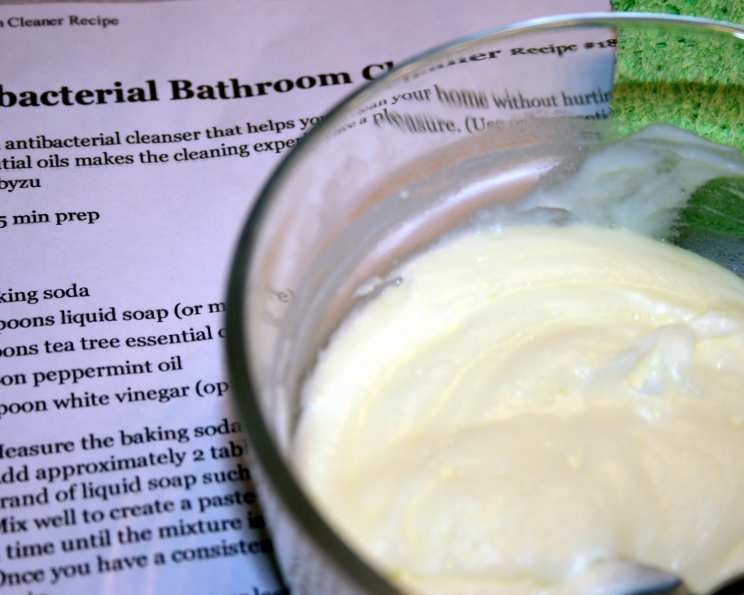
Mix the baking soda and liquid soap thoroughly. The goal is to create a paste-like consistency that’s pliable but not soggy. If the mixture is too dry, add more liquid soap a little at a time until you achieve the desired consistency. Remember, you want a paste you can easily scoop and spread, not a liquid that runs right off your sponge.
-
Once you’re happy with the consistency, it’s time to add the essential oils. Add 2 teaspoons of tea tree essential oil and 1 teaspoon of peppermint oil. Tea tree oil is a powerful natural antibacterial agent, providing an extra layer of cleaning power. Peppermint oil not only adds a refreshing scent, but also has mild antiseptic properties and can help deter pests.
-
Mix the essential oils into the paste until they are evenly distributed. The oils will not only contribute to the cleaning power but also leave your bathroom smelling fresh and clean.
-
For an extra boost of cleaning power, add 1 tablespoon of white vinegar (optional). Be prepared for a slight fizzing reaction when the vinegar comes into contact with the baking soda. This is normal and helps to loosen stubborn grime.
-
Mix well one last time to incorporate the vinegar into the cleanser.
-
To use the cleanser, scoop out a small amount onto a sponge or cleaning cloth. Gently scrub the surfaces of your tub, shower, and sink. A little of this cleanser goes a long way.
-
Rinse the surfaces thoroughly with water after scrubbing.
-
Store any leftover cleanser in an airtight container, like the bowl you mixed it in with a tight-fitting lid. This will keep it fresh and prevent it from drying out.
Expert Tips & Tricks
- Adjust the Consistency: The key to a good bathroom cleanser is the right consistency. If your paste is too thick, add a touch more liquid soap. If it’s too thin, add a little more baking soda. Experiment until you find a texture that you like working with.
- Pre-Treat Stubborn Stains: For tough stains, apply the cleanser to the affected area and let it sit for 10-15 minutes before scrubbing. This allows the cleanser to penetrate the stain and break it down.
- Essential Oil Blends: Feel free to experiment with different essential oil combinations. Lemon, eucalyptus, or lavender are all great options for adding a pleasant scent and boosting cleaning power.
- Vinegar Caution: While vinegar is a fantastic natural cleaner, avoid using it on certain surfaces like marble or granite, as it can damage them.
- Prevent Mold: To prevent mold and mildew growth in your bathroom, ensure adequate ventilation by opening a window or running the exhaust fan during and after showering.
- Test Patch: Before applying the cleanser to a large area, test it on a small, inconspicuous spot to ensure it doesn’t damage the surface.
Serving & Storage Suggestions
This antibacterial bathroom cleanser isn’t something you “serve” in the traditional sense, but rather, it “serves” to clean and freshen your bathroom! Store the leftover cleanser in an airtight container in a cool, dry place. It should last for several months. If the cleanser dries out over time, simply add a little water or liquid soap to rehydrate it.
Nutritional Information
While this recipe isn’t for consumption, understanding its environmental impact is key. Here’s a comparison to traditional chemical cleaners:
| Attribute | Natural Cleanser | Conventional Cleaners |
|---|---|---|
| Ingredients | Biodegradable | Often Synthetic |
| Environmental Impact | Low | High |
| Toxicity | Low | Moderate to High |
| Air Quality | Improves | Degrades |
| Water Quality | Improves | Degrades |
Variations & Substitutions
- Scent Boost: Enhance the scent by adding citrus peels (like lemon or orange) to the mixture. Just be sure to remove them after a few days to prevent spoilage.
- Borax Addition: For extra cleaning power, add a tablespoon of borax to the mixture. However, be mindful that borax can be irritating to some people’s skin, so wear gloves when using it.
- Glycerin for Shine: A teaspoon of vegetable glycerin can be added for extra shine, particularly on shower doors and mirrors.
- Use Castile Soap: For an all-natural option, use Castile soap as your liquid soap base. Castile soap is made from plant oils and is biodegradable.
FAQs (Frequently Asked Questions)
Q: Is this cleanser safe for all bathroom surfaces?
A: While generally safe, it’s always best to test on a small, inconspicuous area first, especially on delicate surfaces like marble or natural stone. Avoid using vinegar on these types of surfaces.
Q: How long does this cleanser last?
A: When stored in an airtight container, this cleanser should last for several months. If it dries out, simply add a little water or liquid soap to rehydrate it.
Q: Can I use different essential oils?
A: Absolutely! Feel free to experiment with your favorite essential oil combinations. Lemon, eucalyptus, lavender, and tea tree are all great options.
Q: Does the vinegar smell linger?
A: The vinegar smell dissipates quickly after rinsing. The essential oils will leave a pleasant, fresh scent.
Q: Can I use this cleanser in the toilet bowl?
A: Yes, you can use this cleanser in the toilet bowl. Simply apply it to the bowl, let it sit for a few minutes, scrub, and flush.
Final Thoughts
Embrace the power of natural cleaning with this simple yet effective antibacterial bathroom cleanser. It’s a small step towards a healthier home and a greener planet. Experiment with different essential oil combinations to create your signature scent, and enjoy the peace of mind that comes with using safe, natural ingredients. Share your experiences and feedback, and let’s create a cleaner, healthier world, one bathroom at a time!