
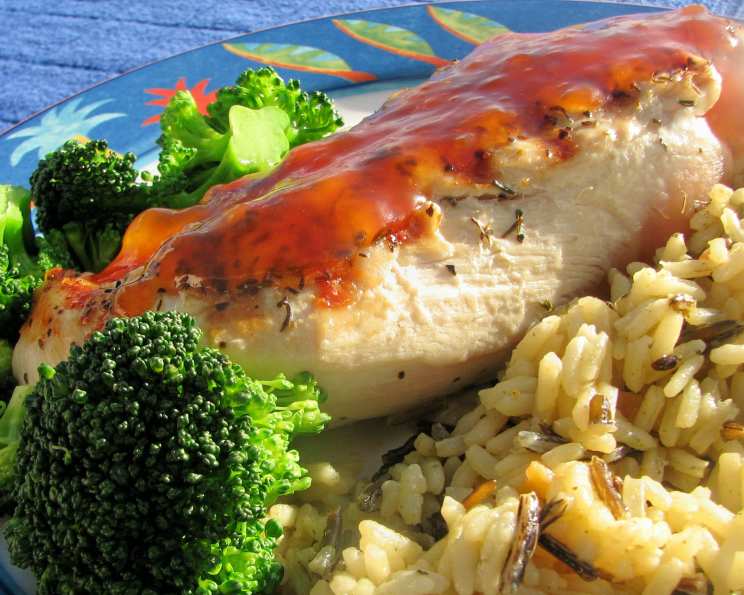
Apricot Glazed Chicken Breasts: A Weeknight Delight
I can still remember the first time I made these apricot-glazed chicken breasts. It was a Tuesday night, I was a newlywed, and my culinary repertoire consisted mainly of spaghetti and scrambled eggs. The sticky-sweet aroma filled our tiny apartment, a welcome change from the usual scent of takeout. That simple dish, with its vibrant glaze and tender chicken, felt like a small victory, a sign that maybe, just maybe, I could actually cook! This recipe remains a favorite for its simplicity and comforting flavor, a perfect weeknight solution that always delivers.
Recipe Overview
- Prep Time: 15 minutes
- Cook Time: 15 minutes
- Total Time: 30 minutes
- Servings: 4
- Dietary Type: Gluten-Free
Ingredients
- Vegetable oil cooking spray
- 3 tablespoons apricot preserves
- 1 tablespoon ketchup
- 1 teaspoon white balsamic vinegar or 1 teaspoon rice wine vinegar
- 2-3 drops Tabasco sauce (optional)
- 4 (5-6 ounce) boneless skinless chicken breast halves, trimmed
- ½ – 1 teaspoon crumbled dried thyme
- Salt and pepper
Equipment Needed
- Broiler pan
- Aluminum foil
- Small cup or bowl
Instructions
- Preheat the broiler. Position the oven rack so that the chicken will be 4-6 inches from the heat source.
- Line the broiler pan with aluminum foil. This is absolutely crucial for easy cleanup – trust me!
- Spray the broiler-pan rack with nonstick vegetable cooking spray. This prevents the chicken from sticking and tearing.
- In a small cup or bowl, stir together the apricot preserves, ketchup, and vinegar (either white balsamic or rice wine vinegar will work beautifully). If you’re feeling a little daring, add 2-3 drops of Tabasco sauce. It won’t make the dish spicy, but it will balance the sweetness of the glaze with a subtle kick.
- Season the chicken breasts generously with the crumbled dried thyme, salt, and pepper. Don’t be shy with the seasonings; this is your opportunity to build flavor.
- Arrange the chicken breasts, skin side down, on the prepared broiler pan. Broil for 5 minutes. This initial broiling sears the bottom of the chicken, locking in juices and creating a nice texture.
- Turn the chicken breasts and broil for an additional 3 minutes. Remember that cooking times can vary depending on the thickness of your chicken breasts. If they are particularly large, you may need to adjust the cooking time accordingly.
- Brush each chicken breast with some of the apricot glaze. Broil for 1 to 2 minutes, or until the glaze is bubbly and caramelized and the chicken is no longer pink in the thickest part. Use a meat thermometer to ensure the internal temperature reaches 165°F (74°C).
- Turn the chicken breasts (they should now be skin side up) and brush on the remaining glaze. Broil for an additional minute to finish the glaze and create a beautiful, glossy appearance. Be careful not to burn the glaze!
- Remove the chicken breasts from the broiler and serve immediately.
Expert Tips & Tricks
- Pounding the Chicken: For even cooking, especially with thicker chicken breasts, consider pounding them to an even thickness before seasoning. Place the chicken between two sheets of plastic wrap and gently pound with a meat mallet or rolling pin.
- Glaze Consistency: If your apricot preserves are very thick, you can microwave them for a few seconds to make them easier to stir and brush.
- Broiler Awareness: Broilers can be unpredictable! Keep a close eye on the chicken to prevent burning, especially during the glazing stage. If the glaze starts to darken too quickly, lower the oven rack slightly or reduce the broiling time.
- Make-Ahead Prep: You can prepare the apricot glaze ahead of time and store it in an airtight container in the refrigerator for up to 3 days. You can also season the chicken in advance and store it in the fridge for up to 24 hours before cooking.
Serving & Storage Suggestions
Serve these apricot-glazed chicken breasts hot off the broiler for the best flavor and texture. They pair beautifully with steamed rice, quinoa, or couscous. A side of roasted asparagus, green beans, or a simple salad complements the sweetness of the glaze perfectly.
Leftover chicken can be stored in an airtight container in the refrigerator for up to 3 days. To reheat, gently warm in the microwave or oven until heated through. Be careful not to overheat, as the chicken can become dry. The glaze might soften upon reheating, but the flavor will still be delicious. Freezing is not recommended, as the texture of the chicken may change.
Nutritional Information
| Nutrient | Amount per Serving | % Daily Value |
|---|---|---|
| Calories | 196.5 kcal | N/A |
| Calories from Fat | 16 g | 8% |
| Total Fat | 1.8 g | 2% |
| Saturated Fat | 0.5 g | 2% |
| Cholesterol | 82.2 mg | 27% |
| Sodium | 139.2 mg | 5% |
| Total Carbohydrate | 10.7 g | 3% |
| Dietary Fiber | 0.1 g | 0% |
| Sugars | 6.4 g | N/A |
| Protein | 32.9 g | 65% |
Note: Nutritional information is an estimate and may vary based on specific ingredients and portion sizes.
Variations & Substitutions
- Grilled Apricot Chicken: As the original recipe suggests, this recipe is fantastic on the grill. Marinate the chicken in the glaze for 30 minutes, then grill over medium heat until cooked through, basting with glaze during the last few minutes.
- Different Preserves: Experiment with different fruit preserves like peach, plum, or orange marmalade. Each will impart a unique flavor to the glaze.
- Honey-Garlic Glaze: For a savory twist, substitute honey for the apricot preserves and add minced garlic and soy sauce to the glaze.
- Spice it Up: Add a pinch of red pepper flakes to the glaze for a more pronounced kick.
FAQs (Frequently Asked Questions)
Q: Can I use frozen chicken breasts?
A: Yes, but be sure to thaw them completely before cooking. Pat them dry with paper towels to remove excess moisture for better browning.
Q: What if I don’t have white balsamic vinegar or rice wine vinegar?
A: You can substitute apple cider vinegar or even a squeeze of lemon juice. These will provide a similar tang to balance the sweetness of the glaze.
Q: How do I know when the chicken is cooked through?
A: The best way is to use a meat thermometer. Insert it into the thickest part of the chicken breast; it should read 165°F (74°C).
Q: Can I make this in the oven instead of using the broiler?
A: Yes, bake the chicken at 375°F (190°C) for about 20-25 minutes, or until cooked through. Brush with the glaze during the last 10 minutes of baking.
Q: My glaze is burning! What should I do?
A: Lower the oven rack further from the broiler, or reduce the broiling time. You can also tent the chicken loosely with foil to protect the glaze.
Final Thoughts
This Apricot Glazed Chicken recipe is a testament to the fact that simple ingredients and straightforward techniques can create a truly delicious and satisfying meal. It’s a recipe that’s perfect for busy weeknights, but elegant enough for a casual dinner party. So go ahead, give it a try! I’m confident that this dish will become a regular in your rotation. And don’t hesitate to experiment with different variations and flavor combinations to make it your own. Bon appétit!