
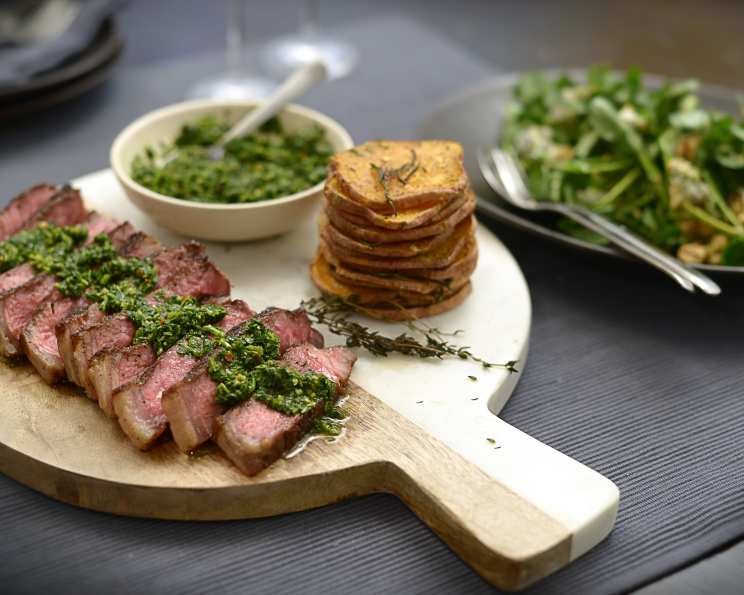
Argentinian Steak With Chimichurri: A Taste of Buenos Aires in Your Kitchen
The first time I truly understood the power of simplicity in cooking was in a small Buenos Aires parrilla. The scent of wood smoke hung heavy in the air, mingling with the savory aroma of grilling meat. I watched, mesmerized, as the asador expertly coaxed perfection from a simple cut of beef, seasoned only with salt and fire, served with a vibrant green sauce I later learned was chimichurri. That meal, more than any other, ignited my passion for Argentinian cuisine, and I’ve been chasing that perfect steak ever since.
Recipe Overview
- Prep Time: 20 minutes
- Cook Time: 10 minutes
- Total Time: 30 minutes
- Servings: 2
- Dietary Type: Gluten-Free
Ingredients
- 1 New York sirloin steak
- 2 tablespoons thyme
- 2 tablespoons rosemary
- Splash olive oil
- Salt and pepper
- 1 garlic clove
- 1 cup parsley
- 1 cup coriander
- ½ cup fresh oregano leaves
- 1 teaspoon dried chili pepper flakes (to taste)
- 1 tablespoon cumin
- 2 tablespoons red wine vinegar (any vinegar can be used)
Equipment Needed
- Food processor
- Ovenproof frying pan (cast iron or steel preferred)
- Oven
- Serrated knife
Instructions
-
Prepare the Chimichurri: In a food processor, combine the garlic, parsley, coriander, oregano, chili flakes, cumin, and vinegar.
-
Blend the Sauce: Slowly add olive oil while blending until you achieve a chunky, pesto-like consistency. Be careful not to over-blend; you want to avoid a paste. The sauce should still have some texture.
-
Season and Rest: Check the seasoning of the chimichurri and let it sit for at least 10 minutes to allow the flavors to meld. Ideally, prepare the chimichurri a day in advance for the best flavor development. This allows the herbs to fully infuse the oil and vinegar.
-
Preheat the Oven: Preheat your oven to 450°F (230°C).
-
Prepare the Pan: Add a generous splash of olive oil to an ovenproof frying pan and place it over very high heat. Cast iron or steel pans are highly recommended for optimal searing and heat retention. Avoid using aluminum, as it doesn’t handle high heat as effectively.
-
Season the Steak: Season the steak generously on both sides with salt and pepper. The thicker the cut of steak, the more seasoning it will require to penetrate and enhance the flavor.
-
Sear the Steak: On your stovetop, sear each side of the steak until a rich, brown crust forms. Then, sear the edge fat strip for approximately 1 to 2 minutes per side and edge to render the fat and add flavor. The key here is patience and high heat – don’t move the steak around too much, let it form that beautiful crust.
-
Oven Finish: Slide the pan with the steak into the preheated oven for an additional 5 minutes. For a 1.5-inch thick steak, this should result in a medium-rare to medium level of doneness. Remember that cooking times can vary depending on your oven and the thickness of the steak.
-
Rest the Steak: Remove the pan from the oven, take the steak out of the pan, cover it loosely with foil, and let it rest for 5 minutes. This allows the juices to redistribute throughout the meat, resulting in a more tender and flavorful steak. Note that the chimichurri is served at room temperature, so it’s ready to go.
-
Slice and Serve: Once the steak has rested, cut it crossways into half-inch slices using a serrated knife for clean cuts. Generously slather the steak with chimichurri or serve the sauce on the side, allowing guests to customize their serving.
Expert Tips & Tricks
- Achieving the Perfect Sear: Ensure your pan is screaming hot before adding the steak. The high heat is crucial for developing a deep, flavorful crust. Pat the steak dry with paper towels before seasoning to remove excess moisture and promote better searing.
- Doneness Levels: Use a meat thermometer for precise doneness. Medium-rare is around 130-135°F, medium is 135-145°F, and medium-well is 145-155°F. Remember that the steak will continue to cook slightly while resting.
- Chimichurri Customization: Adjust the amount of chili flakes in the chimichurri to control the level of heat. For a milder flavor, remove the seeds from the chili flakes. You can also add a touch of smoked paprika for a deeper, more complex flavor.
- Pan Sauce: If you want to elevate the steak further, after removing it from the pan, deglaze the pan with a splash of red wine or beef broth. Scrape up the browned bits from the bottom of the pan to create a simple pan sauce.
Serving & Storage Suggestions
Serve the Argentinian Steak with Chimichurri immediately after slicing. It pairs beautifully with roasted vegetables, such as asparagus or potatoes, or a simple green salad. For a more substantial meal, consider serving it with mashed potatoes or grilled corn on the cob.
Leftover steak should be stored in an airtight container in the refrigerator. It will last for up to 3 days. Reheat gently in a skillet or microwave. Chimichurri can be stored in the refrigerator for up to a week. Its flavor will continue to develop over time. Bring to room temperature before serving.
Nutritional Information
| Nutrient | Amount per Serving | % Daily Value |
|---|---|---|
| Calories | 702.7 kcal | N/A |
| Calories from Fat | 366 g | 52% |
| Total Fat | 40.7 g | 62% |
| Saturated Fat | 16.1 g | 80% |
| Cholesterol | 228 mg | 76% |
| Sodium | 191.4 mg | 7% |
| Total Carbohydrate | 20.1 g | 6% |
| Dietary Fiber | 11.4 g | 45% |
| Sugars | 1.5 g | 5% |
| Protein | 65.5 g | 131% |
Note: Nutritional information is an estimate and may vary based on specific ingredients and preparation methods.
Variations & Substitutions
- Spice it Up: For a spicier chimichurri, add more chili flakes or a finely chopped fresh chili.
- Herb Variations: Experiment with different herbs in the chimichurri. Parsley and oregano are essential, but you can also add cilantro, mint, or even a touch of basil.
- Vinegar Swap: If you don’t have red wine vinegar, you can use white wine vinegar, apple cider vinegar, or even lemon juice.
- Steak Cut: While New York sirloin is excellent, you can also use other cuts like ribeye, flank steak, or skirt steak. Adjust cooking times accordingly.
- Vegetarian Option: Portobello mushrooms can be marinated and grilled, then served with the chimichurri for a vegetarian alternative.
FAQs (Frequently Asked Questions)
Q: Can I make the chimichurri ahead of time?
A: Absolutely! In fact, making it a day ahead of time allows the flavors to meld together beautifully. Store it in the refrigerator in an airtight container.
Q: What’s the best way to ensure my steak is cooked to the right doneness?
A: Using a meat thermometer is the most reliable way to achieve your desired level of doneness. Insert the thermometer into the thickest part of the steak, avoiding bone.
Q: My chimichurri turned out bitter. What did I do wrong?
A: Over-processing the herbs can release bitter compounds. Be sure to blend the chimichurri to a chunky consistency, not a smooth paste.
Q: Can I grill the steak instead of searing it in a pan?
A: Yes, grilling is a great option! Preheat your grill to high heat and follow the searing instructions, then move the steak to a cooler part of the grill to finish cooking to your desired doneness.
Q: What is the best way to reheat leftover steak without drying it out?
A: Gently reheat the steak in a skillet over low heat with a little bit of beef broth or water. Cover the skillet to help retain moisture. You can also reheat it in the microwave, but be careful not to overcook it.
Final Thoughts
Argentinian Steak with Chimichurri is more than just a recipe; it’s an experience. It’s about the sizzle of the steak, the vibrant colors of the sauce, and the explosion of flavors that dance on your palate. This dish is a celebration of simple ingredients and masterful technique. So, fire up your pan, gather your ingredients, and prepare to transport yourself to the heart of Argentina with every delicious bite. Don’t be afraid to experiment with the chimichurri to make it your own. Share your creations and experiences – buen provecho!