
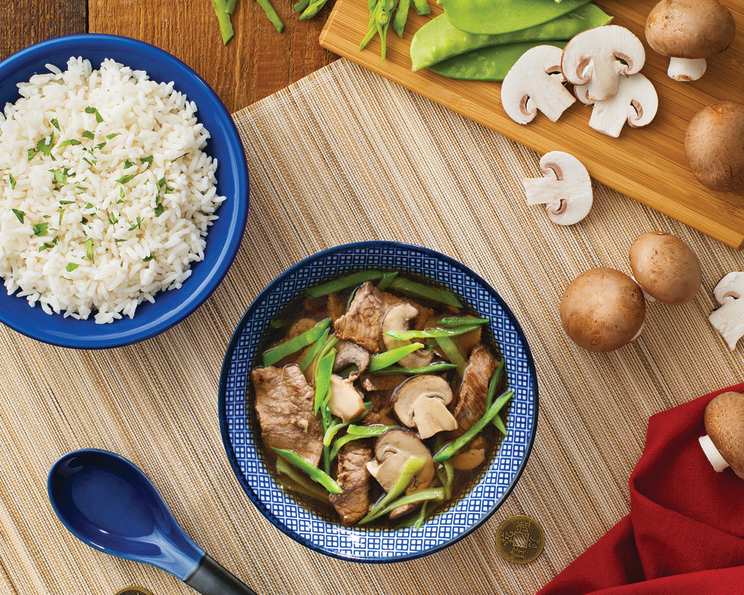
Asian Beef and Mushroom Soup With Rice: A Bowlful of Comfort and Fortune
The first time I tasted a soup quite like this was during a particularly blustery Lunar New Year celebration in San Francisco’s Chinatown. Stepping into a tiny, bustling restaurant, the aroma of ginger, garlic, and rich broth enveloped me, promising warmth and comfort. As I slurped down the savory liquid, studded with tender beef and fragrant mushrooms, a feeling of well-being washed over me – a sense of connection to tradition, family, and the promise of good fortune in the year ahead. That memory, and that feeling, is what I try to recapture every time I make this Asian Beef and Mushroom Soup.
Recipe Overview
- Prep Time: 15 minutes
- Cook Time: 15 minutes
- Total Time: 30 minutes
- Servings: 4
- Dietary Type: Adaptable (see variations for Gluten-Free option)
Ingredients
- ¾ cup Uncle Ben’s Quick Cook Perfection Rice
- 4 cups low sodium beef broth
- 2 tablespoons soy sauce
- 1 tablespoon fresh gingerroot, minced
- 1 teaspoon sesame oil
- 3 garlic cloves, minced
- 1 cup sliced fresh mushrooms
- 4 ounces fresh snow peas, thinly sliced
- 8 ounces top sirloin steaks, thinly sliced across the grain
- 1 tablespoon hot sauce (optional)
Equipment Needed
- Large saucepan
- Measuring cups and spoons
- Cutting board
- Knife
Instructions
-
Begin by preparing the rice according to the package directions. This usually involves bringing water to a boil, adding the rice, covering, and simmering for a specific time (refer to the rice package for precise instructions, as different types may vary slightly).
-
While the rice is cooking, turn your attention to the soup base. In a large saucepan, combine the low sodium beef broth, soy sauce, minced fresh gingerroot, sesame oil, and minced garlic cloves.
-
Bring the mixture to a boil over medium-high heat. The aroma at this stage is incredibly enticing!
-
Once boiling, add the sliced fresh mushrooms and thinly sliced snow peas.
-
Reduce the heat to low, cover the saucepan, and simmer for 5 minutes, or until the snow peas are tender-crisp. This allows the flavors to meld beautifully and softens the snow peas without making them mushy.
-
Now, gently add the thinly sliced top sirloin steaks to the simmering soup.
-
Cook for just 2 minutes, or until the beef is cooked through. It’s important not to overcook the beef, as it will become tough.
-
Once the rice is cooked, divide it evenly among 4 bowls.
-
Ladle the hot soup over the rice in each bowl.
-
If desired, top each bowl with a drizzle of hot sauce for an extra kick.
Expert Tips & Tricks
-
Slice the beef thinly: This is crucial for quick cooking and tenderness. Partially freezing the steak for about 30 minutes before slicing makes it easier to achieve those paper-thin slices.
-
Don’t overcook the beef: Two minutes is generally sufficient for thinly sliced sirloin. Overcooked beef will be tough and detract from the overall experience.
-
Use fresh ginger: While ground ginger can be used in a pinch, fresh ginger provides a brighter, more vibrant flavor that really elevates the soup.
-
Adjust the soy sauce: If you’re sensitive to sodium, start with less soy sauce and add more to taste.
-
Boost the broth: For an even richer flavor, consider using homemade beef broth or adding a tablespoon of beef bouillon paste to the broth.
-
Make it ahead: The soup base (without the beef) can be made a day ahead and stored in the refrigerator. Simply add the beef just before serving.
Serving & Storage Suggestions
This Asian Beef and Mushroom Soup with Rice is best served immediately while hot. Garnish with a sprinkle of fresh cilantro or chopped green onions for added freshness and visual appeal.
Leftover soup can be stored in an airtight container in the refrigerator for up to 3 days. To reheat, gently warm the soup on the stovetop over low heat, or microwave in short intervals, stirring occasionally. The rice is best stored separately to prevent it from becoming soggy.
Freezing is not recommended as the texture of the vegetables and beef may change upon thawing.
Nutritional Information
| Nutrient | Amount per Serving | % Daily Value |
|---|---|---|
| Calories | 167.3 kcal | N/A |
| Calories from Fat | 13 g | 8% |
| Total Fat | 1.5 g | 2% |
| Saturated Fat | 0.2 g | 1% |
| Cholesterol | 0 mg | 0% |
| Sodium | 505.7 mg | 21% |
| Total Carbohydrate | 33.2 g | 11% |
| Dietary Fiber | 1.6 g | 6% |
| Sugars | 1.7 g | N/A |
| Protein | 4.9 g | 9% |
Note: Nutritional information is an estimate and may vary based on specific ingredients and preparation methods.
Variations & Substitutions
- Gluten-Free: Substitute the soy sauce with tamari, a gluten-free alternative. Be sure to check the label of your beef broth to ensure it is also gluten-free.
- Vegetarian/Vegan: Replace the beef with firm tofu, sliced and pan-fried until golden brown. Use vegetable broth instead of beef broth.
- Spicy: Increase the amount of hot sauce, or add a pinch of red pepper flakes to the soup base.
- Different Vegetables: Feel free to add other vegetables such as bok choy, napa cabbage, or carrots.
- Protein Swap: Chicken or shrimp can be used instead of beef. Adjust the cooking time accordingly.
- Rice Alternatives: Use brown rice, quinoa, or even noodles instead of white rice.
FAQs (Frequently Asked Questions)
Q: Can I use dried mushrooms instead of fresh?
A: Yes, you can. Rehydrate the dried mushrooms in hot water for about 30 minutes before adding them to the soup. Be sure to drain and squeeze out any excess water.
Q: Can I make this soup in a slow cooker?
A: Yes, you can. Combine all ingredients except the beef and rice in the slow cooker and cook on low for 6-8 hours. Add the beef during the last 30 minutes of cooking. Cook the rice separately and add it to the bowls before serving.
Q: How can I thicken the soup?
A: If you prefer a thicker soup, you can mix 1 tablespoon of cornstarch with 2 tablespoons of cold water and stir it into the soup during the last few minutes of cooking.
Q: Is it important to use low-sodium beef broth?
A: Using low-sodium broth allows you to control the saltiness of the soup. Regular beef broth can be quite salty, so it’s best to start with low-sodium and add salt to taste if needed.
Q: Can I add other herbs besides ginger?
A: Absolutely! A small amount of chopped cilantro or green onions can add a fresh, vibrant flavor to the soup.
Final Thoughts
This Asian Beef and Mushroom Soup with Rice is more than just a recipe; it’s an invitation to create a warm, comforting, and flavorful experience. Whether you’re seeking a quick weeknight meal or a dish to share with loved ones, this soup is sure to please. So, gather your ingredients, embrace the aromas, and prepare to be transported to a place of culinary comfort and good fortune. I hope you give this recipe a try and share your own experiences and variations!