
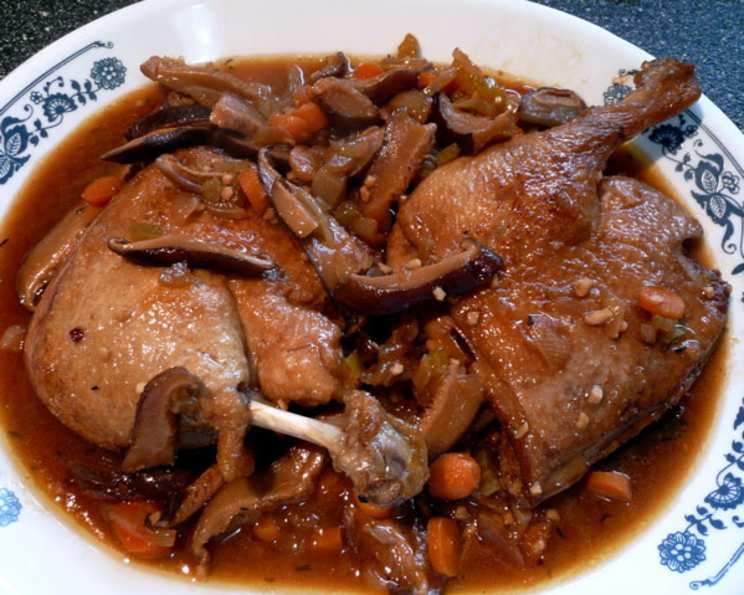
Asian Braised Duck Legs: A Symphony of Flavors
I remember the first time I truly understood the magic of braising. It was in a tiny, bustling kitchen in Hong Kong, watching a wizened chef transform humble duck legs into a dish of unparalleled richness and tenderness. The aroma of star anise, ginger, and something deeply savory hung heavy in the air, a promise of the culinary delight to come. This recipe, inspired by those memories and Chef Ming Tsai, captures the essence of that experience, bringing the comforting warmth of Asian spices to your own kitchen.
Recipe Overview
- Prep Time: 20 minutes
- Cook Time: 1 hour 45 minutes
- Total Time: 2 hours 5 minutes
- Servings: 4
- Yield: 4 duck legs
- Dietary Type: Gluten-Free (check tamari label)
Ingredients
- 4 duck legs
- ½ tablespoon fermented black beans
- 8 garlic cloves, chopped
- ½ tablespoon minced ginger
- 1 onion, diced
- 1 carrot, diced
- 1 celery rib, diced
- 1 cup shiitake mushrooms, sliced
- ½ cup Shaoxing wine
- ¼ cup tamari
- ¼ cup brown sugar
- ½ teaspoon thyme
- Water, to cover
- Salt, to taste
- Pepper, to taste
- 1 tablespoon cornstarch (optional, for thickening)
- 1 tablespoon water (optional, for slurry)
Equipment Needed
- Large heavy-bottomed pot or Dutch oven
- Kettle
- Plate or platter
- Small bowl (if using cornstarch slurry)
Instructions
- Begin by preparing the duck legs. Generously season them with salt and pepper on all sides. This is crucial for developing a flavorful crust and seasoning the meat throughout the braising process.
- Heat a kettle of water to boiling. You’ll need this to cover the duck legs later.
- Place your large pot or Dutch oven over medium-high heat. Add the duck legs, skin-side down (fat side down), and cook for 15-20 minutes, until the skin is deeply browned and crispy. This step renders the duck fat, which will be used to build the flavor base of the braise. Avoid overcrowding the pan; work in batches if necessary.
- Turn the duck legs over and cook for an additional 2 minutes to lightly brown the other side. Remove the legs from the pot and set them aside on a plate.
- Reduce the heat to medium. In the rendered duck fat remaining in the pot, add the fermented black beans, garlic, and ginger. Sauté for 2 minutes, stirring frequently, until fragrant. The fermented black beans add a unique, umami-rich depth of flavor.
- Add the diced onion, carrots, and celery to the pot. Cook for 3 minutes more, stirring occasionally, until the vegetables begin to soften. These aromatics will form the foundation of the braising liquid.
- Add the sliced shiitake mushrooms and continue to cook for another 3 minutes, allowing them to release their earthy flavors.
- Pour in the Shaoxing wine to deglaze the pan, scraping up any browned bits from the bottom. This adds a complex sweetness and acidity to the braising liquid. Let the wine simmer for a minute or two to reduce slightly.
- Add the tamari, brown sugar, and thyme to the pot. Stir to combine and dissolve the sugar. The tamari provides a savory depth, while the brown sugar adds a touch of sweetness and helps to create a rich, glossy sauce.
- Return the duck legs to the pot, placing them fat-side up.
- Pour in the boiling water until the duck legs are just covered.
- Bring the liquid to a simmer, then reduce the heat to low, cover the pot, and simmer gently for 1 ½ hours, or until the duck legs are very tender and the meat is easily pulled from the bone. Check occasionally to ensure the liquid hasn’t evaporated too much; add more water if necessary.
- Once the duck legs are tender, remove them from the pot and place them on a platter.
- Increase the heat to medium-high and allow the cooking liquid to reduce by half, until it thickens into a rich sauce. This may take 10-15 minutes. Watch it closely to prevent burning.
- If the sauce isn’t thick enough for your liking, you can create a cornstarch slurry by whisking together 1 tablespoon of cornstarch with 1 tablespoon of water in a small bowl. Slowly drizzle the slurry into the simmering sauce, stirring constantly, until it reaches your desired consistency.
- Pour the reduced sauce over the duck legs and serve immediately.
Expert Tips & Tricks
- For extra crispy skin, after braising the duck legs, you can broil them for a few minutes, watching carefully to prevent burning.
- Don’t discard the rendered duck fat! It’s liquid gold. Strain it and store it in the refrigerator for cooking potatoes, vegetables, or even frying eggs.
- If you can’t find Shaoxing wine, dry sherry is a good substitute.
- For a deeper, more complex flavor, add a star anise or a cinnamon stick to the braising liquid.
- If you want to make this dish ahead of time, you can braise the duck legs and reduce the sauce, then store them separately in the refrigerator for up to 3 days. Reheat gently before serving.
Serving & Storage Suggestions
Serve the Asian Braised Duck Legs hot, drizzled with the luscious braising sauce. They pair beautifully with steamed rice, noodles, or stir-fried vegetables. Garnish with chopped scallions or cilantro for a pop of freshness.
Leftover duck legs can be stored in an airtight container in the refrigerator for up to 3 days. To reheat, gently warm them in the oven or microwave. You can also shred the leftover duck meat and use it in sandwiches, tacos, or salads.
Do not leave the cooked duck legs at room temperature for more than 2 hours to prevent bacterial growth. For longer storage, the cooked duck legs (with sauce) can be frozen for up to 2 months. Thaw overnight in the refrigerator before reheating.
Nutritional Information
| Nutrient | Amount per Serving | % Daily Value |
|---|---|---|
| Calories | 450 kcal | 23% |
| Total Fat | 30g | 46% |
| Saturated Fat | 10g | 50% |
| Cholesterol | 150mg | 50% |
| Sodium | 800mg | 35% |
| Total Carbohydrate | 20g | 7% |
| Dietary Fiber | 2g | 8% |
| Sugars | 10g | – |
| Protein | 25g | 50% |
Note: Nutritional information is an estimate and may vary based on specific ingredients and cooking methods.
Variations & Substitutions
- Spicy: Add a pinch of red pepper flakes or a sliced chili to the braising liquid for a touch of heat.
- Sweeter: Increase the amount of brown sugar for a sweeter sauce. You can also add a tablespoon of honey or maple syrup.
- Gluten-Free: Ensure the tamari you use is certified gluten-free.
- Vegetarian (Adaptation): While this recipe is centered around duck, you can adapt the braising liquid to use with firm tofu or seitan for a vegetarian take. Simply brown the tofu or seitan before adding the vegetables and braising liquid.
- Seasonal Vegetables: Feel free to swap out the carrots, celery, and shiitake mushrooms for other seasonal vegetables like parsnips, turnips, or cremini mushrooms.
FAQs (Frequently Asked Questions)
Q: Can I use regular soy sauce instead of tamari?
A: Yes, you can substitute regular soy sauce for tamari, but the flavor will be slightly different. Tamari is generally richer and less salty than most soy sauces. If using soy sauce, you may want to reduce the amount slightly.
Q: How do I know when the duck legs are done?
A: The duck legs are done when the meat is very tender and easily pulls away from the bone. You should be able to pierce the meat with a fork without any resistance.
Q: Can I make this in a slow cooker?
A: Yes, you can adapt this recipe for a slow cooker. Brown the duck legs and sauté the vegetables as instructed, then transfer everything to the slow cooker. Cook on low for 6-8 hours, or until the duck legs are tender. Reduce the sauce on the stovetop after removing the duck legs.
Q: What if my sauce is too thin?
A: If your sauce is too thin after reducing it, you can thicken it with a cornstarch slurry (1 tablespoon cornstarch mixed with 1 tablespoon cold water). Slowly drizzle the slurry into the simmering sauce, stirring constantly, until it reaches your desired consistency.
Q: Can I use bone-in chicken thighs instead of duck legs?
A: Yes, you can substitute bone-in chicken thighs for duck legs in this recipe. The cooking time may be slightly shorter, so check for doneness after about 1 hour.
Final Thoughts
This recipe for Asian Braised Duck Legs is more than just a meal; it’s an experience. It’s a journey through layers of flavor, a celebration of comforting aromas, and a testament to the transformative power of slow cooking. Don’t be intimidated by the list of ingredients – the process is straightforward, and the reward is well worth the effort. Gather your ingredients, invite some friends or family, and prepare to be transported by the savory magic of this dish. I encourage you to try it, experiment with the variations, and make it your own. And please, share your feedback! I’d love to hear about your culinary adventures. Pair this dish with a crisp Sauvignon Blanc or a light-bodied Pinot Noir for a truly unforgettable meal.