
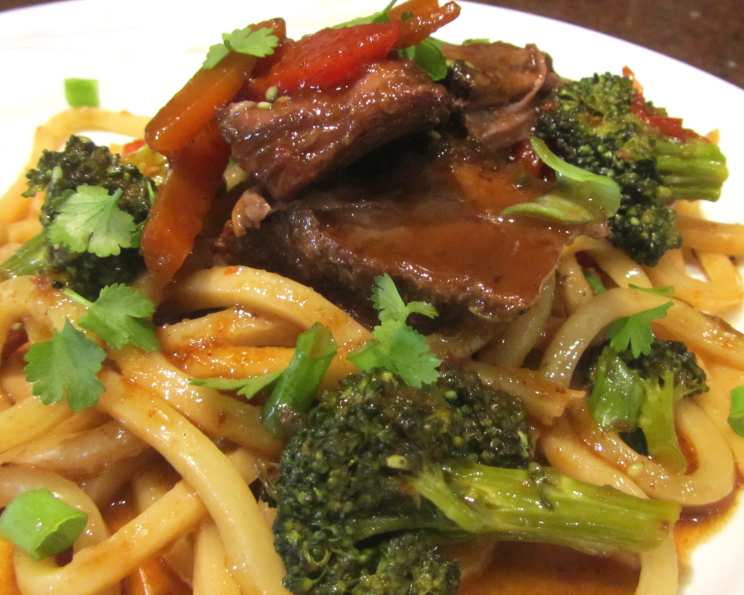
Asian Chuck Pot Roast With Veggies and Udon Noodles
The aroma alone transports me back to bustling night markets in Taiwan, where the air hangs thick with the scent of soy sauce, ginger, and a hint of chili. I remember huddling around a steaming food stall, the cool night air nipping at my cheeks as I slurped down a bowl of noodles bathed in a rich, savory broth. That memory, that feeling, is what I wanted to capture in this Asian-inspired chuck pot roast – a comforting, deeply flavorful dish perfect for a chilly evening.
Recipe Overview
- Prep Time: 20 minutes
- Cook Time: 4 hours 15 minutes
- Total Time: 4 hours 35 minutes
- Servings: 8
- Dietary Type: Dairy-Free
Ingredients
- 1 tablespoon vegetable oil
- 3-4 lbs chuck roast (make sure it fits in your crock-pot)
- Black pepper to taste
- Salt to taste (use sparingly, as the sauces contain sodium)
Sauce Ingredients:
- 1/4 cup soy sauce
- 1/4 cup hoisin sauce
- 15 ounces Thai sweet chili sauce
- 1/3 cup rice vinegar
- 1 small onion, roughly chopped
- 1/2 – 1 teaspoon Sichuan peppercorns
- 3 cloves garlic
- 1 inch fresh ginger, roughly chopped
- 1 inch lemongrass, tender part sliced
- 1 cup water
Additional Ingredients:
- Thai chile (optional, for extra heat)
- 1 carrot, peeled and cut into matchsticks
- 1 red bell pepper, cut into 1 inch pieces
- 1/2 lb shiitake mushrooms, stems removed and sliced
- 2-3 cups broccoli, cut into bite-size pieces
- 2 lbs udon noodles (cooked, refrigerated type preferred)
Garnish:
- 3 scallions, sliced
- 1/4 cup cilantro or basil, roughly chopped (to taste)
Equipment Needed
- Large skillet or Dutch oven
- Crock-Pot or slow cooker
- Blender
Instructions
- Season the chuck roast generously with black pepper and very lightly with salt. Remember that the soy sauce and hoisin sauce are already quite salty, so be cautious.
- Heat the vegetable oil in a large skillet or Dutch oven over medium-high heat.
- Sear the chuck roast on all sides until deeply browned. This step is crucial for developing rich flavor. Don’t overcrowd the pan; work in batches if necessary. Remove the browned roast and set aside.
- In a blender, combine the soy sauce, hoisin sauce, Thai sweet chili sauce, rice vinegar, onion, Sichuan peppercorns, garlic, ginger, and lemongrass. Blend until completely smooth.
- Pour the blended sauce into the crock-pot. Stir in the water.
- Place the seared chuck roast into the crock-pot, ensuring it’s mostly submerged in the sauce.
- If you like a bit more heat, add the optional Thai chile to the crock-pot.
- Cover the crock-pot and cook on high for 4-6 hours, or until the chuck roast is very tender and easily falls apart. The exact cooking time will depend on your crock-pot.
- Once the roast is cooked, carefully remove it from the crock-pot and place it on a plate. Cover with foil to keep it warm.
- Add the carrots, red bell pepper, shiitake mushrooms, and broccoli to the sauce in the crock-pot.
- Cover and cook for another 5-15 minutes, or until the vegetables reach your desired level of tenderness. Some people prefer their vegetables crisp-tender, while others like them softer.
- Add the cooked udon noodles to the crock-pot and toss to combine with the vegetables and sauce. Heat through.
- To serve, place the udon noodle mixture on a platter. Shred the chuck roast and arrange it on top of the noodles.
- Garnish with sliced scallions, chopped cilantro, or chopped basil, to taste. Serve immediately.
Expert Tips & Tricks
- Searing is Key: Don’t skip searing the chuck roast! This step creates a beautiful crust and develops deep, savory flavors that enhance the entire dish.
- Adjust the Heat: The Thai sweet chili sauce provides a mild sweetness and a subtle kick. If you want more heat, add a chopped Thai chile to the sauce in the crock-pot or a dash of Sriracha to individual servings.
- Spice Level Control: Using whole Sichuan peppercorns allows for controlled flavor release. For a milder tingle, use fewer peppercorns, or remove them entirely after cooking. For a more intense buzz, crack the peppercorns before adding them to the sauce.
- Noodle Timing: Add the udon noodles towards the very end to prevent them from becoming mushy. Since you’re using pre-cooked noodles, they only need to be heated through.
- Make-Ahead Tip: The sauce can be made a day or two in advance and stored in the refrigerator. This will save you time on the day you plan to cook the roast.
- Vegetable Variety: Feel free to substitute other vegetables based on your preferences or what you have on hand. Snow peas, bok choy, or even canned bamboo shoots would be delicious additions.
- Don’t Overcook: Keep a close eye on the veggies to avoid overcooking them. They should still have a little bite to them when done.
Serving & Storage Suggestions
Serve this Asian Chuck Pot Roast hot, garnished with plenty of fresh herbs. A sprinkle of toasted sesame seeds would also be a nice touch.
Leftovers can be stored in an airtight container in the refrigerator for up to 3-4 days. The noodles may absorb some of the sauce during storage, so you might need to add a splash of water or broth when reheating.
To reheat, microwave individual portions or warm the entire dish in a pot over low heat, stirring occasionally.
Freezing is not recommended, as the texture of the noodles and vegetables may change upon thawing.
Nutritional Information
| Nutrient | Amount per Serving | % Daily Value |
|---|---|---|
| Calories | 770 kcal | 39% |
| Total Fat | 12 g | 15% |
| Saturated Fat | 5 g | 25% |
| Cholesterol | 113 mg | 38% |
| Sodium | 3597 mg | 150% |
| Total Carbohydrate | 106 g | 35% |
| Dietary Fiber | 11 g | 44% |
| Sugars | 11 g | N/A |
| Protein | 53 g | 106% |
Note: Nutritional information is an estimate and may vary based on specific ingredients and portion sizes.
Variations & Substitutions
- Gluten-Free: Use gluten-free soy sauce and tamari instead of hoisin sauce, or find a gluten-free hoisin sauce substitute. Ensure the udon noodles are also gluten-free, or substitute with rice noodles.
- Vegetarian: Replace the chuck roast with firm or extra-firm tofu, pressing out excess water and searing it before adding it to the crock-pot. You can also use hearty vegetables like eggplant or butternut squash.
- Spicy: Increase the amount of Thai chile or add a pinch of red pepper flakes for extra heat.
- Coconut Milk: For a creamier sauce, substitute 1/2 cup of the water with coconut milk.
- Different Protein: Use chicken thighs or pork shoulder instead of chuck roast. Adjust cooking time accordingly.
- Seasonal Vegetables: Adapt the recipe with seasonal vegetables like asparagus in the spring or root vegetables in the fall.
FAQs (Frequently Asked Questions)
Q: Can I use a different cut of beef?
A: While chuck roast is ideal for slow cooking because it becomes incredibly tender, you could potentially use brisket or even short ribs. Just adjust the cooking time as needed.
Q: Can I make this in an Instant Pot?
A: Yes! Sear the meat using the sauté function, then add the sauce and other ingredients. Cook on high pressure for 45-60 minutes, followed by a natural pressure release.
Q: What if I can’t find Thai sweet chili sauce?
A: You can substitute with a combination of regular chili sauce and a sweetener like honey or maple syrup. Adjust the amount of each to taste.
Q: Can I use dried lemongrass instead of fresh?
A: Fresh lemongrass is preferred for its brighter flavor, but you can use dried lemongrass as a substitute. Use about 1 teaspoon of dried lemongrass for every inch of fresh lemongrass.
Q: The sauce is too salty. How can I fix it?
A: Add a tablespoon of brown sugar or honey to balance the saltiness. You can also add a splash of rice vinegar or water.
Final Thoughts
This Asian Chuck Pot Roast with Veggies and Udon Noodles is more than just a recipe; it’s an invitation to explore vibrant flavors and create lasting memories. I encourage you to gather your ingredients, embrace the aroma, and share this comforting dish with your loved ones. Don’t be afraid to experiment with variations to make it your own, and please, let me know what you think! Pair this with a crisp, dry Riesling or a refreshing Asian beer for the perfect complement. Happy cooking!