
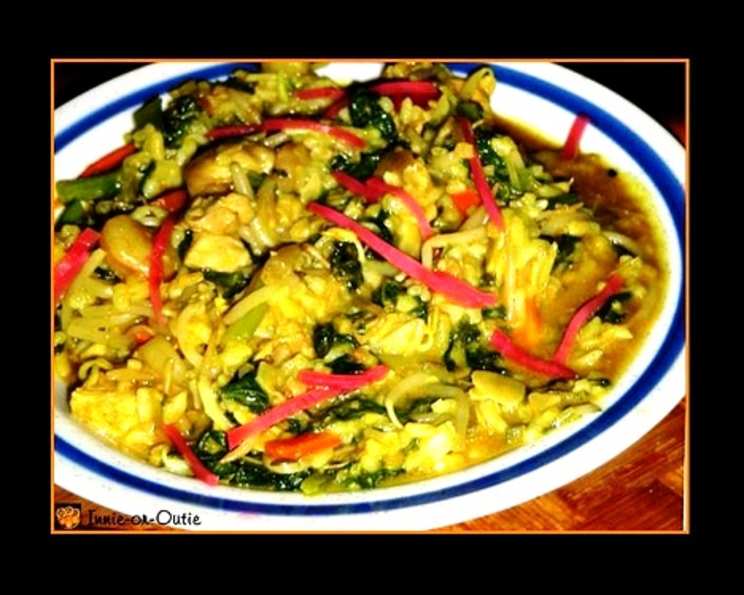
Asian-Flavored Shrimp Gumbo: A Culinary Fusion
The memory is so vivid: a rainy Tuesday evening, the aroma of ginger and soy sauce clinging to the air, a motley crew of leftovers transformed into something extraordinary. It wasn’t about fancy ingredients or complicated techniques; it was about resourcefulness and the sheer joy of creating something delicious from humble beginnings. This Asian-Flavored Shrimp Gumbo is a direct descendant of that improvisational spirit, a testament to the magic that happens when you dare to blend culinary traditions. It’s a dish that’s both comforting and exciting, familiar yet intriguingly different.
Recipe Overview
- Prep Time: 10 minutes
- Cook Time: 10 minutes
- Total Time: 20 minutes
- Servings: 4
- Yield: 4 bowls
- Dietary Type: Adaptable (see variations for gluten-free/vegan options)
Ingredients
- 1 cup salad greens mix
- 1 cup cooked pork, thinly sliced
- 1 cup shrimp
- 1 tablespoon olive oil
- 2 cups bok choy, sliced
- 1 cup soy sprouts (moyashi)
- 1⁄4 cup lime juice
- 2 tablespoons dried garlic slivers
- 1 tablespoon crushed walnuts
- 1 tablespoon crushed slivered almonds
- 1 tablespoon turmeric
- 1 tablespoon cornstarch
- 2 cups cooked rice
- Julienned pickled ginger, for garnish
Equipment Needed
- Medium pot or large skillet
- Cutting board
- Knife
- Measuring cups and spoons
Instructions
- Begin by preparing your ingredients. Slice the bok choy, ensuring it’s evenly sized for consistent cooking. Have your cooked rice and cooked pork ready to go. If using frozen shrimp, ensure it is fully thawed and patted dry.
- In a medium pot or large skillet, heat the olive oil over medium heat. Once the oil is shimmering, add the shrimp and sauté for about 2-3 minutes, or until they turn pink and opaque. Be careful not to overcrowd the pan, as this will lower the temperature and steam the shrimp instead of sautéing it.
- Add the salad mix, bok choy, dried garlic slivers, cooked pork, crushed walnuts, crushed slivered almonds, turmeric, and cooked rice to the pot. Combine thoroughly, ensuring the flavors begin to meld together. Stir frequently to prevent sticking.
- In a small bowl, whisk together the cornstarch and lime juice until smooth. This mixture will act as a thickening agent and add a tangy flavor to the gumbo.
- Pour the cornstarch-lime juice mixture into the pot with the shrimp and vegetables. Cook for approximately 7 minutes, stirring constantly, until the sauce has thickened and the vegetables are tender-crisp.
- Add the soy sprouts (moyashi) and cook for another 3 minutes, stirring frequently. The soy sprouts should remain slightly crunchy.
- Plate the Asian-Flavored Shrimp Gumbo and garnish with julienned pickled ginger for a final burst of flavor and visual appeal. Serve immediately.
Expert Tips & Tricks
- Shrimp Sautéing Secrets: To achieve perfectly cooked shrimp, avoid overcooking. Overcooked shrimp become rubbery. Cook just until they turn pink and opaque.
- Spice Level Customization: Adjust the amount of turmeric to your preference. For a spicier dish, add a pinch of red pepper flakes or a dash of your favorite hot sauce.
- Rice Rescue: This recipe is fantastic for using leftover rice. If your rice is a bit dry, add a splash of chicken broth or water to the pot while cooking to rehydrate it.
- Nutty Nuance: Toast the walnuts and almonds lightly before crushing them to enhance their flavor and aroma.
- Cornstarch Caution: Make sure the cornstarch is fully dissolved in the lime juice before adding it to the hot pot, or it may clump. If clumps do form, whisk vigorously.
Serving & Storage Suggestions
Serve this Asian-Flavored Shrimp Gumbo immediately for the best flavor and texture. The vibrant colors and aromas are most appealing when the dish is fresh. Garnish generously with julienned pickled ginger for a delightful tangy kick.
If you have leftovers, store them in an airtight container in the refrigerator. It will keep for up to 3 days. To reheat, gently warm it in a pot over medium heat, adding a splash of water or broth if needed to prevent it from drying out. Microwaving is also an option, but be careful not to overcook the shrimp. Freezing is not recommended as it can affect the texture of the rice and vegetables.
Nutritional Information
| Nutrient | Amount per Serving | % Daily Value |
|---|---|---|
| Calories | 320 kcal | 16% |
| Total Fat | 12g | 18% |
| Saturated Fat | 2g | 10% |
| Cholesterol | 110mg | 37% |
| Sodium | 250mg | 11% |
| Total Carbohydrate | 35g | 12% |
| Dietary Fiber | 3g | 11% |
| Sugars | 5g | – |
| Protein | 20g | 40% |
Note: Nutritional information is an estimate and can vary based on specific ingredients and portion sizes.
Variations & Substitutions
- Gluten-Free: Ensure that the soy sauce or any other sauces used do not contain gluten. Tamari is a good gluten-free alternative.
- Vegan/Vegetarian: Omit the shrimp and pork. Substitute with tofu, tempeh, or additional vegetables such as mushrooms, bell peppers, or carrots. Use vegetable broth instead of chicken broth.
- Protein Power-Up: Add more shrimp, chicken, or beef for a heartier meal.
- Vegetable Variations: Feel free to substitute the bok choy and soy sprouts with other Asian greens such as gai lan (Chinese broccoli) or napa cabbage.
- Coconutty Twist: Add a splash of coconut milk for a richer, creamier texture and a hint of sweetness.
- Spicy Kick: Incorporate sriracha, gochujang, or chili garlic sauce for added heat.
FAQs (Frequently Asked Questions)
Q: Can I use frozen vegetables in this recipe?
A: Yes, frozen vegetables can be used, but be sure to thaw and drain them before adding them to the pot to prevent excess moisture.
Q: How can I make this dish less salty?
A: Use low-sodium soy sauce and avoid adding extra salt. The pickled ginger also adds some saltiness, so use it sparingly if needed.
Q: What is the best way to reheat this gumbo?
A: Gently reheat it in a pot over medium heat, adding a splash of water or broth if needed to prevent it from drying out.
Q: Can I prepare this dish in advance?
A: You can prepare the individual components (e.g., cook the rice, slice the vegetables) ahead of time, but it’s best to cook the gumbo fresh for optimal flavor and texture.
Q: What can I serve with this Asian-Flavored Shrimp Gumbo?
A: This dish pairs well with a side of steamed edamame, a refreshing cucumber salad, or crispy spring rolls.
Final Thoughts
This Asian-Flavored Shrimp Gumbo isn’t just a recipe; it’s an invitation to embrace creativity in the kitchen and celebrate the art of transforming humble ingredients into something extraordinary. Don’t be afraid to experiment with different flavors, textures, and ingredients to make it your own. I encourage you to try this recipe, share your feedback, and let the magic of culinary fusion ignite your passion for cooking! Perhaps a crisp, dry Riesling would complement the dish beautifully. Happy cooking!