
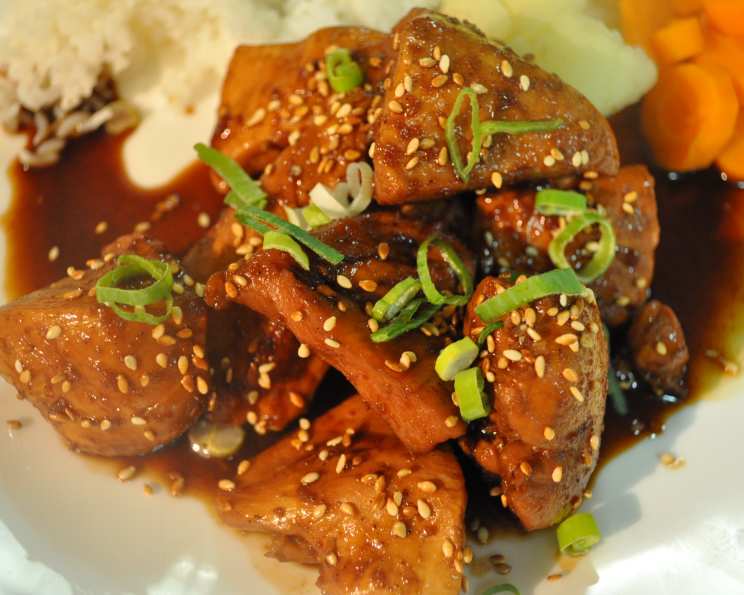
Asian Sticky Chicken: A Symphony of Sweet and Savory
The aroma still transports me back to my tiny apartment in culinary school. Late nights fueled by ramen and textbooks were occasionally punctuated by the sweet, savory, and utterly irresistible scent of this Asian Sticky Chicken wafting from my roommate’s corner of the kitchen. It was the perfect antidote to academic stress – a simple dish that tasted like a restaurant-quality indulgence. The glistening glaze, the tender chicken, and the bright pop of scallions… it was comfort food elevated. It’s a recipe I’ve tweaked and perfected over the years, but the essence remains: a guaranteed crowd-pleaser that’s surprisingly easy to make.
Recipe Overview
- Prep Time: 5 minutes
- Cook Time: 35 minutes
- Total Time: 40 minutes
- Servings: 6
- Dietary Type: Gluten-Free (if using gluten-free soy sauce)
Ingredients
- 1 tablespoon sesame oil
- 2-3 lbs boneless skinless chicken thighs
- 2 garlic cloves, minced
- 1/3 cup rice wine, NOT rice wine vinegar
- 1/3 cup water
- 1/3 cup reduced sodium soy sauce
- 3 tablespoons brown sugar
- 1/2 teaspoon Chinese five spice powder
- 2 scallions, chopped on the diagonal for garnish
Equipment Needed
- Large skillet or wok with lid
- Measuring cups and spoons
- Knife
- Cutting board
Instructions
- Begin by heating the sesame oil in a large skillet or wok over medium-high heat. Ensure the pan is hot before adding the chicken; this will help create a nice sear.
- Add the boneless skinless chicken thighs to the skillet. Work in batches if necessary to avoid overcrowding the pan. Quickly brown the chicken on both sides. You’re not aiming to cook them through at this stage, just to develop some color and flavor.
- In a separate bowl (or directly into the skillet around the chicken), add the minced garlic, rice wine, water, reduced sodium soy sauce, brown sugar, and Chinese five spice powder. Stir to combine, ensuring the brown sugar is mostly dissolved.
- Pour the sauce mixture over the browned chicken thighs.
- Bring the sauce just to a boil.
- Immediately reduce the heat to low. Cover the skillet tightly and gently simmer for about 30 minutes, or until the chicken is cooked through and tender. The internal temperature should reach 165°F (74°C).
- Remove the lid and carefully turn over the chicken thighs. Continue to cook uncovered until the sauce reduces and thickens into a rich, sticky glaze. This may take only a few minutes, so watch it closely to prevent burning. Regularly spoon the glaze over the chicken as it cooks.
- Once the sauce has reached your desired consistency – a thick, glossy glaze that clings to the chicken – remove the skillet from the heat.
- Place the Asian Sticky Chicken on a platter or individual plates and generously sprinkle with the chopped scallions for garnish.
Expert Tips & Tricks
- For an even deeper flavor, marinate the chicken thighs in a portion of the sauce for at least 30 minutes (or even overnight) before cooking.
- Don’t be tempted to crank up the heat to speed up the sauce reduction. Low and slow is key to developing a rich, complex flavor and preventing the sugar from burning.
- If the sauce becomes too thick before the chicken is fully cooked, add a tablespoon or two of water to thin it out. Conversely, if the chicken is cooked but the sauce is still too thin, remove the chicken and continue simmering the sauce until it reaches the desired consistency.
- A splash of rice vinegar at the end (after the sauce has reduced) can add a delightful tang to balance the sweetness.
- For a spicy kick, add a pinch of red pepper flakes or a teaspoon of sriracha to the sauce.
- If you can’t find Chinese five spice powder, you can make your own blend using equal parts ground cinnamon, star anise, cloves, fennel seeds, and white pepper.
Serving & Storage Suggestions
Serve this Asian Sticky Chicken hot, accompanied by steamed rice, quinoa, or your favorite stir-fried vegetables. It’s also delicious with a side of Asian slaw or a simple cucumber salad.
Leftovers can be stored in an airtight container in the refrigerator for up to 3-4 days. Reheat gently in a skillet over low heat or in the microwave. Add a splash of water if the sauce has thickened too much. This chicken also freezes well. Store in an airtight container for up to 2 months. Thaw overnight in the refrigerator before reheating.
Nutritional Information
| Nutrient | Amount per Serving | % Daily Value |
|---|---|---|
| Calories | 254.7 kcal | N/A |
| Calories from Fat | 73g | 29% |
| Total Fat | 8.2 g | 12% |
| Saturated Fat | 1.8 g | 9% |
| Cholesterol | 125.9 mg | 41% |
| Sodium | 605.7 mg | 25% |
| Total Carbohydrate | 9.3 g | 3% |
| Dietary Fiber | 0.3 g | 1% |
| Sugars | 7.1 g | 28% |
| Protein | 30.8 g | 61% |
Note: Nutritional information is an estimate and may vary based on specific ingredients and portion sizes.
Variations & Substitutions
- Gluten-Free: Use gluten-free soy sauce (tamari) to ensure the recipe is gluten-free.
- Sweetness: Adjust the amount of brown sugar to your liking. Honey or maple syrup can be used as substitutes.
- Chicken: While chicken thighs are recommended for their moisture, chicken breasts can be used if preferred. Reduce the simmering time to prevent them from drying out.
- Vegetarian/Vegan: Substitute the chicken with firm tofu or tempeh, pressing out excess water before browning.
FAQs (Frequently Asked Questions)
Q: Can I use rice wine vinegar instead of rice wine?
A: No, rice wine vinegar is much more acidic and will significantly alter the flavor of the sauce. Rice wine (such as Shaoxing wine) is the preferred choice.
Q: How do I know when the chicken is cooked through?
A: The chicken is cooked through when the internal temperature reaches 165°F (74°C). You can use a meat thermometer to check.
Q: Can I make this recipe ahead of time?
A: Yes, this dish can be made ahead of time. The flavors actually meld together and improve overnight. Reheat gently before serving.
Q: My sauce is too salty. What can I do?
A: If the sauce is too salty, add a tablespoon of brown sugar or honey and a squeeze of lemon juice to balance the flavors.
Q: Can I add vegetables to this dish?
A: Absolutely! Add vegetables like broccoli florets, bell peppers, or snap peas during the last 10-15 minutes of cooking.
Final Thoughts
This Asian Sticky Chicken is more than just a recipe; it’s a journey down memory lane, a celebration of simple ingredients, and a testament to the power of delicious food. I encourage you to try this recipe, experiment with variations, and make it your own. Whether you’re a seasoned cook or just starting out, this dish is sure to impress. Share your creations and feedback, and remember, the best meals are those shared with loved ones. Pair this delightful dish with a crisp Sauvignon Blanc or a light-bodied Pinot Noir for a truly memorable culinary experience!