
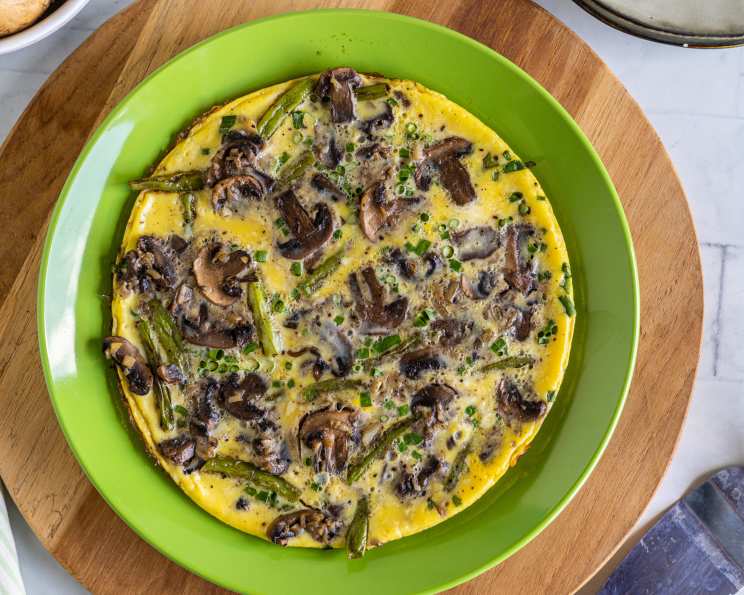
Asparagus & Mushroom Frittata: A Taste of Spring
I’ll never forget the first time I made a frittata. It was a chaotic Sunday morning, and I was determined to impress my notoriously picky family with something beyond scrambled eggs. The fridge was brimming with spring vegetables – bright green asparagus and earthy mushrooms begged to be used. What emerged from that initial experiment wasn’t perfect, but the simple, rustic flavors and the surprisingly light texture won everyone over. This Asparagus & Mushroom Frittata has since become a staple in my kitchen, a testament to the fact that even a spontaneous creation can become a beloved classic.
Recipe Overview
- Prep Time: 15 minutes
- Cook Time: 25 minutes
- Total Time: 40 minutes
- Servings: 4-6
- Yield: 1 frittata
- Dietary Type: Vegetarian
Ingredients
- ½ lb asparagus, cut into 1-inch diagonal pieces
- 4 ounces baby portabella mushrooms, sliced
- 2 garlic cloves, pressed
- 1 tablespoon olive oil
- 6 eggs
- 1 tablespoon milk
- ½ tablespoon fresh tarragon, chopped
- ½ cup asiago-parmesan cheese, finely shredded (pre-shredded blend works well)
- ½ tablespoon olive oil
- ½ tablespoon butter
- 1 pinch sea salt
- 1 pinch white pepper
Equipment Needed
- Steamer or pot with steamer basket
- Large skillet (oven-safe is ideal, but not required)
- Medium mixing bowl
- Whisk
- Measuring spoons and cups
- Plate (for inverting frittata)
- Platter or large dinner plate (for serving)
Instructions
-
Begin by steaming the asparagus. If you don’t have a steamer, you can blanch it in boiling water for 2-3 minutes until bright green and slightly tender-crisp. Immediately plunge the asparagus into ice water to stop the cooking process and preserve its color. Drain well and set aside.
-
Next, prepare the mushrooms. In a large skillet, melt 1 tablespoon of olive oil over medium-high heat. Add the pressed garlic and sauté until fragrant and almost golden, about 30 seconds to 1 minute. Be careful not to burn the garlic, as this will impart a bitter taste.
-
Add the sliced baby portabella mushrooms to the skillet and continue to sauté until they have softened and released their moisture, about 5-7 minutes. The mushrooms should be nicely browned. Set aside.
-
In a medium bowl, combine the eggs and milk. Whisk vigorously until well beaten and frothy. This will help create a light and airy frittata.
-
Add the sea salt, white pepper, and chopped fresh tarragon to the egg mixture. Whisk until well blended. Tarragon adds a subtle anise-like flavor that complements the asparagus and mushrooms beautifully.
-
Stir in the finely shredded asiago-parmesan cheese. Whisk until the cheese is evenly distributed and the mixture is light and fluffy. Avoid over-whisking at this stage.
-
In the same large skillet you used for the mushrooms, melt ½ tablespoon of olive oil and ½ tablespoon of butter over low to medium heat. The combination of oil and butter adds both flavor and prevents the frittata from sticking to the pan.
-
Pour the egg mixture into the skillet. As the bottom of the frittata starts to set, use a spatula to gently lift the edges, allowing the uncooked egg mixture to flow underneath. This will ensure even cooking.
-
Spread the steamed asparagus and sautéed mushrooms evenly over the top of the egg mixture.
-
Continue cooking until most of the egg has cooked through and the bottom of the frittata has started to turn a light golden brown.
-
Now comes the tricky part: inverting the frittata. Carefully slide the frittata onto a plate. Place the skillet back on the burner.
-
Gently slide the frittata back into the skillet, cooked-side up. Cook for another 2-3 minutes to set the top. If you used an oven-safe skillet, you can transfer the frittata to a preheated oven at 350°F (175°C) for the last few minutes to finish cooking the top. This will help ensure it is cooked through without burning the bottom.
-
Once the frittata is cooked through and lightly browned on both sides, carefully slide it onto a platter or large dinner plate.
-
Slice the frittata into 8 “pizza slices” (or 4 larger portions) and serve immediately.
Expert Tips & Tricks
- Don’t overcrowd the pan: Use a skillet that’s large enough to accommodate the egg mixture and vegetables without overcrowding. Overcrowding can lead to a soggy frittata.
- Control the heat: Keep the heat low to medium to prevent the bottom of the frittata from burning before the top is cooked.
- Cheese choices: Experiment with different cheese blends. Fontina, Gruyere, or even a sharp cheddar would work well in this frittata.
- Add herbs: Fresh herbs like chives, parsley, or basil can be added along with the tarragon for a more complex flavor profile.
- Make it ahead: Frittatas are great for meal prepping. You can make it ahead of time and store it in the refrigerator for up to 3 days.
Serving & Storage Suggestions
Serve the Asparagus & Mushroom Frittata immediately while it’s still warm and the cheese is melted. It’s delicious on its own or with a side salad and a slice of crusty bread. Leftovers can be stored in an airtight container in the refrigerator for up to 3 days. Reheat in the microwave or in a skillet over low heat until warmed through. While freezing is possible, the texture of the frittata may change slightly upon thawing, becoming a bit more watery.
Nutritional Information
| Nutrient | Amount per Serving | % Daily Value |
|---|---|---|
| Calories | 280 kcal | 14% |
| Total Fat | 18g | 28% |
| Saturated Fat | 7g | 35% |
| Cholesterol | 210mg | 70% |
| Sodium | 300mg | 13% |
| Total Carbohydrate | 6g | 2% |
| Dietary Fiber | 2g | 8% |
| Sugars | 3g | – |
| Protein | 18g | 36% |
Nutritional information is an estimate and may vary based on specific ingredients and portion sizes.
Variations & Substitutions
- Dairy-Free: Substitute the milk with almond or soy milk and use a dairy-free cheese alternative.
- Gluten-Free: This recipe is naturally gluten-free.
- Protein Boost: Add cooked sausage, ham, or bacon for a heartier frittata.
- Vegetable Variations: Substitute or add other vegetables like spinach, bell peppers, or zucchini.
- Seasonal Adaptations: Use seasonal vegetables like butternut squash in the fall or tomatoes in the summer.
FAQs (Frequently Asked Questions)
Q: Can I use dried tarragon instead of fresh?
A: While fresh tarragon is preferred for its brighter flavor, you can use dried tarragon. Use about 1/4 teaspoon of dried tarragon for every 1/2 tablespoon of fresh.
Q: Can I make this frittata without cheese?
A: Yes, you can omit the cheese if you prefer. The frittata will still be delicious, but it will have a slightly less rich flavor.
Q: How do I know when the frittata is fully cooked?
A: The frittata is fully cooked when the eggs are set and no longer runny. The top should be lightly browned.
Q: Can I add other types of mushrooms?
A: Absolutely! Feel free to experiment with different types of mushrooms like shiitake, cremini, or oyster mushrooms.
Q: What if I don’t have an oven-safe skillet?
A: If you don’t have an oven-safe skillet, simply continue cooking the frittata on the stovetop until the eggs are set and the top is lightly browned. You can also broil the frittata for a minute or two to brown the top, but watch it carefully to prevent burning.
Final Thoughts
This Asparagus & Mushroom Frittata is more than just a recipe; it’s an invitation to embrace simple ingredients and create something truly delicious. Whether you’re a seasoned chef or a beginner in the kitchen, this dish is easy to master and endlessly adaptable to your own tastes. So, gather your ingredients, fire up the stove, and get ready to enjoy a taste of spring in every bite! I encourage you to try this recipe and share your feedback. What variations did you try? What other vegetables did you add? Let’s create a frittata community together! And for the perfect pairing, serve this frittata with a crisp glass of Sauvignon Blanc. Bon appétit!