
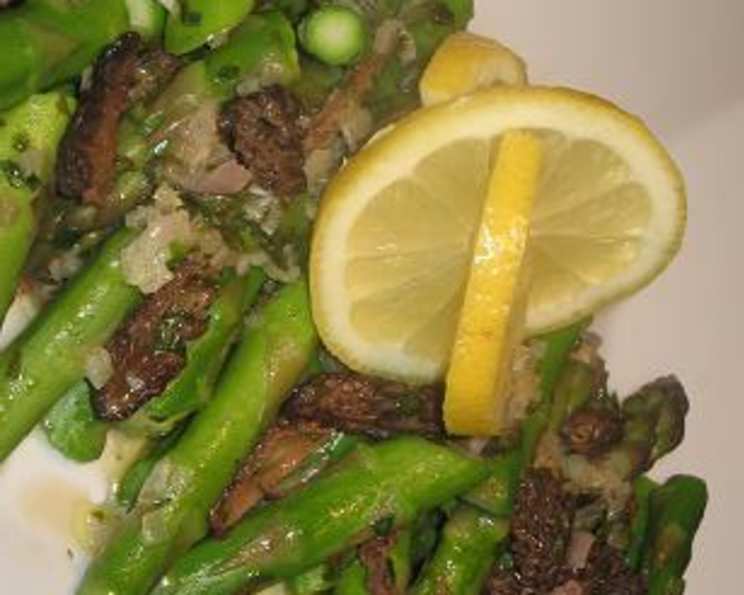
Asparagus With Morels: A Springtime Symphony
The scent of morels always transports me back to my childhood in the Pacific Northwest. My grandfather, a seasoned mushroom hunter, would take me foraging in the damp, mossy forests after the spring rains. We’d carefully comb the undergrowth, our eyes scanning for the distinctive honeycomb caps. Finding those first morels of the season was like striking gold, and my grandmother would always celebrate our bounty by sautéing them with freshly picked asparagus from her garden – a simple yet unforgettable culinary experience.
Recipe Overview
- Prep Time: 15 minutes
- Cook Time: 10 minutes
- Total Time: 25 minutes
- Servings: 6
- Dietary Type: Vegetarian
Ingredients
- 1 lb white asparagus, cut in 2-inch pieces
- 1 lb green asparagus, cut in 2-inch pieces
- 6 tablespoons butter
- 1/2 cup shallot, chopped
- 1/2 lb morels, cleaned and halved
- Sea salt and freshly ground pepper, to taste
- 1 tablespoon fresh tarragon, plus more for garnish
- 1 tablespoon lemon juice
Equipment Needed
- Large pot or microwave-safe dish
- Large skillet
- Slotted spoon or tongs
- Cutting board
- Chef’s knife
Instructions
-
Begin by preparing the asparagus. You’ll want to cook the white asparagus and green asparagus separately, as the white asparagus typically takes a little longer to cook. Fill a large pot with water and bring it to a rolling boil. Alternatively, you can use a microwave-safe dish with a small amount of water.
-
Cook the white asparagus first, either in the boiling water or in the microwave, until tender. This should take approximately 3-5 minutes, depending on the thickness of the spears. The goal is to cook them until they are just tender-crisp, not mushy.
-
Immediately after cooking, refresh the white asparagus under cold running water to stop the cooking process and preserve its vibrant color. Pat it dry with paper towels.
-
Repeat the cooking and refreshing process with the green asparagus. It may require slightly less cooking time than the white asparagus, so keep a close eye on it. Again, aim for a tender-crisp texture.
-
While the asparagus is cooking, prepare the morels. Make sure they are thoroughly cleaned to remove any dirt or grit. Halving them allows for more even cooking and helps release their earthy flavor.
-
In a large skillet, melt 3 tablespoons of butter over medium heat. Add the chopped shallots and cook until they are softened and translucent, about 3-4 minutes. Be careful not to brown them, as you want their delicate flavor to shine through.
-
Add the cleaned and halved morels to the skillet with the softened shallots. Sauté the morels for about 5 minutes, stirring occasionally, until they are tender and have released their aroma. The morels will absorb some of the butter and shallot flavor, becoming incredibly savory.
-
Add the cooked and drained white asparagus and green asparagus to the skillet with the morels and shallots. Sprinkle with 1 tablespoon of chopped fresh tarragon, sea salt, and freshly ground pepper to taste.
-
Continue cooking for another 2-3 minutes, stirring gently to heat everything through. Be careful not to overcook the asparagus at this stage, as it will become mushy. You want it to retain its texture and freshness.
-
Add the remaining 3 tablespoons of butter to the skillet and remove it from the heat. The residual heat will melt the butter, creating a luscious sauce that coats the asparagus and morels.
-
Stir in 1 tablespoon of lemon juice to brighten the flavors and add a touch of acidity.
-
Transfer the Asparagus with Morels to a serving platter. Garnish with additional fresh tarragon sprigs for a pop of color and aroma.
Expert Tips & Tricks
- Cleaning Morels: Morels are notorious for trapping dirt and insects in their honeycomb structure. To clean them thoroughly, soak them in cold, salted water for about 15-20 minutes. Gently agitate them to dislodge any debris. Rinse them thoroughly under running water and pat them dry. Some chefs recommend cutting them lengthwise to inspect and clean the interior.
- Don’t Overcook the Asparagus: Overcooked asparagus becomes limp and loses its bright green color. The key is to cook it until it’s just tender-crisp. Blanching it in boiling water and then shocking it in ice water is a great way to preserve its color and texture.
- Butter Alternatives: While butter adds richness and flavor, you can substitute it with olive oil for a lighter, vegan option.
- Make-Ahead Prep: You can clean the morels and cut the asparagus ahead of time. Store them separately in the refrigerator until you’re ready to cook.
- Enhance the Morel Flavor: For a deeper, more intense Morel flavor, consider using dried morels in addition to fresh. Soak the dried morels in warm water for about 30 minutes, then add them to the skillet along with the fresh morels. Be sure to strain the soaking liquid and add it to the sauce for extra flavor.
Serving & Storage Suggestions
Serve the Asparagus with Morels immediately as a side dish or appetizer. It pairs beautifully with grilled fish, roasted chicken, or a simple omelet.
Leftovers can be stored in an airtight container in the refrigerator for up to 2 days. To reheat, gently sauté them in a skillet with a little butter or olive oil until warmed through. Avoid microwaving, as this can make the asparagus mushy. This dish is best consumed fresh, as the asparagus will lose some of its crispness upon reheating. Freezing is not recommended.
Nutritional Information
| Nutrient | Amount per Serving | % Daily Value |
|---|---|---|
| Calories | 153 kcal | N/A |
| Total Fat | 11.9 g | 18% |
| Saturated Fat | 7.4 g | 37% |
| Cholesterol | 30.5 mg | 10% |
| Sodium | 88.8 mg | 3% |
| Total Carbohydrate | 10 g | 3% |
| Dietary Fiber | 3.6 g | 14% |
| Sugars | 3.5 g | N/A |
| Protein | 5.1 g | 10% |
Note: % Daily Value is based on a 2000 calorie diet. Nutritional information is an estimate and may vary based on specific ingredients and preparation methods.
Variations & Substitutions
- Mushroom Variations: If morels are unavailable or too expensive, you can substitute them with other flavorful mushrooms like shiitake, oyster, or cremini mushrooms. While they won’t have the same distinctive flavor as morels, they’ll still add a delicious earthy note to the dish.
- Herb Variations: Tarragon pairs beautifully with asparagus and morels, but you can also experiment with other herbs like chives, parsley, or thyme.
- Vegan Option: Substitute the butter with olive oil or a vegan butter alternative.
- Asparagus Variations: If you prefer thicker asparagus, adjust the cooking time accordingly. You can also grill the asparagus for a smoky flavor.
- Adding Garlic: For a more robust flavor, add a clove of minced garlic to the skillet along with the shallots.
FAQs (Frequently Asked Questions)
Q: How do I know when the morels are clean enough?
A: The water should be relatively clear after soaking and rinsing. If you still see dirt, repeat the process until the water remains clear.
Q: Can I use frozen asparagus for this recipe?
A: Fresh asparagus is preferred for its superior texture and flavor, but frozen asparagus can be used in a pinch. Be sure to thaw it completely and pat it dry before cooking. Reduce the cooking time to avoid overcooking.
Q: What is the best way to store fresh morels?
A: Store fresh morels in a paper bag in the refrigerator. Avoid storing them in plastic, as this can cause them to become slimy. Use them as soon as possible for the best flavor and texture.
Q: Can I add white wine to this dish?
A: Yes, a splash of dry white wine added to the skillet after sautéing the shallots and morels can add a lovely depth of flavor. Let it reduce slightly before adding the asparagus.
Q: How do I prevent the asparagus from becoming soggy?
A: Do not overcook the asparagus. Cook until it’s just tender-crisp, and refresh it in cold water immediately after cooking to stop the cooking process.
Final Thoughts
This Asparagus with Morels recipe is a celebration of spring flavors, combining the delicate sweetness of asparagus with the earthy richness of morels. It’s a dish that’s both elegant and simple to prepare, perfect for a special occasion or a weeknight meal. I encourage you to try it and experience the joy of fresh, seasonal ingredients. Feel free to experiment with different herbs and variations to make it your own. And if you have any questions or feedback, please don’t hesitate to share! Pair this delightful dish with a crisp Sauvignon Blanc for an unforgettable culinary experience.