
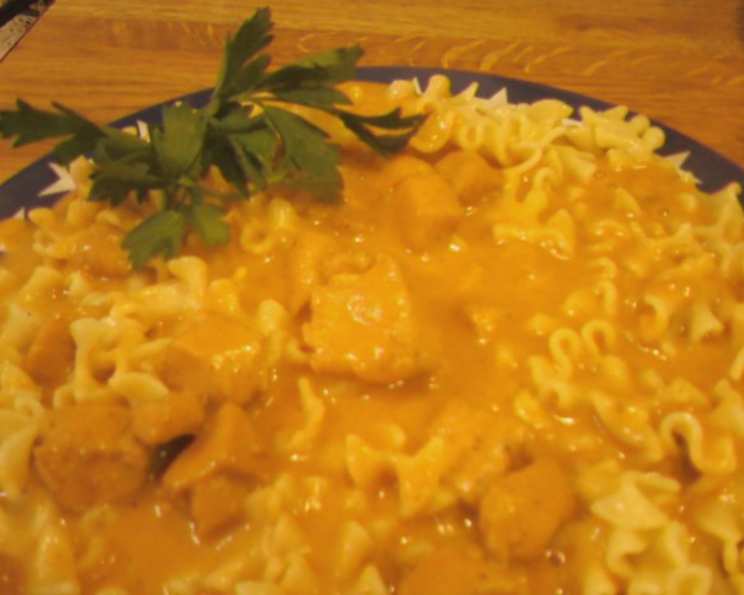
Aunt Sara’s Chicken Paprikash: A Legacy of Flavor
My earliest memories are filled with the aroma of Aunt Sara’s kitchen. The scent of simmering chicken, sweet paprika, and something undeniably comforting would waft through the air, beckoning us all to the table. Her Chicken Paprikash wasn’t just a meal; it was an experience, a warm hug on a cold day, and a testament to the power of simple ingredients transformed into something truly extraordinary. Every spoonful transported me back to those cherished moments, surrounded by family, laughter, and the undeniable magic of Aunt Sara’s cooking. It’s a dish I’ve strived to recreate, hoping to capture even a fraction of the love and warmth she poured into every pot.
Recipe Overview
- Prep Time: 30 minutes
- Cook Time: 1 hour 20 minutes
- Total Time: 1 hour 50 minutes
- Servings: 4-6
- Yield: 3 quarts
- Dietary Type: Not specified
Ingredients
- 1 1/2 lbs chicken breasts or 1 1/2 lbs chicken thighs
- 2 tablespoons vegetable oil
- 4 tablespoons sweet Hungarian paprika
- 2 tablespoons onion powder
- 2 teaspoons salt
- 1 teaspoon pepper
- 48 ounces chicken broth
- 2 carrots, peeled and cut in half
- 2 celery ribs, cut in half
- 1 medium onion, sliced
- 1 medium tomatoes, quartered
- 1 cup fresh parsley, uncut
- 16 ounces sour cream
- 2 cups water
- 1/2 cup flour
For the Dumplings:
- 3 eggs
- 2 cups flour
- 3/4 cup water
- 1/2 teaspoon salt
Equipment Needed
- Large kettle or Dutch oven
- Colander
- Large bowl
- Large plate
- Spoon or Spätzle cutter
Instructions
- Lightly flour the chicken pieces. This will help them brown nicely and contribute to a richer gravy.
- Heat the vegetable oil in a large kettle or Dutch oven over medium-high heat.
- Brown the chicken in the heated oil. Don’t overcrowd the pan; work in batches if necessary to ensure even browning. Remove the chicken from the pot and set aside.
- Add the paprika, onion powder, salt, pepper, carrots, celery, sliced onion, quartered tomatoes, fresh parsley, and chicken broth to the pot.
- Return the browned chicken to the pot.
- Bring the mixture to a simmer, then reduce heat to low, cover, and simmer until the chicken is cooked through, approximately one hour. The internal temperature of the chicken should reach 165°F (74°C).
- Remove the chicken pieces from the pot and let them cool slightly, until you are able to handle them comfortably.
- Carefully remove the meat from the bones, discarding the bones and skin. Shred or cut the chicken into bite-sized pieces.
- Pour the broth through a colander back into the kettle, discarding the cooked vegetables (the carrots, celery, onion, tomatoes, and parsley). These have imparted their flavor to the broth and are no longer needed.
- Allow the broth to cool slightly.
- In a separate bowl, whisk together the sour cream, water, and flour until smooth. This mixture will prevent the sour cream from curdling when added to the hot broth.
- Gradually stir the sour cream mixture into the warm broth in the kettle to make a creamy, slightly thick gravy. Ensure that the mixture is well combined to prevent lumps.
- Gently heat through, but do not boil, the gravy. If the gravy is too thick, add a little more water to thin it to your desired consistency.
- While the gravy is simmering, prepare the dumplings. Bring 4 quarts of water to a rolling boil in a separate large pot.
- In a large bowl, beat the eggs.
- Add the water, flour, and salt to the beaten eggs and mix to form a sticky dough. The dough should be wet enough to drop easily from a spoon.
- Place the dumpling dough on a large plate.
- Using a spoon, cut or drop small spoonfuls of dough into the boiling water. The size is up to you – traditionally, they are about grape-sized, but you can make them smaller if you prefer. If you have a Spätzle cutter, this works great as well.
- Stir the dumplings gently to prevent them from sticking together or to the bottom of the pot.
- Cook the dumplings for about 5 minutes, or until they float to the top of the water. Once they float, cook for another minute or two to ensure they are cooked through.
- Drain the cooked dumplings well in a colander.
- Add the shredded or cut chicken pieces back into the gravy in the kettle.
- Gently stir to combine the chicken with the gravy.
- Serve the chicken paprikash hot over the drained dumplings.
Expert Tips & Tricks
- For a richer, more complex flavor, use bone-in, skin-on chicken thighs. Remove the skin after browning if desired.
- Don’t skimp on the paprika! Sweet Hungarian paprika is key to the dish’s authentic flavor. You can also add a touch of smoked paprika for a deeper, smokier note.
- If your gravy is too thin, whisk a tablespoon of cornstarch with two tablespoons of cold water and stir it into the simmering gravy. Cook for a minute or two until thickened.
- To prevent the sour cream from curdling, make sure the broth is warm, not boiling, when you add the sour cream mixture. Tempering the sour cream by gradually adding warm broth to it before adding it to the pot can also help.
- For extra flavor, sauté a minced clove of garlic along with the onions at the beginning.
Serving & Storage Suggestions
Serve Aunt Sara’s Chicken Paprikash hot, ladled generously over the freshly cooked dumplings. A sprinkle of fresh parsley adds a touch of freshness and visual appeal. A dollop of extra sour cream on top is also a welcome addition.
Leftovers can be stored in an airtight container in the refrigerator for up to 3-4 days. To reheat, gently warm the paprikash on the stovetop over low heat, stirring occasionally, until heated through. You may need to add a little water or chicken broth if the gravy has thickened too much. Reheated dumplings may be slightly softer than freshly cooked dumplings.
The paprikash can also be frozen for up to 2-3 months. Thaw it overnight in the refrigerator before reheating. Freezing the dumplings separately is recommended to prevent them from becoming too soft.
Nutritional Information
| Nutrient | Amount per Serving | % Daily Value |
|---|---|---|
| Calories | 1077 kcal | N/A |
| Calories from Fat | 498 g | 46% |
| Total Fat | 55.4 g | 85% |
| Saturated Fat | 23.1 g | 115% |
| Cholesterol | 320.2 mg | 106% |
| Sodium | 2878.4 mg | 119% |
| Total Carbohydrate | 81.8 g | 27% |
| Dietary Fiber | 7.5 g | 29% |
| Sugars | 7.5 g | 30% |
| Protein | 62.1 g | 124% |
Note: Nutritional information is an estimate and may vary based on specific ingredients and portion sizes.
Variations & Substitutions
- Gluten-Free: Use gluten-free flour for both the chicken coating and the dumplings.
- Dairy-Free: Substitute the sour cream with a plant-based alternative like cashew cream or full-fat coconut milk. Be sure to choose an unflavored and unsweetened variety.
- Spicier: Add a pinch of cayenne pepper or a dash of hot sauce to the gravy for a spicy kick.
- Vegetarian: Replace the chicken with firm tofu or mushrooms for a vegetarian version.
FAQs (Frequently Asked Questions)
Q: Can I use chicken thighs instead of chicken breasts?
A: Absolutely! Chicken thighs will result in a richer, more flavorful dish due to their higher fat content.
Q: Can I make the dumplings ahead of time?
A: While you can make the dumpling dough ahead of time, it’s best to cook the dumplings just before serving to prevent them from becoming soggy.
Q: How can I prevent the sour cream from curdling?
A: Make sure the broth is warm, not boiling, when you add the sour cream mixture. Tempering the sour cream by gradually adding warm broth to it before adding it to the mixture can also help.
Q: Can I freeze Chicken Paprikash?
A: Yes, you can freeze Chicken Paprikash for up to 2-3 months. Thaw it overnight in the refrigerator before reheating. Freezing the dumplings separately is recommended to prevent them from becoming too soft.
Q: What is sweet Hungarian paprika?
A: Sweet Hungarian paprika is made from ground dried peppers that have a naturally sweet flavor. It is a key ingredient in Chicken Paprikash and contributes to the dish’s signature flavor and color.
Final Thoughts
Aunt Sara’s Chicken Paprikash is more than just a recipe; it’s a piece of my heart, a reminder of family, and a celebration of simple, honest cooking. I encourage you to try this recipe, adapt it to your liking, and share it with the people you love. Cooking is an act of love, and this dish is a beautiful way to express it. Don’t be afraid to experiment and make it your own. Let me know how it turns out – I’d love to hear your stories and see your creations! And, if you’re looking for the perfect accompaniment, try serving it with a crisp green salad and a glass of dry white wine. Enjoy!