
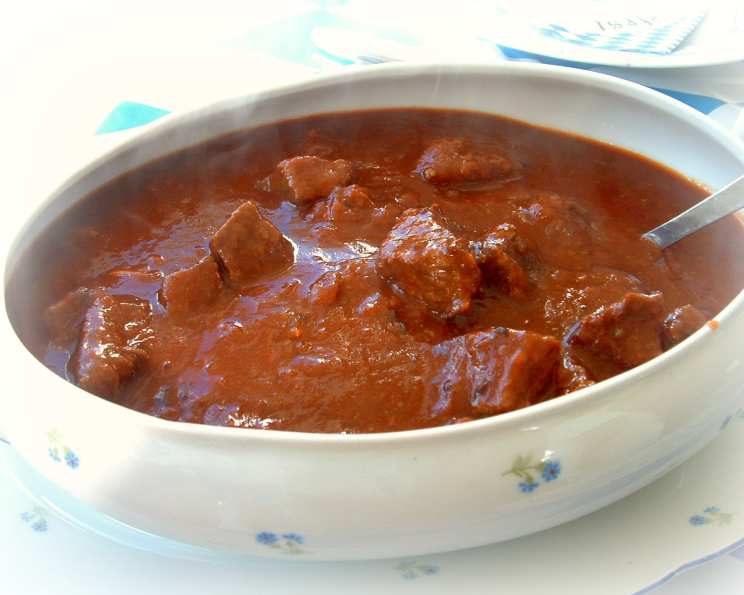
Austrian Goulash: A Culinary Journey to Comfort
The scent of simmering paprika and tender beef always transports me back to a small, cozy Gasthaus in the Austrian Alps. It was a blustery winter day, and the warmth radiating from the kitchen, combined with the promise of a hearty meal, was irresistible. I remember the rich, dark gravy clinging to perfectly cooked spaetzle, each bite a symphony of savory flavors that warmed me from the inside out. That goulash was more than just a dish; it was a feeling of home, a taste of tradition, and a memory I cherish.
Recipe Overview
- Prep Time: 30 minutes
- Cook Time: 2 hours 15 minutes
- Total Time: 2 hours 45 minutes
- Servings: 8-10
- Yield: About 8-10 servings
- Dietary Type: Varies based on side dish; can be dairy-free and easily adapted to gluten-free
Ingredients
- 4 lbs stew cut meat (beef chuck is ideal), cut into bite-sized chunks
- Flour seasoned with kosher salt & cracked pepper (about 1 cup flour, 1 Tbsp salt & pepper)
- 2 large onions, sliced thin
- Olive oil, for searing
- 1 tablespoon Hungarian hot paprika
- 1-2 teaspoon mild paprika
- 2 garlic cloves, sliced thin
- 1 small lemon, zested
- 1 tablespoon caraway seed
- 2 tablespoons tomato paste
- 4 cups tomato sauce (large can)
- ½ cup beef stock (or water) or ½ cup chicken stock (or water)
- Kosher salt & pepper, to taste
- Flour, for searing meat
Equipment Needed
- Large Dutch oven with a lid
- Large bowl
- Cutting board
- Knife
- Measuring cups and spoons
Instructions
- Begin by preparing your workspace. Cut the beef chuck into bite-sized chunks, ensuring they are relatively uniform in size for even cooking.
- Next, prepare the flour mixture for dredging. In a shallow dish, combine about 1 cup of flour with 1 tablespoon of kosher salt and cracked pepper. Mix well.
- Pat the meat dry with paper towels. This step is crucial for achieving a good sear.
- Dredge the beef chunks in the seasoned flour, ensuring each piece is fully coated. Shake off any excess flour.
- Place your Dutch oven on the stovetop over high heat. Add just enough olive oil to coat the bottom of the pan. You want the oil to shimmer but not smoke.
- Carefully add a piece of meat to the hot oil to test if it sizzles. If it does, the pan is ready for searing.
- Add the remaining meat to the pan, being careful not to overcrowd it. Sear the meat for about 3-4 minutes per side, until a golden crust forms. This crust is essential for developing a rich, flavorful gravy.
- If necessary, cook the meat in batches to avoid overcrowding the pan. Set the seared meat aside in a large bowl, making sure to collect any juices that accumulate – these will add flavor to the goulash.
- Once all the meat is seared, reduce the heat to medium. Add a little more olive oil to the pan if needed, and then add the sliced onions. Cook the onions until they are tender, about 3-4 minutes.
- Add the sliced garlic and cook until fragrant, about 30 seconds or so, being careful not to burn it.
- Stir in the tomato paste and paprika (both hot and mild) and cook for 1-2 minutes. This step is important for blooming the spices and enhancing their flavor.
- Pour in the tomato sauce, add the caraway seeds and lemon zest. Stir well to combine all the ingredients.
- Add the seared beef and any accumulated juices back into the Dutch oven.
- Pour in the beef stock (or water) or chicken stock (or water), ensuring the meat is mostly covered.
- Bring the mixture to a simmer for about 15 minutes, then taste for seasoning. Adjust with additional kosher salt and pepper as necessary. If the sauce is too thick, thin it with a little more beef stock or water until it reaches the consistency of a gravy.
- Cover the Dutch oven with a lid and simmer for 2 hours, or until the beef is very tender. Alternatively, you can transfer the goulash to a slow cooker and cook on low for 4-6 hours.
- Once the goulash is cooked, taste and adjust the seasoning one final time.
Expert Tips & Tricks
- Achieve maximum flavor: Don’t skimp on the searing process. A well-seared crust on the beef adds depth and richness to the goulash.
- Spice it up (or down): Adjust the amount of hot and mild paprika to suit your personal preference.
- Slow cooking is key: Simmering the goulash for a long time allows the flavors to meld together beautifully and tenderizes the beef.
- Lemon Zest: Don’t skip the lemon zest! It adds a brightness and complexity that balances the richness of the dish.
Serving & Storage Suggestions
Austrian Goulash is traditionally served hot over buttered egg noodles, spaetzle, or with Bavarian Bread Dumplings (“Semmel Knoedel”). A dollop of sour cream or a sprinkle of fresh parsley can add a nice finishing touch.
Leftover goulash can be stored in an airtight container in the refrigerator for up to 3-4 days. It can also be frozen for up to 2-3 months. To reheat, gently warm the goulash on the stovetop or in the microwave, adding a little extra stock or water if needed to prevent it from drying out.
Nutritional Information
| Nutrient | Amount per Serving | % Daily Value |
|---|---|---|
| Calories | 350 kcal (estimated) | 18% |
| Total Fat | 20g (estimated) | 31% |
| Saturated Fat | 8g (estimated) | 40% |
| Cholesterol | 80mg (estimated) | 27% |
| Sodium | 700mg (estimated) | 29% |
| Total Carbohydrate | 15g (estimated) | 5% |
| Dietary Fiber | 4g (estimated) | 16% |
| Sugars | 8g (estimated) | |
| Protein | 30g (estimated) | 60% |
Nutritional information is an estimate and may vary based on specific ingredients and portion sizes.
Variations & Substitutions
- Gluten-Free: Use a gluten-free flour blend for dredging the beef. Serve over gluten-free noodles or rice.
- Spicier Goulash: Add a pinch of cayenne pepper or a finely chopped chili pepper to the sauce for extra heat.
- Vegetarian Goulash: Substitute the beef with hearty vegetables such as mushrooms, potatoes, and bell peppers. Use vegetable broth instead of beef stock.
- Wine Addition: Add 1/2 cup of dry red wine along with the beef stock for a deeper, more complex flavor.
FAQs (Frequently Asked Questions)
Q: Can I make this goulash in a slow cooker?
A: Yes, absolutely! After searing the meat and sautéing the vegetables, transfer everything to a slow cooker and cook on low for 4-6 hours, or until the beef is very tender.
Q: What kind of beef is best for goulash?
A: Beef chuck is the most commonly used cut, as it becomes incredibly tender and flavorful during the long cooking process. Other options include beef brisket or round roast.
Q: Can I freeze Austrian Goulash?
A: Yes, goulash freezes very well. Allow it to cool completely before transferring it to an airtight container or freezer bag. It can be stored in the freezer for up to 2-3 months.
Q: Is the lemon zest essential?
A: While it’s optional, the lemon zest adds a bright, citrusy note that balances the richness of the goulash. It’s highly recommended for enhancing the overall flavor profile.
Q: What can I serve with Austrian Goulash?
A: Traditional accompaniments include buttered egg noodles, spaetzle, or Bavarian bread dumplings. A side of sauerkraut or a simple green salad also complements the dish nicely.
Final Thoughts
Austrian Goulash is a labor of love, but the result is a deeply satisfying and flavorful dish that’s perfect for a cozy night in or a special gathering with friends and family. Don’t be intimidated by the cooking time – it’s mostly hands-off simmering that allows the flavors to meld together beautifully. I encourage you to try this recipe and experience the taste of authentic Austrian comfort food. Feel free to experiment with the spice levels and side dishes to create your own unique version. Guten Appetit!