
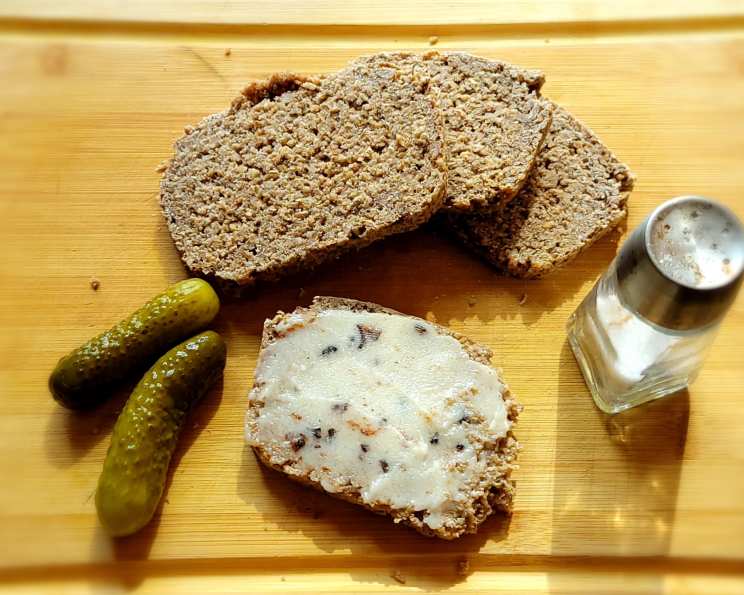
Authentic German Black Bread (Schwarzbrot)
The scent of Schwarzbrot baking always takes me back to my grandmother’s kitchen. She was a master baker, and her black bread was legendary. It wasn’t just the taste – a deep, earthy rye that lingered on the palate – but the whole experience. The rhythmic clatter of her grain mill, the slow, patient rise of the dough, and the comforting warmth emanating from the oven—these are sensory memories etched in my mind. This recipe is my attempt to recreate that magic, to share a piece of my heritage with you.
Recipe Overview
- Prep Time: 12-14 hours
- Cook Time: 3.5 hours
- Total Time: 16-18 hours
- Servings: Varies
- Yield: 2 loaves
- Dietary Type: Vegan
Ingredients
- 6 cups water
- 1 cup sourdough starter
- 7 ½ cups rye berries, cracked (measure before cracking)
- 1 tablespoon salt
Equipment Needed
- Grain mill (optional, but recommended)
- Large mixing bowl
- Bread forms (preferably glass)
- Spatula
- Parchment paper
- Aluminum foil
- Cooling rack
Instructions
-
In a large mixing bowl, combine the water, sourdough starter, and one half of the cracked rye berries. The mixture will be quite soupy at this stage. Don’t worry, that’s normal!
-
Cover the bowl and allow the mixture to set at around 70°F (room temperature) for 8 to 10 hours. This initial fermentation period is crucial for developing the characteristic flavor of Schwarzbrot. Think of it as the foundation upon which the whole bread is built.
-
After the 8-10 hour rest, you’ll notice that the mixture has absorbed a significant amount of the water and has thickened to a consistency similar to porridge. This is exactly what you want.
-
Save 1 cup of this mixture to use as a starter for your next batch of black bread. This is a great way to maintain a consistent flavor profile over time.
-
Add the salt and the rest of the cracked rye berries to the remaining dough in the bowl. Mix thoroughly to ensure even distribution of ingredients.
-
Allow the dough to ferment again at about 70°F for another 4 hours. During this time, the dough will continue to develop in flavor and texture.
-
At the end of the 4-hour fermentation, it’s time to work and squeeze the dough with your hands. This is not like kneading wheat bread dough. Rye dough is very moist, slippery, and lacks gluten, so kneading is not possible. The goal here is to develop cohesiveness by compressing the ingredients together. When you squeeze a handful, it should squirt out between your fingers.
-
After working the dough for several minutes, pack it tightly into your bread forms. Glass forms are preferable because the moistness and acidity of the dough, combined with the long baking time, can cause steel pans to rust and aluminum pans to etch. If you must use metal pans, line them thoroughly with parchment paper.
-
The dough won’t rise much during baking, so it’s important to minimize air pockets in the bread by packing it firmly. Smooth the top of the dough with a spatula for a neat appearance.
-
Lay a piece of parchment paper over the top of each form, and then cover tightly with aluminum foil. The aluminum foil prevents the bread from drying out, while the parchment paper acts as a barrier to prevent the aluminum foil from dissolving into the bread due to the acidity of the dough.
-
Bake at 225°F (107°C) for 3½ hours. The low temperature and long baking time are essential for fully cooking the rye and developing the characteristic dense texture of Schwarzbrot.
-
After the 3½ hours of baking, turn off the oven but allow the bread to remain inside for a couple more hours. This allows the bread to slowly cool and further firm up.
-
Carefully remove the bread from the pans and place it on a rack to cool and dry completely.
-
Ideally, you should wait a day or two until the bread becomes firmer before attempting to slice it. Schwarzbrot is best when it has had time to fully mature.
Expert Tips & Tricks
- Cracking the Rye: While you can purchase cracked rye, freshly cracking the berries in a grain mill right before using them produces the best flavor. Aim for a coarse crack, not a fine flour.
- Temperature Control: Maintaining a consistent temperature during fermentation is key. If your kitchen is too cold, consider using a proofing box or placing the dough in a slightly warmed oven (turned off, of course!).
- Dough Consistency: Don’t be alarmed by the wet and slippery texture of the dough. This is normal for 100% rye bread.
- Baking Time: Baking times may vary slightly depending on your oven. The bread is done when it feels firm to the touch and a toothpick inserted into the center comes out clean.
Serving & Storage Suggestions
Schwarzbrot is traditionally served thinly sliced and eaten open-faced. It pairs beautifully with strong cheeses, smoked meats, pickled herring, or even just a simple spread of butter. It is also excellent toasted.
To store, wrap the cooled bread tightly in plastic wrap or place it in an airtight container. It will keep at room temperature for up to a week, in the refrigerator for up to two weeks, or in the freezer for up to three months. If freezing, slice the bread before freezing for easier use.
To reheat, simply toast a slice or two, or wrap the whole loaf in foil and warm it in a low oven (200°F) for about 20 minutes.
Nutritional Information
| Nutrient | Amount per Serving | % Daily Value |
|---|---|---|
| Calories | ~200 kcal | ~10% |
| Total Fat | ~1g | ~1% |
| Saturated Fat | ~0g | ~0% |
| Cholesterol | 0mg | 0% |
| Sodium | ~400mg | ~17% |
| Total Carbohydrate | ~40g | ~15% |
| Dietary Fiber | ~10g | ~36% |
| Sugars | ~1g | ~2% |
| Protein | ~5g | ~10% |
Note: Nutritional information is an estimate and may vary depending on specific ingredients and portion sizes.
Variations & Substitutions
- Flavor Boost: Add caraway seeds, fennel seeds, or anise seeds to the dough for a more complex flavor profile. A tablespoon or two should suffice.
- Sweetness: A touch of molasses or honey can add a subtle sweetness to the bread.
- Gluten-Free: This recipe is naturally gluten-free as it uses 100% rye. However, ensure your sourdough starter is also gluten-free.
- Darker Color: Add a tablespoon of instant coffee granules or cocoa powder to the dough for a darker color and richer flavor.
FAQs (Frequently Asked Questions)
Q: Why is the baking time so long?
A: The long baking time at a low temperature is necessary to fully cook the rye and develop the dense, chewy texture characteristic of Schwarzbrot.
Q: Can I use pre-cracked rye berries instead of cracking them myself?
A: Yes, you can use pre-cracked rye berries. However, freshly cracked berries will provide a more intense flavor.
Q: My dough is very sticky. Is that normal?
A: Yes, rye dough is naturally very sticky and moist. It does not behave like wheat-based dough.
Q: Can I use a different type of pan?
A: Glass pans are recommended due to the acidity of the dough. If using metal pans, line them well with parchment paper to prevent rusting or etching.
Q: How long does the starter last?
A: If properly stored in the refrigerator, your reserved sourdough starter can last for up to a week. Refresh it before using it in your next batch.
Final Thoughts
Baking Schwarzbrot is a labor of love, a journey back in time to simpler, more wholesome traditions. It requires patience and attention, but the reward is a deeply satisfying and flavorful bread that nourishes both body and soul. I encourage you to try this recipe, experiment with different flavors, and share your creations with friends and family. And don’t forget to let me know how it turns out! Pair a slice with some creamy goat cheese and a crisp apple for a truly delightful experience.