
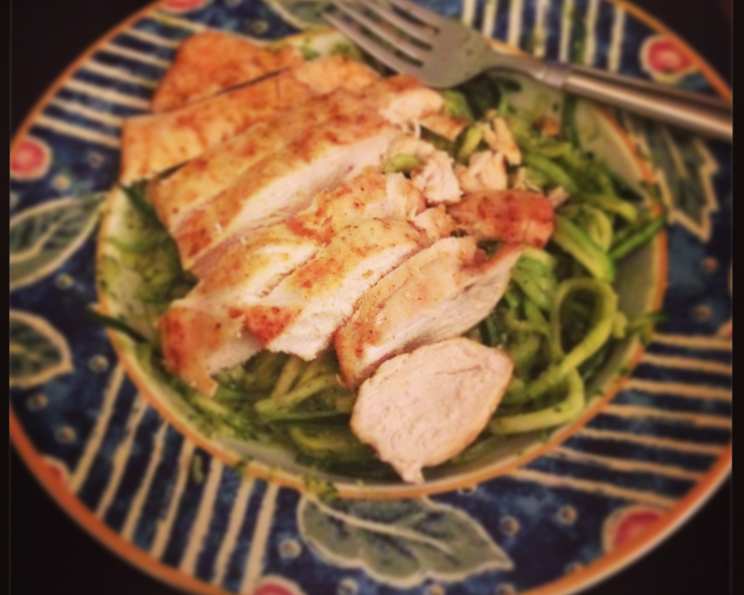
Luscious Avocado Pesto: A Vibrant Twist on a Classic
The scent of fresh basil always transports me back to my grandmother’s garden in Italy. She had an enormous patch of it, and we’d spend hours picking leaves, their peppery aroma clinging to our fingers. While she typically made traditional pesto with pine nuts and Parmesan, I remember one summer when she experimented with avocados, a relatively new ingredient to her. The result was a creamy, vibrant sauce that was just as delightful as the original, and it opened my eyes to the versatility of pesto and the magic of avocados. This recipe is inspired by that memory, a tribute to her adventurous spirit in the kitchen.
Recipe Overview
- Prep Time: 15 minutes
- Cook Time: 5 minutes
- Total Time: 20 minutes
- Servings: 3-4
- Dietary Type: Paleo, Whole30, Gluten-Free, Dairy-Free (optional)
Ingredients
- 1 large avocado (pit removed)
- 1 bunch fresh basil
- 1 teaspoon sea salt
- ½ teaspoon ground pepper
- 3 garlic cloves (crushed)
- 2 tablespoons extra virgin olive oil
- ½ lemon (squeezed)
- ¼ – ½ teaspoon red pepper flakes (optional)
- 5 large zucchini (option #1)
- 1 tablespoon bacon fat (olive oil or coconut oil also work- option #1)
- 1 lb pasta (option #2)
- 1 tablespoon salt (or to taste-option #2)
- 2-4 chicken breasts (optional)
Equipment Needed
- Food processor
- Knife
- Cutting board
- Colander (optional)
- Paper towels (optional)
- Frying pan (for zucchini noodles)
- Large pot (for pasta)
Instructions
-
Begin by preparing the avocado pesto. Cut the avocado into cubes and place them in the food processor.
-
Wash and dry the basil. Cut off the stems and roughly chop the basil before adding it to the avocado in the food processor.
-
Add the remaining pesto ingredients—sea salt, ground pepper, crushed garlic cloves, extra virgin olive oil, lemon juice, and red pepper flakes (if using)—to the food processor.
-
Blend all the ingredients in the food processor until the pesto is smooth and creamy. Scrape down the sides of the food processor as needed to ensure all ingredients are fully incorporated.
-
Now, choose your preferred noodle base. For a lighter, paleo-friendly option, proceed with option #1, the zucchini noodles. For a classic pasta dish, proceed with option #2.
Option #1: Zucchini Noodles
- Julienne the zucchinis using a spiralizer or vegetable peeler.
- Place the zucchini noodles in a colander for 10-15 minutes to drain excess moisture. Alternatively, you can place them on paper towels and gently squeeze to remove moisture. This step is crucial to prevent a watery sauce. A sprinkle of sea salt can be added to taste and tossed to coat (optional).
- Add bacon fat (or olive oil or coconut oil) to a frying pan over medium heat and let it melt.
- Add the zucchini noodles to the pan and cook for 2-3 minutes, or until al dente. Be careful not to overcook them, as they can become mushy.
Option #2: Pasta
- Cook the pasta according to the package instructions.
- Add a tablespoon of sea salt (or to taste) to the cooking water (optional). This seasons the pasta from the inside out.
- Cook the pasta until al dente.
- Drain the pasta in a colander and return it to the saucepan on medium heat.
-
Add the prepared avocado pesto to either the zucchini noodles (option #1) or the pasta (option #2).
-
Toss the noodles and sauce to ensure all noodles are evenly coated in the vibrant green sauce.
-
Cook for another 2-4 minutes, or until heated through. Be mindful not to overcook the zucchini noodles. Alternatively, you can heat the sauce separately and serve it on top of the noodles/pasta.
-
Serve immediately with or without grilled or baked chicken breasts (optional) for a complete and satisfying meal.
Expert Tips & Tricks
- For a smoother pesto: If your food processor struggles to create a completely smooth sauce, add a tablespoon of water or more olive oil to help emulsify the ingredients.
- Prevent browning: Avocado can brown quickly due to oxidation. To minimize this, add the lemon juice right away and store any leftover pesto in an airtight container with a layer of olive oil on top. Press a piece of plastic wrap directly onto the surface of the pesto before sealing.
- Adjust consistency: If the pesto is too thick, add a little more olive oil or lemon juice to reach your desired consistency. If it’s too thin, add a bit more avocado.
- Toast the garlic: For a deeper, more mellow garlic flavor, lightly sauté the crushed garlic in a tablespoon of olive oil before adding it to the food processor. Be careful not to burn it.
Serving & Storage Suggestions
Serve the avocado pesto immediately after preparation for the best flavor and color. It’s delicious tossed with pasta or zucchini noodles, as a spread on sandwiches or wraps, or as a dip for vegetables.
Store any leftover avocado pesto in an airtight container in the refrigerator. It will keep for up to 2 days, but the color may darken slightly. To help prevent browning, press a piece of plastic wrap directly onto the surface of the pesto before sealing the container.
Freezing is not recommended, as the texture of the avocado can change upon thawing.
To reheat, gently warm the pesto in a saucepan over low heat, stirring occasionally, or microwave in short intervals. Add a splash of olive oil or water if needed to restore its creamy consistency.
Nutritional Information
| Nutrient | Amount per Serving | % Daily Value |
|---|---|---|
| Calories | 436 kcal | 22% |
| Total Fat | 35g | 54% |
| Saturated Fat | 5g | 25% |
| Cholesterol | 0mg | 0% |
| Sodium | 790mg | 33% |
| Total Carbohydrate | 25g | 8% |
| Dietary Fiber | 10g | 40% |
| Sugars | 5g | |
| Protein | 8g | 16% |
Note: Nutritional information is an estimate and may vary based on specific ingredients and portion sizes.
Variations & Substitutions
- Nut-Free Pesto: This recipe is naturally nut-free, making it a great option for those with allergies.
- Spicy Pesto: Adjust the amount of red pepper flakes to your liking for a spicier sauce. You can also add a pinch of cayenne pepper.
- Vegan Pesto: Omit the optional chicken for a fully vegan meal.
- Add Greens: Incorporate other greens like spinach or kale for added nutrients and a slightly different flavor profile.
- Lemon-Lime Pesto: Substitute half the lemon juice with lime juice for a tangy twist.
- Sun-Dried Tomato Pesto: Add a few sun-dried tomatoes (oil-packed, drained) to the food processor for a richer, more complex flavor.
FAQs (Frequently Asked Questions)
Q: Why is my avocado pesto turning brown?
A: Avocado oxidizes quickly when exposed to air. Adding lemon juice helps slow down the process. Store leftover pesto in an airtight container with a layer of olive oil on top and plastic wrap pressed directly onto the surface.
Q: Can I use dried basil instead of fresh?
A: Fresh basil is highly recommended for the best flavor. Dried basil will have a significantly different taste and texture. If you must use dried basil, use about 1 tablespoon and be aware that the flavor will not be as vibrant.
Q: Can I make this pesto ahead of time?
A: It’s best to make this pesto fresh, but you can prepare it a few hours in advance. Store it in an airtight container in the refrigerator with plastic wrap pressed against the surface to prevent browning.
Q: What kind of pasta works best with this pesto?
A: Almost any pasta shape will work well with this pesto. Try penne, fusilli, or linguine for a good sauce-to-pasta ratio.
Q: Can I freeze avocado pesto?
A: Freezing is not recommended, as the texture of the avocado can change upon thawing, resulting in a less creamy sauce. However, if you must freeze it, consider freezing it in small portions (ice cube trays) to minimize thawing.
Final Thoughts
I hope this Avocado Pesto recipe inspires you to get creative in the kitchen! It’s a delicious and healthy alternative to traditional pesto, and it’s incredibly versatile. Whether you’re enjoying it with pasta, zoodles, or as a dip, I’m confident you’ll love the vibrant flavors and creamy texture. Don’t hesitate to experiment with different variations and let me know what you think. Buon appetito!