
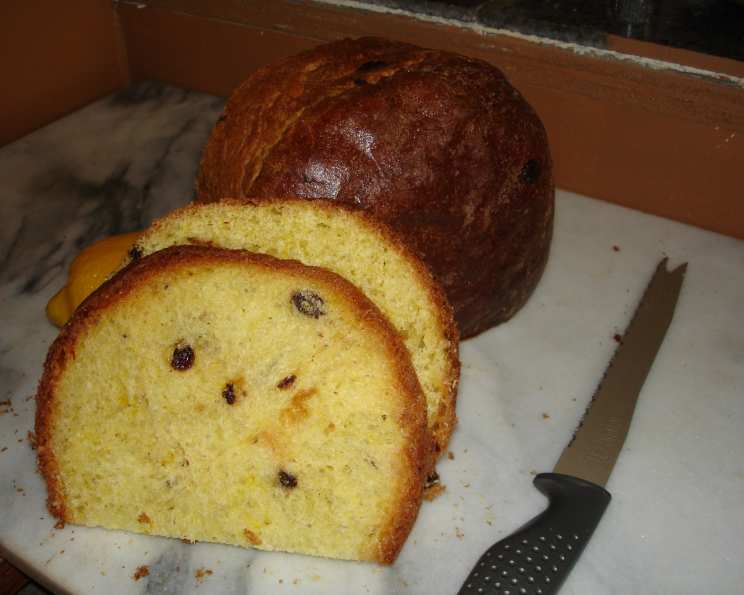
B. Voycheshin’s Easter Bread With Saffron and Raisins
The memory of my grandmother’s kitchen during Easter still warms me to this day. The air, thick with the aroma of yeast and something subtly floral, almost otherworldly, meant only one thing: Easter bread. Not just any Easter bread, but her Easter bread, the one infused with the sunshine hue and delicate fragrance of saffron. I remember standing on a stool, mesmerized as she carefully folded plump, rum-soaked raisins into the golden dough, each movement a practiced ritual passed down through generations. The taste was pure joy, a fluffy, sweet cloud with bursts of fruit and the unforgettable whisper of saffron.
Recipe Overview
- Prep Time: 3 hours
- Cook Time: 45-55 minutes
- Total Time: 4 hours 45 minutes
- Yields: 4 loaves
- Dietary Type: Not specified
Ingredients
- 1/2 cup warm water
- 2 teaspoons sugar
- 2 1/2 tablespoons yeast
- 1 cup milk, scalded
- 1 1/3 cups flour, sifted
- 1/2 cup butter, melted
- 1/4 cup vegetable oil
- 2 teaspoons vanilla
- 1 lemon, zested
- 2 teaspoons lemon juice
- 1/2 teaspoon saffron thread (to taste)
- 10 egg yolks
- 2 eggs
- 3/4 cup sugar
- 2 teaspoons salt
- 1-2 cups seedless raisins, soaked
- 1/4 cup flour (for coating raisins)
- 5 – 5 1/2 cups flour, sifted
- 1 egg white, beaten (for glazing)
Equipment Needed
- Large bowl with a tight-fitting cover
- Medium bowl
- Electric beaters or stand mixer
- Flat hand-held spatula
- Loaf pans
- Floured board
Instructions
- Begin by scalding the milk and setting it aside to cool completely. This is crucial for activating the yeast properly.
- Next, prepare the raisins. Place them in water to reconstitute while you work on the other components. They should be plump and juicy by the time you need them.
- In a separate bowl, combine the warm water, 2 teaspoons of sugar, and the yeast. Allow this mixture to stand until it becomes frothy, approximately 10 minutes. This step ensures the yeast is active and will leaven the bread properly.
- In a very large bowl with a tight-fitting cover, beat the cooled milk and the initial 1 1/3 cups of sifted flour vigorously with electric beaters. The goal is to create a smooth batter, free of lumps.
- Add the yeast mixture to the milk and flour batter, beating well to combine. Cover the bowl tightly and let it stand for at least 30 minutes, or up to 2 hours. This allows the yeast to begin working and develop the initial flavor of the dough.
- While the dough is resting, prepare the saffron infusion. In a small bowl, mix together the warm melted butter, vegetable oil, vanilla, lemon zest, lemon juice, and saffron. The warmth helps to extract the color and flavor from the saffron, creating a potent infusion. Allow this mixture to steep and strengthen its flavor while you continue with the other steps.
- In a medium bowl, separate the eggs. Place the 10 yolks and the 2 whole eggs in the bowl (reserve the whites for another use, saving one for glazing later). Beat the eggs and yolks until they are frothy but not stiff. Add the 3/4 cup of sugar and the salt and continue beating until both are completely dissolved. This creates a light and airy base for the bread.
- Add the butter/oil/saffron mixture to the egg mixture and beat well to combine. The saffron will tint the mixture a beautiful golden hue.
- Now, combine the egg/butter/saffron mixture into the yeast and flour mixture that was set aside earlier. Beat this thoroughly to ensure even distribution.
- Take this moment to drain and pat dry the soaked raisins. Toss them in the 1/4 cup of flour so that they do not sink to the bottom of the loaves during baking.
- Begin adding the remaining 5 to 5 1/2 cups of sifted flour to the egg/butter/yeast mixture, one cup at a time. Beat well between each cup to ensure the flour is fully incorporated. Continue beating until you can no longer beat easily with the electric beaters.
- At around 3 cups of flour, you might need to stop using the electric beaters and switch to stirring by hand. A flat hand-held spatula can be helpful for this task, allowing you to work the flour in evenly without overworking the dough.
- Once all the flour is blended evenly, gently fold in the floured raisins. Distribute them throughout the batter, being careful not to break them.
- The dough will be more like a very thick batter at this stage. Turn the batter out onto a well-floured board, and with oiled hands, knead it thoroughly.
- Oil the dough and place it back into the bowl, cover it tightly, and let it stand until it has doubled in size (approximately 60 minutes). This allows the yeast to fully develop and create a light and airy texture.
- Punch the dough down to release the air.
- Form the dough into loaves and place them in greased loaf pans.
- Let the loaves double in size again (approximately 50 minutes).
- Bake the loaves in a preheated 400°F (200°C) oven for 15 minutes.
- Brush the tops of the loaves with the beaten egg white for a glossy finish. Then, reduce the oven temperature to 350°F (175°C).
- Continue baking for 30-40 minutes, or until the loaves are golden brown and sound hollow when tapped on the bottom.
- Remove the loaves from the oven and let them cool in the pans for a few minutes before transferring them to a wire rack to cool completely.
Expert Tips & Tricks
- For an even richer flavor, consider soaking the raisins in a bit of rum or brandy instead of water.
- The saffron infusion can be made a day in advance to allow the flavors to fully develop.
- If you don’t have loaf pans, you can bake the bread in a round shape on a baking sheet lined with parchment paper. Just adjust the baking time accordingly.
- If the tops of the loaves start to brown too quickly during baking, tent them loosely with foil.
Serving & Storage Suggestions
Serve this Easter bread warm or at room temperature. It’s delicious on its own, with a smear of butter, or as a base for French toast. Leftovers can be stored in an airtight container at room temperature for up to 3 days, or in the refrigerator for up to a week. For longer storage, freeze the bread for up to 2 months. Thaw completely before serving. To reheat, wrap the bread in foil and warm it in a 350°F (175°C) oven for about 10-15 minutes.
Nutritional Information
| Nutrient | Amount per Serving | % Daily Value |
|---|---|---|
| Calories | 1572.1 kcal | N/A |
| Calories from Fat | 487 g | 31% |
| Total Fat | 54.1 g | 83% |
| Saturated Fat | 22.6 g | 112% |
| Cholesterol | 647.3 mg | 215% |
| Sodium | 1436.7 mg | 59% |
| Total Carbohydrate | 236.1 g | 78% |
| Dietary Fiber | 9.8 g | 39% |
| Sugars | 62.4 g | 249% |
| Protein | 37.9 g | 75% |
Note: Nutritional information is an estimate and may vary based on specific ingredients and portion sizes.
Variations & Substitutions
- Citrus Zest: Experiment with different citrus zests, such as orange or grapefruit, to add a unique flavor dimension.
- Nuts: Incorporate chopped nuts, like almonds or walnuts, for added texture and richness.
- Glaze: After baking, brush the cooled loaves with a simple glaze made from powdered sugar and milk for extra sweetness.
FAQs (Frequently Asked Questions)
Q: Can I use active dry yeast instead of instant yeast?
A: Yes, you can substitute active dry yeast. Just proof it in warm water for a bit longer (about 15 minutes) before adding it to the other ingredients.
Q: Why is my bread not rising?
A: Several factors can prevent bread from rising, including using expired yeast, not proofing the yeast properly, or not kneading the dough enough. Make sure your yeast is fresh, and follow the recipe instructions carefully.
Q: Can I make this bread ahead of time?
A: Yes, you can prepare the dough ahead of time and refrigerate it overnight. Just let it come to room temperature before shaping and baking.
Q: How do I prevent the raisins from sinking to the bottom of the loaf?
A: Coating the raisins in flour helps to prevent them from sinking. Also, don’t over-knead the dough after adding the raisins.
Q: Can I freeze this bread?
A: Yes, this bread freezes well. Let it cool completely, wrap it tightly in plastic wrap, and then place it in a freezer bag. It can be frozen for up to 2 months.
Final Thoughts
This Easter bread is more than just a recipe; it’s a connection to heritage, a celebration of spring, and a reminder of cherished memories. The aroma alone is enough to transport you to a sun-drenched kitchen filled with love and laughter. I encourage you to try this recipe, to make it your own, and to share it with those you love. Whether you enjoy it warm from the oven with a cup of tea or use it to make the most decadent French toast, this bread is sure to become a beloved tradition in your own home. Don’t hesitate to experiment and adapt the recipe to your personal tastes. Happy baking!