
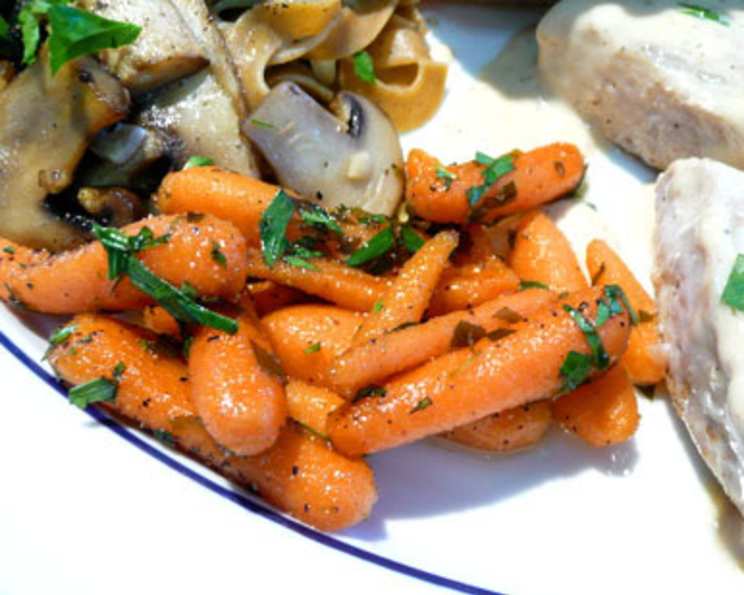
Baby Carrots With Tarragon: A Springtime Symphony
There’s a certain magic in the simplicity of vegetables, especially when they’re treated with respect and a little bit of flair. I remember one particularly blustery spring day, foraging for wild herbs with my grandmother. We unearthed a handful of vibrant, petite carrots from her garden, still clinging to the earth. Back in her cozy kitchen, she tossed them with butter, a splash of vinegar, and a generous handful of freshly snipped tarragon. The aroma filled the room, a promise of warmth and sunshine on a gray day. Those sweet, herb-kissed carrots were a revelation, a simple side that elevated the entire meal, and I’ve been making them ever since.
Recipe Overview
- Prep Time: 10 minutes
- Cook Time: 18 minutes
- Total Time: 28 minutes
- Servings: 6
- Yield: About 6 servings
- Dietary Type: Vegetarian, Gluten-Free
Ingredients
- 4 bunches baby carrots, peeled and trimmed, keep 3-inches of stems left intact
- 1/4 cup water
- 3 tablespoons fresh tarragon, minced (or 3 teaspoons dried tarragon)
- 2 tablespoons butter
- 1 tablespoon white wine vinegar
- 1 tablespoon honey
- Salt and pepper to taste
Equipment Needed
- Large, heavy skillet
- Measuring cups and spoons
- Cutting board
- Knife
Instructions
- In a large, heavy skillet, combine the baby carrots, 1/4 cup water, 1 1/2 tablespoons minced fresh tarragon (or 1 1/2 teaspoons dried), 2 tablespoons butter, 1 tablespoon white wine vinegar, and 1 tablespoon honey.
- Bring the mixture to a boil over medium-high heat.
- Once boiling, reduce the heat to medium, cover the skillet, and simmer until the carrots are almost tender, approximately 12 minutes. Check the carrots by piercing them with a fork. They should offer slight resistance.
- Uncover the skillet. Continue to cook until the carrots are tender and the liquid has reduced to a glaze, about 6 minutes longer. Watch carefully during this stage to prevent the glaze from burning. You can adjust the heat if needed. The glaze should cling to the carrots, creating a beautiful sheen.
- Season the carrots with salt and pepper to taste. Don’t be afraid to be generous – salt and pepper enhance the sweetness of the carrots and the herbaceousness of the tarragon.
- Transfer the glazed carrots to a serving platter.
- Sprinkle the remaining 1 1/2 tablespoons minced fresh tarragon (or 1 1/2 teaspoons dried) over the carrots before serving. This final flourish of fresh tarragon adds a burst of aroma and flavor.
Expert Tips & Tricks
- Carrot Prep: To ensure even cooking, select baby carrots that are roughly the same size. If some are significantly larger, you may want to halve or quarter them lengthwise.
- Tarragon Timing: If using dried tarragon, add it at the beginning of the cooking process along with the water and other ingredients. Dried herbs need time to rehydrate and release their flavors.
- Glaze Consistency: The key to a perfect glaze is patience. Don’t rush the reduction process. If the glaze becomes too thick too quickly, add a tablespoon of water to loosen it. Conversely, if it’s taking too long to reduce, increase the heat slightly, but watch carefully to prevent burning.
- Butter Alternative: For a dairy-free version, substitute the butter with olive oil or a plant-based butter alternative.
- Acid Adjustment: If you prefer a less tangy flavor, reduce the amount of white wine vinegar slightly. You can also substitute lemon juice for a brighter flavor.
- Sweetness Adjustment: Adjust the honey according to your preference. If you prefer a less sweet dish, reduce the amount of honey or omit it altogether.
- Carrot Doneness: If you want more tender carrots, feel free to extend the simmering and glazing time.
Serving & Storage Suggestions
These baby carrots with tarragon are best served warm, immediately after cooking. They make an excellent side dish for roasted chicken, grilled fish, or a vegetarian main course like lentil loaf. The bright flavors and vibrant color of the carrots add a touch of elegance to any meal.
Leftovers can be stored in an airtight container in the refrigerator for up to 3 days. To reheat, gently warm them in a skillet over low heat or in the microwave. Add a splash of water or broth if needed to prevent them from drying out. While freezing is possible, the texture of the carrots may change slightly upon thawing.
Nutritional Information
| Nutrient | Amount per Serving | % Daily Value |
|---|---|---|
| Calories | 65 kcal | 3% |
| Total Fat | 3.5g | 5% |
| Saturated Fat | 2g | 10% |
| Cholesterol | 8mg | 3% |
| Sodium | 30mg | 1% |
| Total Carbohydrate | 7g | 2% |
| Dietary Fiber | 1g | 4% |
| Sugars | 4g | – |
| Protein | 0.5g | 1% |
Nutritional information is an estimate and may vary based on specific ingredients and cooking methods.
Variations & Substitutions
- Maple Glazed Carrots: Substitute maple syrup for the honey for a richer, more autumnal flavor.
- Ginger-Glazed Carrots: Add a teaspoon of grated fresh ginger to the skillet along with the carrots for a spicy kick.
- Balsamic Glazed Carrots: Use balsamic vinegar instead of white wine vinegar for a deeper, more complex flavor.
- Spiced Carrots: Add a pinch of cumin, coriander, or chili flakes to the skillet for a warm, aromatic twist.
- Other Herbs: While tarragon is the star of this recipe, you can experiment with other herbs like parsley, chives, or dill.
FAQs (Frequently Asked Questions)
Q: Can I use regular carrots instead of baby carrots?
A: Yes, you can. Peel and slice regular carrots into 1/4-inch thick rounds or sticks. Adjust the cooking time accordingly, as they may take longer to become tender.
Q: Can I make this recipe ahead of time?
A: You can prepare the carrots up to the point of glazing them, then refrigerate them until ready to finish. Add the tarragon and complete the glazing process just before serving.
Q: I don’t have fresh tarragon. Can I use dried?
A: Yes, you can substitute dried tarragon for fresh, using about 1 teaspoon dried tarragon for every tablespoon of fresh. Add the dried tarragon at the beginning of the cooking process.
Q: The glaze is burning. What should I do?
A: Immediately reduce the heat to low and add a tablespoon of water or broth to the skillet to deglaze it. Stir constantly to prevent further burning.
Q: Can I add other vegetables to this dish?
A: Absolutely! Consider adding other root vegetables like parsnips, turnips, or sweet potatoes for a colorful and flavorful medley.
Final Thoughts
I hope this recipe for baby carrots with tarragon brings as much joy to your table as it has to mine. It’s a testament to the fact that simple ingredients, treated with care and attention, can create something truly special. Don’t be afraid to experiment with different herbs and flavors to find your perfect combination. And most importantly, share your culinary creations with loved ones and savor the simple pleasures of good food and good company. Bon appétit!