
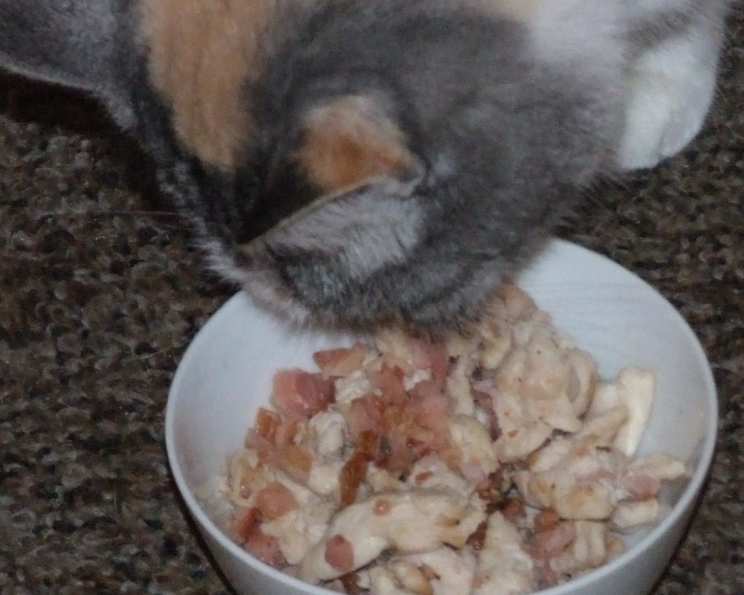
Bacon and Chicken Stir-Fry: A Gourmet Treat for Your Feline Friend
My earliest memory involving cooking for a pet isn’t exactly glamorous. It involves a very anxious phone call from my sister, whose cat, Mr. Whiskers, had somehow gotten into a bag of shrimp crackers and wasn’t feeling his best. The vet recommended a bland diet of boiled chicken and rice, and my sister, bless her heart, promptly called me in a panic, convinced she would somehow mess up boiling chicken. It seemed ridiculous at the time, but it sparked a realization: our pets are family, and we want to give them the best, even when it comes to their food. This simple bacon and chicken stir-fry is a far cry from bland boiled chicken – it’s a culinary experience designed to delight your cat’s taste buds, though perhaps best kept as a special occasion treat!
Recipe Overview
- Prep Time: 5 minutes
- Cook Time: 5 minutes
- Total Time: 10 minutes
- Servings: 1
- Dietary Type: High Protein
Ingredients
- 1 tablespoon butter
- 1 slice bacon, finely diced (Canadian or British bacon)
- ¼ cup chicken, cubed
Equipment Needed
- Wok or pan
Instructions
- Begin by melting the butter in a wok or pan over medium heat. The butter should be shimmering but not browning.
- Add the finely diced bacon and cubed chicken to the pan.
- Stir-fry the bacon and chicken for a few minutes until the chicken is lightly cooked through. The chicken should be opaque and no longer pink inside. The bacon should be cooked but not overly crispy.
- Remove the pan from the heat and allow the stir-fry to cool for about 5 minutes. This is crucial to prevent burns to your cat.
- Serve the cooled stir-fry in your cat’s dish. I recommend using a shallow dish to prevent whisker fatigue.
Expert Tips & Tricks
- Bacon Choice: Be mindful of the type of bacon you use. Canadian bacon or British bacon (back bacon) is leaner than streaky American bacon, making it a healthier option. Avoid bacon with added nitrates or excessive salt. If using regular bacon, drain off any excess fat after cooking.
- Chicken Preparation: Cut the chicken into small, easily manageable cubes to prevent choking hazards for your cat. Ensure the chicken is cooked all the way through.
- Cooling is Key: Always allow the stir-fry to cool completely before serving it to your cat. A good test is to touch a piece of the chicken – it should feel lukewarm or cool to the touch.
- Butter Alternative: If your cat has a dairy sensitivity, you can substitute the butter with a small amount of olive oil or coconut oil.
- Don’t Overcook: Overcooked chicken can become dry and unappetizing, even for a cat! Aim for tender, juicy pieces.
Serving & Storage Suggestions
Serve the stir-fry in a clean, shallow dish. Cats often prefer shallow dishes because they prevent whisker fatigue. Observe your cat as they eat to ensure they are enjoying the meal and not experiencing any digestive upset.
Leftovers, if any, should be stored in an airtight container in the refrigerator. It’s best to consume the leftovers within 24 hours to ensure freshness and prevent bacterial growth. I do not recommend storing this in the freezer. Reheating isn’t ideal either as it can make the chicken rubbery. Since the recipe only yields one serving, it is best made fresh each time.
Nutritional Information
| Nutrient | Amount per Serving |
|---|---|
| Calories | 205.6 kcal |
| Calories from Fat | 195 kcal |
| Total Fat | 21.7 g |
| Saturated Fat | 10.7 g |
| Cholesterol | 45.9 mg |
| Sodium | 270.6 mg |
| Total Carbohydrate | 0.2 g |
| Dietary Fiber | 0 g |
| Sugars | 0 g |
| Protein | 2.8 g |
Variations & Substitutions
- Fishy Fun: Substitute the chicken with cooked, flaked white fish like cod or haddock for a different protein source. Ensure all bones are removed!
- Turkey Temptation: Use cubed cooked turkey instead of chicken for another lean protein option.
- Veggie Boost: While cats are obligate carnivores, a tiny amount of finely grated cooked carrot or zucchini can add a little extra fiber (consult your vet before introducing new foods). This is best done very sparingly.
- Egg-cellent Addition: A small amount of scrambled egg can be added for extra protein and nutrients. Cook the egg separately and then mix it in after the stir-fry has cooled.
- Herbal Enhancement: A tiny sprinkle of catnip (once cooled) can add extra excitement to the dish.
FAQs (Frequently Asked Questions)
Q: Is it safe to feed my cat cooked bacon?
A: In small quantities as a special treat, cooked bacon can be safe for cats. However, it’s important to use lean bacon and avoid bacon with high salt or nitrate content. Always cook it thoroughly and drain off any excess fat.
Q: Can I use any type of cooking oil instead of butter?
A: Yes, you can substitute the butter with a small amount of olive oil or coconut oil. These oils are generally safe for cats in moderation.
Q: How often can I give my cat this stir-fry?
A: This stir-fry is best kept as an occasional treat, not a regular meal. Cats require a balanced diet formulated specifically for their needs.
Q: My cat is a picky eater. What if they don’t like it?
A: Not all cats will enjoy every food. If your cat is hesitant, try offering a very small amount initially. If they refuse, don’t force it.
Q: Can I add seasonings to the stir-fry?
A: It’s generally best to avoid adding seasonings to your cat’s food. Many seasonings can be harmful to cats, including garlic and onion.
Final Thoughts
I hope this bacon and chicken stir-fry brings a little joy to your furry friend’s day. Remember, treats are best enjoyed in moderation, and a balanced diet is crucial for your cat’s health and well-being. Don’t be afraid to experiment with different variations, but always prioritize your cat’s safety and consult with your veterinarian if you have any concerns. Happy cooking, and may your cat purr with delight!