
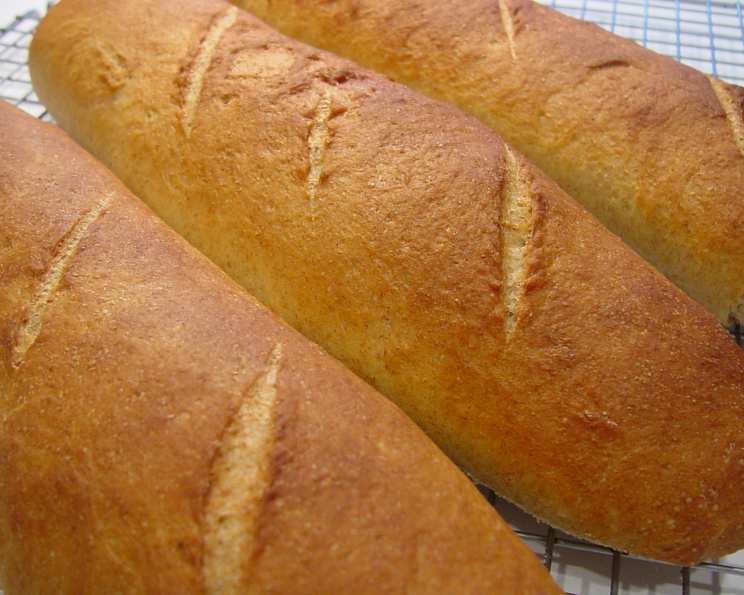
The Hearty Embrace of Homemade Whole Wheat Baguettes
There’s a particular memory etched in my mind from my early days as an apprentice in a small Parisian bakery. It wasn’t the elaborate pastries or the perfectly laminated croissants, but the simple, rustic whole wheat baguettes that captured my heart. Each morning, the aroma of these earthy loaves, baking alongside their lighter counterparts, would fill the air, a testament to the beauty of honest, wholesome ingredients transformed by patience and care. The bakers, their faces dusted with flour, would emerge from the depths of the kitchen, carrying trays laden with these warm, crusty breads, a scene that felt more like a warm hug than a mere task. To this day, the scent of whole wheat baking transports me back to that tiny, bustling bakery, a reminder of the foundational skills and profound respect for ingredients that have shaped my culinary journey.
Recipe Overview
- Prep Time: 30 minutes
- Cook Time: 30 minutes
- Total Time: 2 hours
- Yields: 3 loaves
- Serves: 36
- Dietary Type: Vegetarian
Ingredients
- 1 (1/4 ounce) package dry yeast (about 2 1/4 teaspoons)
- 2 tablespoons sugar
- 2 1/2 cups warm water (100 to 110°F)
- 3 3/4 cups bread flour
- 2 cups whole wheat flour
- 1/2 cup semolina flour or 1/2 cup pasta flour
- 1 1/2 tablespoons salt
- Cooking spray
- 1 tablespoon cornmeal
- 1/4 cup water
Equipment Needed
- Large bowl
- Whisk
- Measuring cups and spoons
- Lightly floured surface
- Large baking sheet
- Wire racks
Instructions
- In a large bowl, dissolve the yeast and sugar in the warm water. Let the mixture stand for 5 minutes to allow the yeast to activate; you should see some bubbling. This step is crucial – if the yeast doesn’t bubble, it’s likely expired and your bread won’t rise properly.
- Add 3 1/2 cups of the bread flour, the whole wheat flour, the semolina flour (or pasta flour), and the salt to the yeast mixture. Stir with a whisk until well blended. The dough will be shaggy at this point, don’t worry!
- Turn the dough out onto a lightly floured surface.
- Knead the dough until it becomes smooth and elastic. This usually takes about 10 minutes. Add the remaining bread flour, 1 tablespoon at a time, as needed to prevent the dough from sticking to your hands. The dough should still feel slightly tacky, not dry. This is important for achieving a light and airy crumb.
- Place the dough in a large bowl that has been coated with cooking spray, turning the dough to coat the top as well. This prevents the dough from drying out during the rising process.
- Cover the bowl and let the dough rise in a warm place (around 85°F), free from drafts, for approximately 45 minutes, or until it has doubled in size. A good place to do this is in a slightly warmed oven (turned off, of course!) or near a sunny window.
- Test if the dough has risen enough by gently pressing a finger into it. If the indentation remains, it’s ready.
- Punch the dough down gently to release the air, then cover it and let it rest for 5 minutes. This helps relax the gluten and makes it easier to shape.
- Divide the dough into three equal portions.
- Working with one portion at a time (cover the remaining dough to prevent it from drying out), roll each portion into a 16-inch rope on a floured surface. Use a gentle back-and-forth motion, applying even pressure, to create a uniform shape.
- Place the ropes on a large baking sheet that has been sprinkled with cornmeal. The cornmeal will prevent the baguettes from sticking and add a nice textural element to the crust.
- Cover the loaves and let them rise again for 40 minutes, or until they have doubled in size.
- Uncover the dough.
- Using a sharp knife or a lame (a special bread-scoring tool), cut 3 diagonal slits in the top of each rope. This allows the bread to expand during baking and gives it its characteristic look. Aim for about 1/2 inch deep.
- Preheat your oven to 425°F (220°C).
- Just before placing the baking sheet in the oven, throw the 1/4 cup of water onto the floor of the oven, being careful to avoid the heating element. This creates steam, which is essential for a crisp, golden crust. Safety Note: Be extremely cautious when adding water to a hot oven to avoid steam burns.
- Quickly place the baking sheet in the oven and close the door.
- Bake at 425°F for 30 minutes, or until the loaves are golden brown and sound hollow when tapped on the bottom.
- Remove the baguettes from the baking sheet and let them cool completely on wire racks before slicing and serving. Cooling them properly allows the internal structure to set, preventing a gummy texture.
- Cut each loaf into 12 slices.
Expert Tips & Tricks
- For a richer flavor: Consider adding a tablespoon of honey or molasses to the dough along with the sugar. This will enhance the sweetness and add depth to the overall taste.
- Achieving the perfect crust: The steam is key. If your oven doesn’t produce enough steam, you can place a baking pan filled with hot water on the bottom rack during the preheating and baking process. Replenish the water as needed.
- Kneading technique: Proper kneading is essential for developing the gluten, which gives the bread its structure. Use a push-turn-fold motion, ensuring you are incorporating all the ingredients and developing the elasticity of the dough.
- Overnight proofing: For a more complex flavor, you can let the dough rise in the refrigerator overnight. This slow fermentation process develops a deeper, tangier taste. Just be sure to bring the dough back to room temperature before shaping and baking.
- Scoring mastery: Experiment with different scoring patterns. Angled slashes, straight cuts, or even a wheat stalk design can add a touch of artistry to your baguettes.
Serving & Storage Suggestions
These whole wheat baguettes are incredibly versatile. Serve them warm with a pat of butter or a drizzle of olive oil for a simple yet satisfying snack. They are also excellent for making sandwiches, bruschetta, or crostini. Pair them with soups, salads, or stews for a hearty meal.
To store, wrap the cooled baguettes tightly in a clean kitchen towel or a bread bag. They will stay fresh at room temperature for 1-2 days. For longer storage, you can freeze the baguettes. Slice them before freezing for easier portioning. To reheat frozen baguettes, wrap them in foil and bake at 350°F (175°C) for about 10-15 minutes, or until warmed through. You can also refresh day-old bread by lightly misting it with water and baking it in a preheated oven at 350°F (175°C) for a few minutes until the crust is crisp again.
Nutritional Information
| Nutrient | Amount per Serving | % Daily Value |
|---|---|---|
| Calories | 82.4 kcal | N/A |
| Calories from Fat | 2 g | 3% |
| Total Fat | 0.3 g | 0% |
| Saturated Fat | 0.1 g | 0% |
| Cholesterol | 0 mg | 0% |
| Sodium | 291.8 mg | 12% |
| Total Carbohydrate | 17.4 g | 5% |
| Dietary Fiber | 1.3 g | 5% |
| Sugars | 0.8 g | 3% |
| Protein | 2.6 g | 5% |
Note: Nutritional information is an estimate and may vary based on specific ingredients and portion sizes.
Variations & Substitutions
- Spelt Flour: Replace some of the bread flour with spelt flour for a nuttier flavor and slightly denser texture.
- Seeds: Add a sprinkle of sesame seeds, poppy seeds, or sunflower seeds to the dough before the final rise for added flavor and visual appeal.
- Herbs: Incorporate chopped fresh herbs like rosemary, thyme, or oregano into the dough for a savory twist.
- Garlic: Roasted garlic cloves, mashed and mixed into the dough, will create a delicious and aromatic baguette.
- Olive Oil: Add a tablespoon or two of olive oil to the dough for a softer crumb and a richer flavor.
- Different Flours: You could substitute the semolina flour with rye flour, barley flour, or even a portion of all-purpose flour if you don’t have semolina on hand.
FAQs (Frequently Asked Questions)
Q: Why is my dough not rising?
A: The most common reason is inactive yeast. Make sure your yeast is fresh and that the water is between 100-110°F (38-43°C). Too hot and you’ll kill the yeast; too cold and it won’t activate.
Q: How can I tell if my baguettes are done baking?
A: The baguettes should be golden brown and sound hollow when tapped on the bottom. An internal temperature of around 200-210°F (93-99°C) is also a good indicator.
Q: What if I don’t have semolina flour?
A: You can substitute it with an equal amount of pasta flour, all-purpose flour or even more bread flour, though the texture may be slightly different. The semolina adds a pleasant chewiness.
Q: Can I make this recipe with a stand mixer?
A: Absolutely! Use the dough hook attachment and mix on low speed until the dough comes together. Then, increase the speed to medium and knead for about 8-10 minutes, or until the dough is smooth and elastic.
Q: My crust is too hard. How can I prevent this?
A: Try reducing the baking time slightly or lowering the oven temperature by 25°F (15°C). Also, be sure to cool the baguettes completely on a wire rack before slicing, as this allows excess moisture to escape.
Final Thoughts
Baking these whole wheat baguettes is more than just following a recipe; it’s about connecting with a centuries-old tradition and experiencing the simple joy of creating something truly special with your own hands. The aroma that fills your home as these hearty loaves bake is a reward in itself, and the satisfaction of sharing them with loved ones is even greater. So, gather your ingredients, embrace the process, and don’t be afraid to experiment. I encourage you to give this recipe a try and share your baking adventures with me! These baguettes are wonderful alongside a creamy tomato soup or a simple cheese board. Bon appétit!