
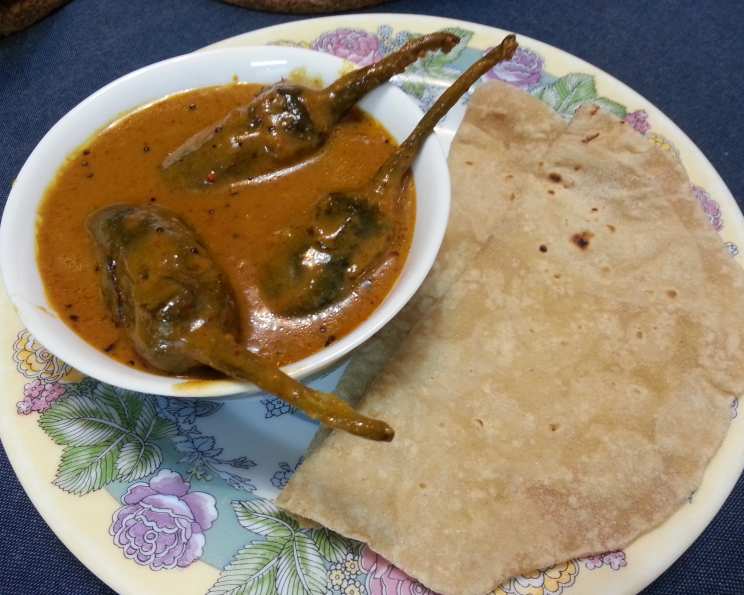
Baingan Ka Salan: A Symphony of Spices and Eggplant
The aroma of Baingan Ka Salan instantly transports me back to my grandmother’s kitchen. I remember her meticulously scoring each small eggplant, the rhythmic clinking of her bangles as she stirred the roasting spices, and the way the entire house would fill with an earthy, tantalizing fragrance. It wasn’t just a meal; it was an experience, a lesson in patience, and a testament to the magic of simple ingredients transformed into something extraordinary. Though the traditional salan is peanut-based, this version, lighter and spicier, is a beautiful rendition that’s quick, simple and tastes amazing.
Recipe Overview
- Prep Time: 15 minutes
- Cook Time: 20 minutes
- Total Time: 35 minutes
- Servings: 4
- Dietary Type: Vegan
Ingredients
- 12 small brinjals (eggplants)
- ½ teaspoon turmeric
- 1 teaspoon tamarind paste
- 2 tablespoons gram flour (besan)
- 1 tablespoon fennel powder
- 2 teaspoons chili powder
- 10 g salt
- 300 ml water, plus more as needed
- Fresh, chopped coriander leaves, for garnish
Equipment Needed
- Wok or deep pan
- Roasting pan (optional, for dry roasting spices)
- Mixing bowls
- Measuring spoons and cups
Instructions
-
Begin by washing the brinjals thoroughly. Using a sharp knife, make two criss-cross slits in each eggplant, being careful not to cut through the stem. The eggplant should be quartered but remain joined at the stem. This will allow the flavors to penetrate deeply during cooking.
-
Pour 300 ml of water into the wok or deep pan. Add the prepared brinjals, tamarind paste, and turmeric powder to the water. Bring to a simmer over medium heat.
-
Next, prepare the spice mix. In a separate roasting pan (or a dry pan on the stovetop), gently roast the gram flour, fennel powder, and chili powder over low heat. Keep stirring the powders continuously to prevent burning. The goal is to lightly toast them until they turn a light brown color and release their fragrant aroma. This process usually takes 3-5 minutes. Roasting the spices enhances their flavor and depth.
-
Once the spices are roasted, remove them from the heat. Slowly add water to the roasted spice mixture, stirring constantly, until it forms a thick, smooth paste. Ensure there are no lumps.
-
Carefully add the spice paste to the wok containing the brinjals, water, tamarind paste, and turmeric. Add the salt and stir gently to combine all the ingredients.
-
Reduce the heat to low, cover the wok, and let the Baingan Ka Salan cook for approximately 20 minutes, or until the brinjals become tender. During cooking, monitor the gravy consistency. If it becomes too thick, add small amounts of water to maintain the desired consistency, which should be similar to ketchup.
-
To check for doneness, gently pierce a brinjal with a fork. It should be easily pierced without resistance.
-
Once the brinjals are tender and the gravy has reached the desired consistency, turn off the heat.
-
Garnish the Baingan Ka Salan generously with fresh, chopped coriander leaves.
-
Serve the Baingan Ka Salan hot with freshly made rotis or steamed white rice.
Expert Tips & Tricks
- Roasting the Spices: Don’t skip roasting the gram flour, fennel, and chili powder. This is crucial for unlocking their full potential and preventing a raw, bitter taste.
- Consistency is Key: Adding water gradually to the spice mixture will help you avoid lumps and create a smooth paste that blends seamlessly with the other ingredients.
- Adjusting Spiciness: If you prefer a milder flavor, reduce the amount of chili powder. For a spicier version, add a pinch of cayenne pepper or a chopped green chili to the wok along with the other ingredients.
- Tamarind Paste: The tanginess of tamarind is essential to the dish. Taste and adjust the amount according to your preference. Some tamarind pastes are more concentrated than others.
- Brinjal Size Matters: Use smaller brinjals if possible. They cook more evenly and absorb the flavors better than larger ones.
- Don’t Overcook: Overcooked brinjals can become mushy. Keep a close eye on them and test for doneness periodically.
Serving & Storage Suggestions
Serve Baingan Ka Salan hot, garnished with fresh coriander leaves. It pairs wonderfully with roti, naan, paratha, or steamed rice. A dollop of plain yogurt can also be served on the side to complement the spiciness.
Leftover Baingan Ka Salan can be stored in an airtight container in the refrigerator for up to 3 days. To reheat, gently warm it on the stovetop over low heat, adding a splash of water if needed to loosen the gravy. You can also reheat it in the microwave. Freezing is not recommended, as the eggplant can become mushy upon thawing.
Nutritional Information
| Nutrient | Amount per Serving | % Daily Value |
|---|---|---|
| Calories | 150 kcal | 8% |
| Total Fat | 6g | 8% |
| Saturated Fat | 1g | 5% |
| Cholesterol | 0mg | 0% |
| Sodium | 500mg | 22% |
| Total Carbohydrate | 15g | 5% |
| Dietary Fiber | 5g | 18% |
| Sugars | 3g | 6% |
| Protein | 4g | 8% |
Nutritional information is an estimate and may vary based on specific ingredients and serving sizes.
Variations & Substitutions
- Gluten-Free: This recipe is naturally gluten-free as long as the gram flour is pure and not mixed with wheat flour.
- Spice Level: Adjust the amount of chili powder to suit your preference. You can also add a pinch of cayenne pepper for extra heat.
- Vegetable Variations: Feel free to add other vegetables such as okra (bhindi) or potatoes (aloo) to the salan.
- Nut-Free: This version already avoids peanuts, unlike traditional salan.
- Tomatoes: For a richer gravy, you can add finely chopped tomatoes to the wok along with the other ingredients. Cook them down until softened before adding the spice paste.
- Onions and Garlic: Sauté diced onions and minced garlic in oil before adding the brinjals for added flavor depth.
FAQs (Frequently Asked Questions)
Q: Can I use large eggplants instead of small ones?
A: While small eggplants are preferred for their even cooking and flavor absorption, you can use larger eggplants. Cut them into smaller, bite-sized pieces and adjust the cooking time accordingly.
Q: Can I use store-bought spice powders instead of roasting my own?
A: While store-bought spice powders are convenient, roasting the spices enhances their flavor significantly. If using pre-ground spices, consider briefly toasting them in a dry pan to wake up their aromas.
Q: How do I prevent the eggplants from becoming bitter?
A: Salting the eggplants before cooking can help draw out any bitterness. After slicing or scoring the eggplants, sprinkle them with salt and let them sit for about 30 minutes. Rinse them thoroughly before cooking.
Q: What if I don’t have tamarind paste?
A: You can substitute tamarind paste with lemon juice or amchur (dried mango powder). Start with a small amount and adjust to taste.
Q: Can I make this recipe ahead of time?
A: Yes, Baingan Ka Salan can be made ahead of time. The flavors actually meld together and improve over time. Store it in the refrigerator and reheat gently before serving.
Final Thoughts
Baingan Ka Salan is more than just a recipe; it’s a celebration of flavors, textures, and traditions. With its simple ingredients and straightforward instructions, it’s a dish that anyone can master. I encourage you to try this recipe and experience the magic of this classic Indian delicacy. Don’t be afraid to experiment with different spices and vegetables to create your own unique version. And most importantly, share your culinary creations with loved ones and spread the joy of good food!