
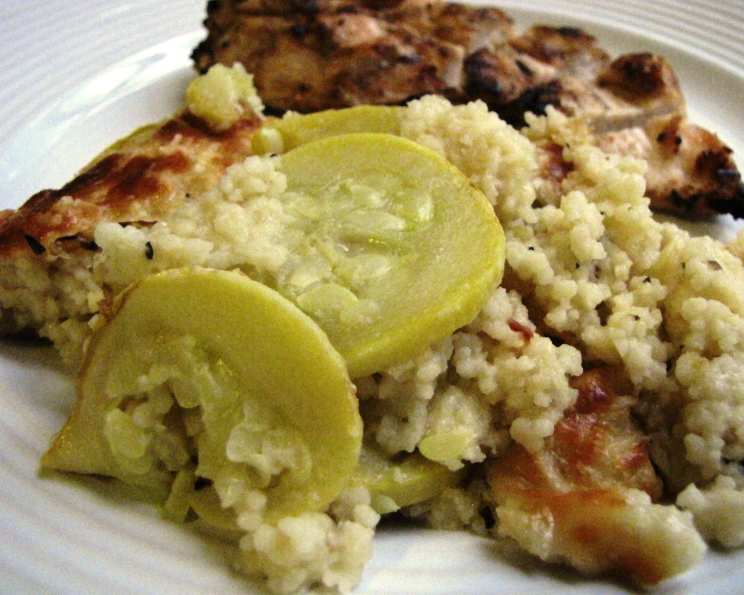
Baked Couscous With Summer Squash
My grandmother, Nana Rose, always had a garden overflowing with zucchini and yellow squash. Every summer visit meant a flurry of squash-centric dishes, from fritters to bread. While I enjoyed them all, her baked couscous with squash held a special place in my heart. The aroma of basil and oregano mingled with the sweet squash would fill her tiny kitchen, a promise of a warm, comforting, and unbelievably flavorful dish that always felt like pure sunshine on a plate. This recipe reminds me of those summer days and the love she poured into her cooking.
Recipe Overview
- Prep Time: 15 minutes
- Cook Time: 35 minutes
- Total Time: 50 minutes
- Servings: 6
- Dietary Type: Vegetarian
Ingredients
- 14 ounces reduced-sodium fat-free chicken broth (or vegetable broth for a vegetarian option), DIVIDED
- ¾ cup uncooked couscous
- 2 cups sliced yellow squash
- ½ cup sliced green onion
- 2 tablespoons chopped fresh basil
- 1 tablespoon chopped fresh oregano
- 1 garlic clove, minced
- ¼ cup shredded Fontina cheese
- ¼ cup grated Parmesan cheese
- ¼ cup egg substitute
- ¼ teaspoon salt
- ¼ teaspoon pepper
Equipment Needed
- Medium saucepan
- Large nonstick skillet
- 8×8-inch baking dish
- Mixing bowl
- Fork
Instructions
-
Preheat your oven to 400°F (200°C). Ensure your oven rack is positioned in the center for even baking.
-
In a medium saucepan, bring 1 cup of the reduced-sodium chicken broth (or vegetable broth) to a boil over medium-high heat.
-
Gradually stir in the ¾ cup of uncooked couscous. This gradual addition helps prevent clumping.
-
Remove the saucepan from the heat, cover it tightly, and let it stand for 5 minutes. This allows the couscous to absorb the broth and become tender.
-
After 5 minutes, uncover the saucepan and fluff the couscous gently with a fork. This separates the grains and prevents them from sticking together.
-
Heat a large nonstick skillet over medium-high heat. A well-seasoned skillet or one coated with cooking spray will prevent the vegetables from sticking.
-
Coat the pan lightly with cooking spray. This minimizes the amount of fat used and prevents sticking.
-
Add the 2 cups of sliced yellow squash, ½ cup of sliced green onion, 2 tablespoons of chopped fresh basil, 1 tablespoon of chopped fresh oregano, and 1 minced garlic clove to the skillet.
-
Sauté the vegetables for approximately 3 minutes, or until the yellow squash is tender. Stir frequently to ensure even cooking and prevent burning. The squash should be slightly softened but still retain some firmness.
-
Remove the skillet from the heat and set the sautéed vegetable mixture aside.
-
In a separate mixing bowl, combine the ¼ cup of shredded Fontina cheese and ¼ cup of grated Parmesan cheese. Reserve half of this cheese mixture for topping the couscous bake later.
-
In a large bowl, combine the cooked couscous, the sautéed squash mixture, and half of the cheese mixture.
-
Stir in the remaining ¼ cup of chicken broth (or vegetable broth), ¼ cup of egg substitute, ¼ teaspoon of salt, and ¼ teaspoon of pepper. Mix well to ensure all ingredients are evenly distributed. The mixture should be moist but not soupy.
-
Lightly coat an 8×8-inch baking dish with cooking spray. This prevents the couscous bake from sticking to the dish.
-
Spoon the couscous mixture evenly into the prepared baking dish.
-
Sprinkle the remaining cheese mixture evenly over the top of the couscous bake.
-
Bake in the preheated oven at 400°F (200°C) for 25 to 35 minutes, or until the top is golden brown and the couscous bake is heated through. Keep a close eye on it during the last 10 minutes to prevent over-browning. If it begins to brown too quickly, you can loosely tent the dish with foil.
-
Remove the baked couscous from the oven and let it cool slightly before serving. Serving warm is best.
Expert Tips & Tricks
- Herb Power: Using fresh herbs is crucial for the best flavor. If you can’t find fresh basil or oregano, you can substitute dried herbs, but use only about 1 teaspoon of dried for every tablespoon of fresh.
- Cheese Variations: Feel free to experiment with different cheeses! Mozzarella, Gruyere, or even a little goat cheese would be delicious additions or substitutes for the Fontina or Parmesan.
- Vegetable Medley: Don’t be afraid to add other vegetables! Diced zucchini, bell peppers, or even some cherry tomatoes would be great additions to the squash mixture. Just be sure to adjust the cooking time accordingly.
- Make-Ahead Magic: You can prepare the couscous mixture ahead of time and store it in the refrigerator for up to 24 hours before baking. This is a great option if you’re short on time. Just add a few extra minutes to the baking time to ensure it’s heated through.
- Broth Flavor Boost: For a deeper, richer flavor, use homemade chicken or vegetable broth. You can also add a splash of white wine to the skillet while sautéing the vegetables for an extra layer of flavor.
Serving & Storage Suggestions
Serve the baked couscous warm as a side dish alongside grilled chicken, fish, or tofu. It’s also delicious as a light vegetarian main course. Garnish with a sprinkle of fresh basil or Parmesan cheese for an extra touch of flavor and visual appeal.
Leftovers can be stored in an airtight container in the refrigerator for up to 3 days. To reheat, bake in a preheated oven at 350°F (175°C) until heated through, or microwave in short intervals, stirring occasionally. You can also freeze the baked couscous for up to 2 months. Thaw overnight in the refrigerator before reheating.
Nutritional Information
| Nutrient | Amount per Serving | % Daily Value |
|---|---|---|
| Calories | 132.9 kcal | N/A |
| Calories from Fat | 26 g | 20% |
| Total Fat | 2.9 g | 4% |
| Saturated Fat | 1.6 g | 8% |
| Cholesterol | 8.9 mg | 2% |
| Sodium | 223.5 mg | 9% |
| Total Carbohydrate | 19.4 g | 6% |
| Dietary Fiber | 1.8 g | 7% |
| Sugars | 1.6 g | N/A |
| Protein | 7.2 g | 14% |
Variations & Substitutions
- Vegan Version: Ensure you use vegetable broth. Replace the Parmesan and Fontina cheeses with your favorite vegan cheese shreds. There are many great vegan cheese options available now that melt well and have a similar flavor profile.
- Gluten-Free: While couscous is technically a type of pasta made from semolina (wheat), you can easily substitute it with a gluten-free alternative like quinoa or rice. Be sure to adjust the cooking time and liquid accordingly.
- Spicy Kick: Add a pinch of red pepper flakes to the squash mixture while sautéing for a little heat.
- Mediterranean Twist: Incorporate sun-dried tomatoes, kalamata olives, and feta cheese for a Mediterranean-inspired flavor.
- Seasonal Adaptation: In the fall, substitute the yellow squash with butternut squash or pumpkin for a warm, autumnal variation.
FAQs (Frequently Asked Questions)
Q: Can I use frozen squash instead of fresh?
A: While fresh squash is preferred for the best texture and flavor, you can use frozen squash in a pinch. Be sure to thaw it completely and drain off any excess water before sautéing.
Q: Can I make this recipe without the egg substitute?
A: The egg substitute helps bind the ingredients together. You can try using a flax egg (1 tablespoon of ground flaxseed mixed with 3 tablespoons of water, let sit for 5 minutes) as a substitute.
Q: My couscous bake is too dry. What can I do?
A: If the couscous bake seems dry, add a little more broth (chicken or vegetable) to moisten it before baking. You can also cover the dish with foil during baking to help retain moisture.
Q: Can I add meat to this dish?
A: Absolutely! Cooked chicken, sausage, or shrimp would be delicious additions to this baked couscous. Add the cooked meat to the squash mixture before combining it with the couscous.
Q: How can I prevent the cheese from burning?
A: If the cheese starts to brown too quickly, loosely tent the baking dish with foil during the last 10-15 minutes of baking.
Final Thoughts
This baked couscous with summer squash is more than just a recipe; it’s a taste of sunshine, a memory of Nana Rose, and a celebration of simple, fresh ingredients. I encourage you to try this dish and make it your own. Feel free to experiment with different vegetables, cheeses, and herbs to create a flavor combination that you love. And most importantly, share your creations with family and friends. I hope this recipe brings as much joy to your kitchen as it does to mine! Bon appétit!