
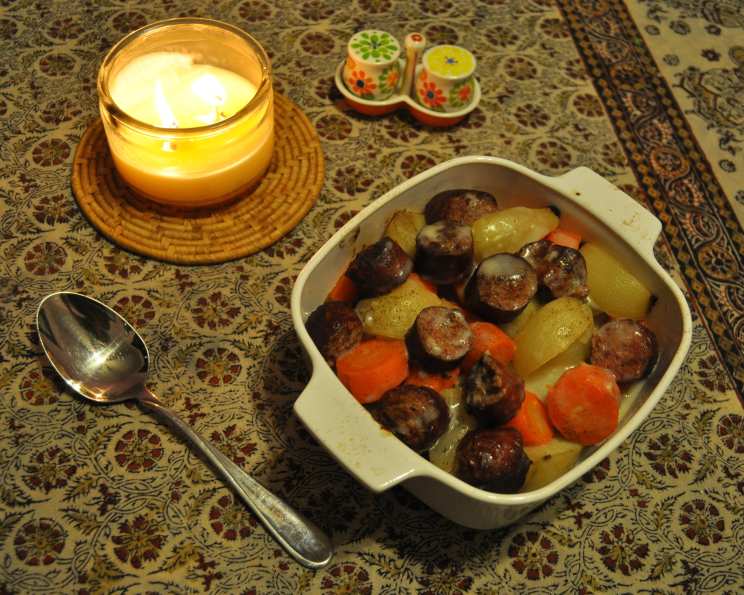
Baked Farmer Sausage, Potatoes, and Carrots With Gravy
The aroma alone transports me back to childhood. Sunday afternoons in my grandmother’s cozy kitchen always held the promise of something special simmering in the oven. More often than not, it was this very dish: baked farmer sausage nestled amongst tender potatoes and carrots, all destined to be drenched in a creamy, homemade gravy. The flavors were simple, honest, and utterly satisfying – a taste of home that I cherish to this day. It’s a meal that speaks of warmth, family, and uncomplicated joy.
Recipe Overview
- Prep Time: 20 minutes
- Cook Time: 1 hour 30 minutes
- Total Time: 1 hour 50 minutes
- Servings: 4-6
- Yield: 1 casserole
- Dietary Type: Can be adapted to gluten-free
Ingredients
- 2 lbs frozen farmer sausage
- 4 medium potatoes, peeled and quartered
- 8 medium carrots, peeled and cut into 3-4 pieces each
For the Gravy:
- Sausage drippings (reserved from the baking dish)
- 2 tablespoons flour (use gluten-free all-purpose flour for a gluten-free version)
- 1 cup milk (any kind, including dairy or non-dairy)
- Salt and pepper to taste
Equipment Needed
- Roaster or large casserole dish
- Saucepan
- Whisk or gravy shaker (optional)
Instructions
- If desired, peel the frozen farmer sausage. A helpful trick is to hold it under a trickle of warm water, which makes the skin easier to remove.
- Break the sausage into 4-6 chunks. This helps it cook evenly and releases its flavorful drippings into the vegetables.
- Place the peeled and quartered potatoes and the peeled and cut carrots into a roaster or large casserole dish.
- Add water to cover the bottom of the dish. This creates steam, which helps the vegetables cook through and prevents them from drying out. Don’t drown the vegetables; just a thin layer is sufficient.
- Place the frozen sausage chunks over top of the potatoes and carrots. Positioning the sausage above the vegetables ensures that the flavorful drippings will infuse the vegetables as they cook.
- Cover the dish tightly with a lid or aluminum foil. This traps the steam and helps everything cook evenly.
- Bake in a preheated oven at 375°F (190°C) for 1 1/2 hours. The sausage should be cooked through, and the vegetables should be fork-tender.
- Remove the casserole dish from the oven. Carefully drain the juices from the dish into a saucepan. These drippings are the base of the delicious gravy.
- (Optional) You may want to transfer the sausage and vegetables to a serving dish at this point. To keep them warm, place them back in the oven at a low temperature (around 200°F or 95°C) while you prepare the gravy.
- Prepare the gravy: In a separate bowl or a gravy shaker, mix the flour and milk together. Add the milk gradually, whisking or shaking continuously to prevent lumps from forming. The mixture should start as a paste and slowly become thinner as you add more milk. If using a shaker, simply combine the flour and milk and shake vigorously.
- Add the milk mixture to the drippings in the saucepan.
- Bring the mixture to a boil over medium heat, stirring constantly. This is crucial to prevent the gravy from scorching or forming lumps.
- Continue stirring until the gravy has thickened to your desired consistency. The thickening process usually takes a few minutes.
- Adjust the thickness of the gravy, if needed. If it’s too thick, add a little more milk. If it’s too thin, mix a teaspoon of flour with a tablespoon of cold water to form a slurry, and then stir it into the gravy. Simmer for a minute or two until the gravy thickens again.
- Season the gravy with salt and pepper to taste. Be sure to taste it and adjust the seasoning as needed.
- Serve the baked farmer sausage, potatoes, and carrots hot, drenched generously with the homemade gravy.
Expert Tips & Tricks
- For a richer gravy, use half milk and half cream.
- Add a bay leaf to the gravy while it simmers for extra flavor; remove it before serving.
- If you don’t have farmer sausage, kielbasa or another smoked sausage can be used as a substitute, though the flavor profile will be different.
- Roasting the vegetables separately before adding the sausage will intensify their flavor and create slightly caramelized edges.
- To make this dish ahead of time, bake the sausage and vegetables as directed and store them in the refrigerator. Prepare the gravy just before serving.
Serving & Storage Suggestions
Serve the baked farmer sausage, potatoes, and carrots immediately while hot. Ladle generous portions of the gravy over the sausage and vegetables. This dish pairs well with a side of crusty bread or a simple green salad.
Leftovers can be stored in an airtight container in the refrigerator for up to 3-4 days. To reheat, warm them gently in a saucepan on the stovetop or in the microwave. You may need to add a splash of milk or water to the gravy to thin it out if it has thickened during refrigeration.
While freezing is possible, it’s not ideal for the vegetables, as their texture may become slightly mushy upon thawing. However, the sausage and gravy freeze well. Store in an airtight container for up to 2 months. Thaw overnight in the refrigerator before reheating.
Nutritional Information
(Estimated values per serving)
| Nutrient | Amount per Serving | % Daily Value |
|---|---|---|
| Calories | 650 kcal | 33% |
| Total Fat | 40g | 62% |
| Saturated Fat | 15g | 75% |
| Cholesterol | 100mg | 33% |
| Sodium | 1500mg | 63% |
| Total Carbohydrate | 40g | 13% |
| Dietary Fiber | 5g | 20% |
| Sugars | 5g | — |
| Protein | 30g | 60% |
Variations & Substitutions
- Gluten-Free: Use gluten-free all-purpose flour for the gravy.
- Dairy-Free: Substitute dairy-free milk (almond, soy, or oat milk) for the milk in the gravy.
- Vegetarian (Adaptation): While the primary recipe relies on meat, consider a vegetarian version by using smoked tofu or vegetarian sausages along with hearty root vegetables like parsnips and turnips, seasoned with smoked paprika to mimic the savory flavor of farmer sausage.
- Spicy: Add a pinch of red pepper flakes to the gravy for a little heat.
- Herbaceous: Stir in some fresh chopped parsley or thyme into the gravy at the end for a brighter flavor.
FAQs (Frequently Asked Questions)
Q: Can I use frozen vegetables in this recipe?
A: While fresh vegetables are preferable for the best texture, frozen potatoes and carrots can be used in a pinch. There may be a slight difference in texture.
Q: How can I prevent the gravy from being lumpy?
A: The key is to mix the flour and milk thoroughly before adding it to the drippings. Using a gravy shaker or whisking vigorously helps prevent lumps from forming. Also, constant stirring while the gravy is simmering is important.
Q: My gravy is too thin. How can I thicken it?
A: Mix a teaspoon of flour with a tablespoon of cold water to form a slurry. Stir this slurry into the gravy and simmer for a minute or two until it thickens.
Q: Can I use chicken or beef broth instead of milk for the gravy?
A: Yes, you can use broth for a savory variation. It will change the flavor profile of the gravy, but it can still be delicious. You might want to omit or reduce the salt if using broth, as it’s typically already seasoned.
Q: Can I add other vegetables to this dish?
A: Absolutely! Onions, parsnips, turnips, and celery would all be delicious additions. Add them to the casserole dish along with the potatoes and carrots.
Final Thoughts
I hope this recipe brings you as much comfort and joy as it has brought my family over the years. It’s a simple, hearty dish that’s perfect for a cozy weeknight meal or a special Sunday supper. Don’t be afraid to experiment with different variations and substitutions to make it your own. And most importantly, enjoy the process of creating a delicious and nourishing meal from scratch! I’d love to hear about your experiences with this recipe – please share your thoughts and feedback. Pair this with a crisp apple cider for a perfect complement!