
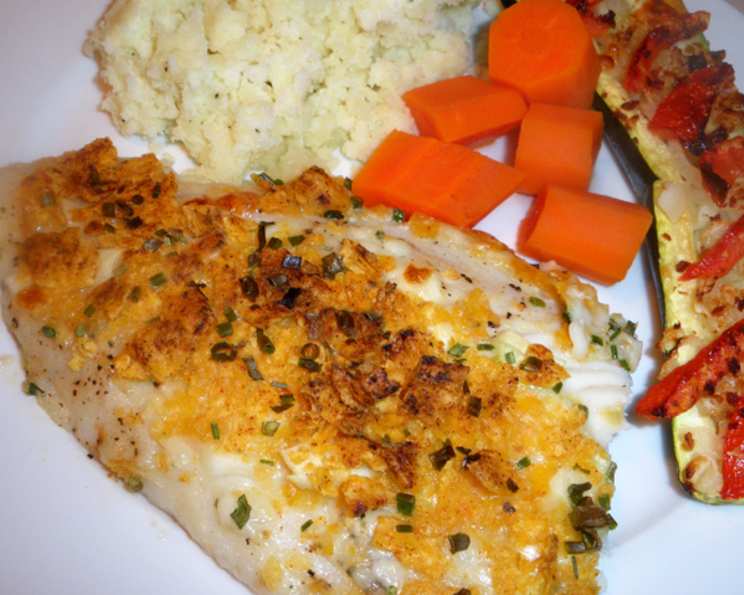
Baked Fish With Sour Cream Topping: A Comfort Food Classic
The scent of baked fish, mingled with tangy sour cream and the subtle crunch of potato chips, instantly transports me back to my grandmother’s cozy kitchen. She wasn’t a fancy chef by any means, but she had a knack for creating simple, satisfying dishes that warmed the soul. This baked fish recipe, adapted from one of her well-worn cookbooks, is a testament to that. It’s a reminder that sometimes, the most delicious meals are the ones that require the least fuss.
Recipe Overview
- Prep Time: 10 minutes
- Cook Time: 30 minutes
- Total Time: 40 minutes
- Servings: 6
- Yield: 6 servings
- Dietary Type: Not Gluten-Free (due to potato chips), can be adapted.
Ingredients
- 2 lbs hake fillets
- Salt
- Pepper
- 1 cup sour cream (Note: Substituting with yogurt may result in a tangier dish)
- 1 ounce sour cream and onion potato chips, crushed
- 1 garlic clove, crushed
- 1 cup cheddar cheese, grated
- 1 tablespoon chives, chopped
- 1 tablespoon chives, chopped for garnish
- ½ teaspoon paprika
Equipment Needed
- Oven
- Greased Oven Dish
- Mixing Bowl
- Cutting board
- Knife
Instructions
- If using frozen hake, ensure it’s completely defrosted. Pat the defrosted fillets dry with kitchen towels. This will help remove excess moisture and allow the topping to adhere better.
- Lightly season the fish fillets with salt and pepper. Be mindful not to over-salt, as the potato chips in the topping will also contribute to the saltiness.
- Arrange the seasoned fish fillets in a greased oven dish. A little cooking spray or a light coating of oil works perfectly.
- In a mixing bowl, combine the sour cream, crushed potato chips, crushed garlic, grated cheddar cheese, 1 tablespoon of chopped chives, and paprika. Mix well until all ingredients are evenly distributed.
- Spread the sour cream mixture evenly over the fish fillets, ensuring each fillet is generously coated.
- Bake for approximately 30 minutes at 400 degrees F (200 degrees C). The fish is done when the thickest part flakes easily with a fork and is no longer glassy in the center. Cooking times may vary depending on the thickness of the fillets and your oven, so keep a close eye on it.
- Once cooked, remove the dish from the oven and garnish with the remaining 1 tablespoon of chopped chives. Serve immediately.
Expert Tips & Tricks
- Prevent Soggy Fish: Patting the fish dry before seasoning is crucial. Excess moisture will steam the fish rather than allowing it to bake properly, resulting in a soggy texture.
- Chip Size Matters: Don’t crush the potato chips into a fine powder. Leaving some slightly larger pieces adds a delightful textural contrast to the creamy topping.
- Cheese Variations: While cheddar is classic, feel free to experiment with other cheeses. Monterey Jack, Colby Jack, or even a sharp provolone can add interesting flavor dimensions.
- Make Ahead: You can prepare the sour cream topping a few hours in advance and store it in the refrigerator. However, it’s best to add the topping to the fish just before baking to prevent the chips from getting soggy.
- Adjust for Thickness: If your fillets are particularly thick, you may need to increase the baking time by a few minutes. Conversely, thinner fillets will cook faster, so check for doneness earlier. An instant-read thermometer inserted into the thickest part of the fish should register 145°F (63°C).
- Broiler Boost: For a beautifully browned and slightly crispy topping, broil the fish for the last minute or two of baking. Watch it closely to prevent burning.
Serving & Storage Suggestions
Serve the baked fish hot, straight from the oven. It pairs beautifully with a simple side salad, steamed vegetables (like asparagus or broccoli), or roasted potatoes. For a complete meal, consider serving it with a side of rice or quinoa.
Leftovers can be stored in an airtight container in the refrigerator for up to 2-3 days. To reheat, bake in a preheated oven at 350°F (175°C) until warmed through, or microwave in short intervals until heated through. Microwaving may slightly alter the texture, so oven reheating is preferable. It is not recommended to freeze this dish, as the sour cream topping may separate and become watery upon thawing.
Nutritional Information
| Nutrient | Amount per Serving | % Daily Value |
|---|---|---|
| Calories | 300.7 kcal | N/A |
| Calories from Fat | N/A | 49% |
| Total Fat | 16.5 g | 25% |
| Saturated Fat | 9 g | 45% |
| Cholesterol | 105.1 mg | 35% |
| Sodium | 259.2 mg | 10% |
| Total Carbohydrate | 4.1 g | 1% |
| Dietary Fiber | 0.3 g | 1% |
| Sugars | 1.5 g | 5% |
| Protein | 32.9 g | 65% |
Note: Nutritional information is an estimate and can vary based on specific ingredients and portion sizes.
Variations & Substitutions
- Gluten-Free: For a gluten-free version, substitute the regular potato chips with gluten-free potato chips. Ensure all other ingredients are also gluten-free.
- Dairy-Free: Replace the sour cream with a plant-based sour cream alternative and the cheddar cheese with a dairy-free cheese substitute. Be aware that the flavor profile will change.
- Spice it Up: Add a pinch of red pepper flakes to the sour cream mixture for a hint of heat.
- Herbaceous Twist: Experiment with different herbs. Dill, parsley, or tarragon would all be delicious additions.
- Fish Swap: If you don’t have hake, cod, haddock, or tilapia are all suitable alternatives. Adjust baking time as needed based on the thickness of the fish.
- Vegetable Boost: Add some finely chopped vegetables, such as bell peppers, onions, or mushrooms, to the sour cream mixture for added flavor and nutrients. Sauté the vegetables lightly before adding them to the topping.
FAQs (Frequently Asked Questions)
Q: Can I use frozen fish?
A: Yes, you can use frozen hake fillets, but make sure they are completely thawed and patted dry with paper towels to remove excess moisture before cooking.
Q: What if I don’t have sour cream and onion potato chips?
A: You can use plain potato chips and add a pinch of onion powder to the sour cream mixture for a similar flavor.
Q: How do I know when the fish is done?
A: The fish is done when the thickest part flakes easily with a fork and is no longer glassy in the center. An instant-read thermometer inserted into the thickest part of the fish should register 145°F (63°C).
Q: Can I prepare this dish in advance?
A: You can prepare the sour cream topping a few hours in advance, but it’s best to add it to the fish just before baking to prevent the chips from getting soggy.
Q: Can I use a different type of cheese?
A: Yes, you can experiment with different cheeses such as Monterey Jack, Colby Jack, or provolone.
Final Thoughts
This baked fish with sour cream topping is more than just a recipe; it’s a hug on a plate. It’s a dish that’s easy enough for a weeknight meal but special enough to serve to guests. So, gather your ingredients, preheat your oven, and prepare to be transported to a place of comfort and deliciousness. I encourage you to try this recipe, experiment with variations, and most importantly, share it with the people you love. Don’t hesitate to leave a comment and let me know how it turned out! Bon appétit!