
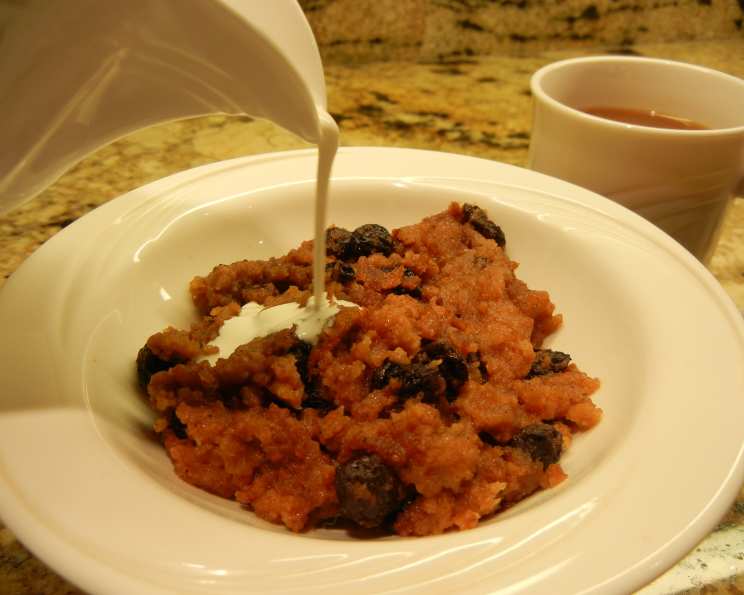
A Culinary Journey Back Home: Baking Indian Pudding
My grandmother’s kitchen always held a special magic, a symphony of scents that painted vivid pictures of warmth and comfort. One memory stands out most prominently: the rich, almost intoxicating aroma of Indian pudding simmering in the oven for what seemed like an eternity. The dark molasses, the earthy cornmeal, and the gentle spice filled the air, promising a sweet, soul-satisfying treat. It wasn’t just dessert; it was a hug in a bowl, a tangible reminder of family, tradition, and love, all baked into one simple dish. And though her original recipe is lost to time, I’ve strived to recreate that magic with this recipe, making minor adjustments to truly capture those nostalgic flavors.
Recipe Overview
- Prep Time: 15 minutes
- Cook Time: 4-6 hours
- Total Time: 4 hours 15 minutes to 6 hours 15 minutes
- Servings: 8-10
- Yield: 1 large casserole
- Dietary Type: Can be Gluten-Free
Ingredients
- 6 cups hot milk
- 1/2 cup blackstrap molasses (or regular molasses)
- 1/4 cup sugar
- 1/4 cup butter
- 1/4 teaspoon salt
- 1/4 teaspoon baking soda
- 2 eggs, beaten
- 1 cup yellow cornmeal
- 1/2 teaspoon cinnamon
- 1/4 teaspoon nutmeg
- 1/2 cup raisins (optional)
Equipment Needed
- Greased casserole dish or stone crock
- Large mixing bowl
- Whisk or spoon
- Measuring cups and spoons
- Oven
Instructions
- Begin by preheating your oven to 400°F (200°C). This initial high heat helps to kickstart the cooking process.
- In a large, greased casserole dish or a traditional stone crock (which holds heat exceptionally well), combine the cornmeal, molasses, sugar, butter, salt, baking soda, beaten eggs, cinnamon, nutmeg, and raisins (if you’re using them). The order isn’t critical, but ensuring the dry ingredients are somewhat mixed before adding the wet ones helps prevent clumping.
- Carefully stir in 3 cups of the hot milk, making sure to incorporate everything thoroughly. The hot milk will help to bloom the cornmeal and melt the butter.
- Place the casserole dish in the preheated oven and bake until the mixture comes to a boil. This usually takes around 15-20 minutes, but keep a close eye on it to prevent it from boiling over.
- Once the mixture has reached a boil, reduce the oven temperature to 275°F (135°C). This lower temperature is crucial for the long, slow bake that gives Indian pudding its signature creamy texture.
- Stir in the remaining 3 cups of hot milk. This second addition of milk helps to create the characteristic custardy consistency.
- Cover the casserole dish and bake for 4-6 hours, stirring every half hour or so. The frequent stirring is key to preventing a skin from forming on top and ensuring even cooking. The pudding is ready when it has thickened to your desired consistency and the surface is a rich, dark brown. Remember that it will continue to thicken slightly as it cools.
- Serve the Indian pudding warm, ideally with a dollop of whipped cream or a scoop of vanilla ice cream. The contrast between the warm, spiced pudding and the cold cream is heavenly.
Expert Tips & Tricks
- For a smoother texture: If you prefer a completely smooth pudding, you can blend the cornmeal with a small amount of the hot milk before adding it to the rest of the ingredients. This helps to break down any lumps and ensures a velvety consistency.
- Don’t skip the stirring: The frequent stirring is absolutely crucial for preventing a thick skin from forming on the surface of the pudding. It also helps to distribute the heat evenly, ensuring that the pudding cooks evenly and doesn’t burn on the bottom.
- Using a slow cooker: If you don’t have the time to bake the pudding in the oven for several hours, you can adapt the recipe for a slow cooker. Simply combine all of the ingredients in the slow cooker, cover, and cook on low for 6-8 hours, or until the pudding is thick and creamy.
- Molasses Matters: Blackstrap molasses has a more intense, slightly bitter flavor than regular molasses. If you prefer a sweeter, milder pudding, stick with regular molasses.
- Check for Doneness: The pudding is done when a knife inserted into the center comes out mostly clean. A little bit of creamy residue is fine, as the pudding will continue to set as it cools.
Serving & Storage Suggestions
Indian pudding is best served warm, straight from the oven. A scoop of vanilla ice cream or a dollop of freshly whipped cream complements the rich, spiced flavor perfectly. A sprinkle of ground cinnamon or nutmeg adds a final touch of elegance.
Leftover Indian pudding can be stored in an airtight container in the refrigerator for up to 3-4 days. To reheat, gently warm it in a saucepan over low heat, stirring frequently, or microwave in short intervals until heated through. You can also freeze Indian pudding for longer storage (up to 2 months). Thaw it overnight in the refrigerator before reheating.
Nutritional Information
(Estimated values per serving; actual values may vary based on ingredient brands and portion sizes.)
| Nutrient | Amount per Serving | % Daily Value |
|---|---|---|
| Calories | 320 kcal | 16% |
| Total Fat | 12g | 18% |
| Saturated Fat | 7g | 35% |
| Cholesterol | 70mg | 23% |
| Sodium | 220mg | 9% |
| Total Carbohydrate | 45g | 15% |
| Dietary Fiber | 2g | 8% |
| Sugars | 20g | N/A |
| Protein | 7g | 14% |
Variations & Substitutions
- Dairy-Free: Substitute the milk with a plant-based alternative like almond, soy, or oat milk. Use a dairy-free butter substitute.
- Spice it up: Add a pinch of ground cloves or ginger for a more complex flavor profile.
- Nutty Delight: Toast some chopped pecans or walnuts and stir them into the pudding for added texture and flavor.
- Fruit Forward: Experiment with different dried fruits like cranberries or chopped dates in place of the raisins.
- Maple Syrup: Substitute some of the sugar with maple syrup for a richer, more nuanced sweetness.
FAQs (Frequently Asked Questions)
Q: Why is my Indian pudding grainy?
A: This usually happens when the cornmeal isn’t fully incorporated or cooked properly. Make sure to stir the pudding frequently during baking to prevent clumping. Blending the cornmeal with some of the hot milk beforehand can also help.
Q: Can I make this recipe ahead of time?
A: Absolutely! Indian pudding is a great make-ahead dessert. You can bake it a day or two in advance and store it in the refrigerator. Reheat gently before serving.
Q: What kind of casserole dish should I use?
A: A traditional stone crock is ideal, as it retains heat well and helps to create a creamy texture. However, any oven-safe casserole dish will work.
Q: Can I reduce the amount of sugar?
A: Yes, you can reduce the sugar to 2 tablespoons, but keep in mind that this will affect the overall sweetness of the pudding. You may also want to adjust the amount of molasses accordingly.
Q: Is it necessary to cover the casserole dish while baking?
A: Covering the dish helps to prevent the surface of the pudding from drying out and forming a thick skin. If you don’t have a lid, you can use a sheet of aluminum foil.
Final Thoughts
More than just a dessert, Indian pudding is a journey through time, a connection to our culinary past. The warmth of the spices, the richness of the molasses, and the comforting texture all combine to create a dish that nourishes both body and soul. I encourage you to try this recipe, to share it with your loved ones, and to create your own cherished memories around this classic American pudding. And please, don’t hesitate to share your own variations and feedback – I’d love to hear how you make this dish your own! Perhaps pair it with a cup of hot apple cider on a crisp autumn evening for the ultimate cozy experience.