
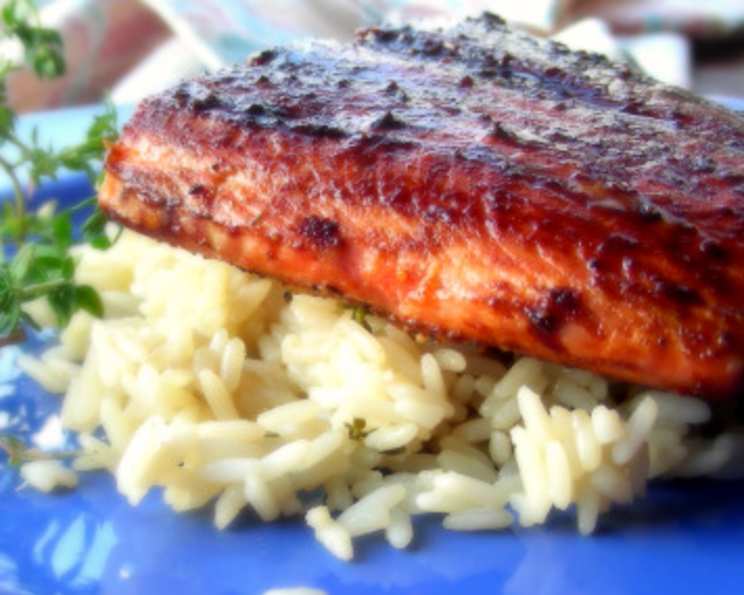
Balsamic Glazed Salmon Fillets: A Symphony of Sweet and Savory
My grandmother, Nonna Emilia, had a way with simple ingredients. She could transform them into dishes that tasted like pure sunshine and love. I remember one summer afternoon, the air thick with the scent of basil and ripe tomatoes, she grilled salmon on her tiny balcony. The glaze, a secret she guarded closely (though I later discovered it was simply balsamic vinegar reduced to a sweet, tangy nectar), caramelized beautifully on the fish. Each bite was an explosion of flavor – the richness of the salmon balanced perfectly by the sweet and tart balsamic. This recipe is my attempt to recreate that magic, a tribute to Nonna Emilia and her effortless ability to make every meal a celebration.
Recipe Overview
- Prep Time: 5 minutes
- Cook Time: 14 minutes
- Total Time: 19 minutes
- Servings: 4
- Dietary Type: Pescatarian, Gluten-Free, Dairy-Free
Ingredients
- ½ cup white balsamic vinegar
- 1 salmon fillet, cut into 4 pieces (approximately 1 ½ lb)
- ¼ teaspoon freshly ground black pepper
Equipment Needed
- Small saucepan
- Barbecue grill
Instructions
- Begin by creating the balsamic glaze. In a small saucepan, bring the ½ cup of white balsamic vinegar to a boil over medium heat.
- Once boiling, reduce the heat slightly to maintain a gentle boil. Allow the vinegar to boil for approximately 6 minutes, or until it has reduced to about 3 tablespoons. The vinegar will thicken and become syrupy.
- Remove the saucepan from the heat and let the reduced balsamic vinegar cool completely. As it cools, it will thicken further.
- Preheat your barbecue grill to medium-high heat. Ensure the grill grates are clean and lightly oiled to prevent the salmon from sticking.
- Brush the salmon fillets with half of the cooled, reduced balsamic vinegar. Make sure each fillet is evenly coated, allowing the glaze to penetrate the surface of the fish.
- Place the salmon fillets, skin side down, on the preheated, oiled grill grates.
- Sprinkle the ¼ teaspoon of freshly ground black pepper evenly over the salmon fillets.
- Close the barbecue cover and cook the salmon for approximately 10 minutes, or until the flesh is opaque and flakes easily when tested with a fork. Cooking time may vary depending on the thickness of the fillets and the heat of your grill. It’s best to err on the side of slightly undercooked, as the salmon will continue to cook slightly after being removed from the grill.
- Once the salmon is cooked through, carefully remove the fillets from the grill and transfer them to a serving platter.
- Brush the cooked salmon fillets with the remaining reduced balsamic vinegar. This final glaze will add a beautiful sheen and enhance the flavor.
- Serve immediately. This dish pairs wonderfully with a bed of fresh corn salad and mange-touts peas, as suggested, or any other side dish of your choosing.
Expert Tips & Tricks
- Don’t Overcook the Balsamic Reduction: Boiling the balsamic vinegar for too long will result in a burnt, bitter flavor. Watch it carefully and remove it from the heat once it reaches a syrupy consistency.
- Use High-Quality Balsamic Vinegar: The quality of your balsamic vinegar will directly impact the flavor of the glaze. Opt for a good-quality white balsamic vinegar for the best results. If you can’t find white balsamic, regular balsamic will also work, but it will impart a darker color to the salmon.
- Prevent Sticking: Ensure the grill grates are clean and well-oiled to prevent the salmon from sticking. You can also use a grill mat or a piece of aluminum foil (lightly oiled) to further reduce the risk of sticking.
- Checking for Doneness: The salmon is done when it flakes easily with a fork and the flesh is opaque throughout. Avoid overcooking, as this will result in dry, tough salmon.
- Flavor Boost: For an extra layer of flavor, consider adding a clove of minced garlic or a pinch of red pepper flakes to the balsamic vinegar while it’s reducing.
- Balsamic Reduction Alternative: If you want to save some time, you can purchase pre-made balsamic glaze. Just be sure to choose a high-quality brand.
Serving & Storage Suggestions
Serve the balsamic glazed salmon fillets immediately after grilling for the best flavor and texture. The glaze is most vibrant and the salmon is at its peak succulence when freshly cooked.
To store leftovers, allow the salmon to cool completely before placing it in an airtight container. Refrigerate for up to 2 days. To reheat, gently warm the salmon in a skillet over low heat or in a microwave. Be careful not to overcook it during reheating, as this will dry it out.
This dish is best enjoyed fresh, but it can be stored in the refrigerator for a short period. Freezing is not recommended, as it can affect the texture of the salmon.
Nutritional Information
| Nutrient | Amount per Serving | % Daily Value |
|---|---|---|
| Calories | 250 kcal | 13% |
| Total Fat | 14g | 22% |
| Saturated Fat | 2g | 10% |
| Cholesterol | 80mg | 27% |
| Sodium | 70mg | 3% |
| Carbohydrates | 2g | 1% |
| Fiber | 0g | 0% |
| Sugar | 2g | N/A |
| Protein | 28g | 56% |
Note: Nutritional information is an estimate and may vary based on specific ingredients and portion sizes.
Variations & Substitutions
- Honey-Balsamic Glaze: For a sweeter glaze, add a tablespoon of honey to the balsamic vinegar while it’s reducing.
- Maple-Balsamic Glaze: Substitute maple syrup for honey for a different flavor profile.
- Herb-Infused Glaze: Add fresh herbs like thyme, rosemary, or oregano to the balsamic vinegar while it’s reducing for an herbaceous twist.
- Citrus-Balsamic Glaze: Add a teaspoon of lemon or orange zest to the balsamic vinegar while it’s reducing for a bright, citrusy flavor.
- Different Types of Fish: While salmon is the star of this recipe, you can also use other types of fish, such as tuna, swordfish, or halibut. Adjust the cooking time accordingly.
- Oven-Baked: If you don’t have a grill, you can bake the salmon in the oven at 400°F (200°C) for 12-15 minutes, or until it’s cooked through.
FAQs (Frequently Asked Questions)
Q: Can I use regular balsamic vinegar instead of white balsamic vinegar?
A: Yes, you can. Regular balsamic vinegar will result in a darker glaze and a slightly different flavor profile, but it will still be delicious.
Q: How do I prevent the salmon from sticking to the grill?
A: Make sure the grill grates are clean and well-oiled. You can also use a grill mat or a piece of aluminum foil (lightly oiled) to further reduce the risk of sticking.
Q: How do I know when the salmon is cooked through?
A: The salmon is done when it flakes easily with a fork and the flesh is opaque throughout. Avoid overcooking, as this will result in dry, tough salmon.
Q: Can I make the balsamic glaze ahead of time?
A: Yes, you can make the balsamic glaze ahead of time and store it in an airtight container in the refrigerator for up to a week.
Q: What are some good side dishes to serve with this salmon?
A: This salmon pairs well with a variety of side dishes, such as roasted vegetables, grilled asparagus, quinoa, or a fresh salad.
Final Thoughts
I hope this recipe inspires you to create your own delicious memories in the kitchen. Whether you’re grilling on a sunny afternoon or baking in the warmth of your oven, the combination of sweet and savory flavors in this balsamic glazed salmon is sure to delight. Don’t be afraid to experiment with different variations and substitutions to make it your own. And most importantly, share your culinary creations with loved ones and enjoy the simple pleasures of good food and good company. Let me know how it turns out – I’d love to hear your feedback! Perhaps pair it with a crisp glass of Pinot Grigio for the perfect meal!