
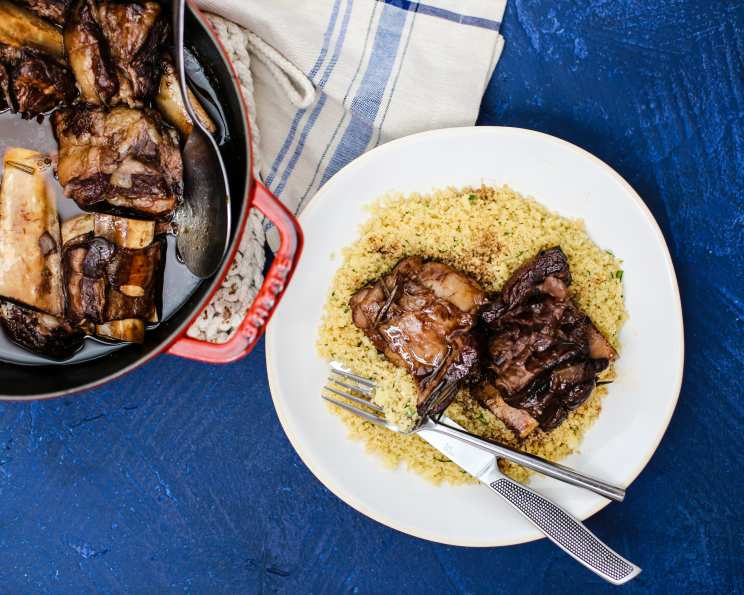
Balthazar’s Braised Beef Ribs: A Culinary Embrace
My first taste of braised short ribs wasn’t in a fancy restaurant, but in my grandmother’s cozy kitchen. The aroma of slow-cooked beef, herbs, and wine permeated the air, promising comfort and warmth. As I savored each tender, melt-in-your-mouth morsel, I understood the magic of braising – transforming humble cuts of meat into something extraordinary. It’s a memory etched in my mind, and this recipe for Balthazar’s Braised Beef Ribs, with its emphasis on patience and simple techniques, brings me right back to that cherished moment.
Recipe Overview
- Prep Time: 20 minutes
- Cook Time: 4 hours
- Total Time: 4 hours 20 minutes
- Servings: 4-6
- Yield: 4-6 servings
- Dietary Type: Not specified
Ingredients
- 6 short ribs of beef (5 to 7 pounds)
- 2 sprigs rosemary
- 6 sprigs thyme
- 1 bay leaf
- 1 stalk celery, halved
- 3 teaspoons kosher salt
- 2 teaspoons fresh coarse ground black pepper
- 3 tablespoons vegetable oil
- 3 medium carrots, peeled and cut into 1-inch pieces
- 1 medium onion, roughly chopped
- 4 shallots, peeled and sliced 1/4 inch thick
- 5 garlic cloves, peeled and halved
- 3 tablespoons tomato paste
- 3 tablespoons all-purpose flour
- 1⁄2 cup ruby port
- 4 cups full-bodied wine, such as cabernet sauvignon
- 6 cups veal stock (or good homemade beef stock)
Equipment Needed
- Large Dutch oven
- Kitchen twine
- Medium saucepan
- Sieve
Instructions
-
Preheat your oven to 325°F (160°C).
-
Prepare the short ribs by binding each one with cotton kitchen twine. This helps them maintain their shape during the long braising process.
-
Create an herb bundle by placing the rosemary, thyme, and bay leaf between the two celery halves. Secure them together with kitchen twine. This bundle will infuse the braising liquid with aromatic flavors.
-
Season the short ribs generously with 2 teaspoons of the kosher salt and the black pepper. Don’t be shy – proper seasoning is crucial for a flavorful final product.
-
Heat the vegetable oil in a large Dutch oven over a high flame until it smokes. The high heat is essential for achieving a good sear on the ribs.
-
Working in two batches to avoid overcrowding the pot, brown the short ribs well on both sides, about 3 minutes per side. Make sure to pour off all but 3 tablespoons of oil between batches to prevent the ribs from steaming instead of browning. Remove the ribs and set aside when they are browned.
-
Lower the flame to medium, and add the carrots, onion, shallots, and garlic to the pot. Sauté for 5 minutes, until the onion is soft and light brown. This step develops the base flavor of the braise.
-
Stir in the tomato paste and cook for 2 minutes. Cooking the tomato paste enhances its sweetness and deepens its flavor.
-
Add the flour and stir well to combine. This will help thicken the braising liquid.
-
Deglaze the pot by adding the ruby port, red wine, and the celery-herb bundle. Scraping up any browned bits from the bottom of the pot adds another layer of flavor.
-
Raise the flame to high and cook until the liquid is reduced by a third, about 20 minutes. This concentrates the flavors of the wine and port.
-
Return the ribs to the pot (they will stack into two layers).
-
Add the veal stock and the remaining 1 teaspoon of salt. If the stock doesn’t cover the ribs by at least 1 inch, add water up to that level. Ensure the ribs are mostly submerged for even cooking.
-
Bring to a gentle simmer, cover the Dutch oven, transfer it to the preheated oven, and cook for 3 hours. Visit the pot occasionally and stir the ribs, bringing the ones on the bottom up to the top. They’re done when the meat is fork tender and falling off the bone. The long, slow braise is key to achieving that perfect tenderness.
-
Transfer the ribs to a large platter and remove the strings.
-
Skim any fat from the surface of the sauce. Then, strain the sauce through a sieve into a medium saucepan. Discard the solids.
-
Over medium heat, bring the sauce to a strong simmer and reduce the liquid until slightly less than half (4 cups) remains, about 1 hour. This intensifies the flavors of the sauce.
-
Return the ribs to the pot, simmer for 10 minutes to reheat, and serve.
Expert Tips & Tricks
- Browning is key: Don’t rush the browning process. A deep, rich sear on the ribs is essential for flavor development.
- Make ahead: This dish is even better the next day! The flavors meld together beautifully overnight. Simply refrigerate the ribs in the sauce and reheat gently before serving.
- Degreasing: Skimming the fat from the braising liquid is important for a cleaner, richer sauce. Use a ladle or a fat separator for best results.
- Don’t skip the herb bundle: The herb bundle is a game changer and will infuse the dish with incredible aroma.
- Adjust the sauce: If the sauce is too thin, whisk in a cornstarch slurry (1 tablespoon cornstarch mixed with 2 tablespoons cold water) towards the end of the reduction. If it’s too thick, add a little more stock or water.
Serving & Storage Suggestions
Serve the braised beef ribs hot, spooned over a bed of creamy garlic mashed potatoes or alongside pan-roasted root vegetables, as the original recipe suggests. A sprinkle of fresh parsley adds a pop of color.
Leftovers can be stored in an airtight container in the refrigerator for up to 3 days. For longer storage, freeze the ribs and sauce separately for up to 2 months. Thaw overnight in the refrigerator and reheat gently on the stovetop or in the oven.
Nutritional Information
| Nutrient | Amount per Serving | % Daily Value |
|---|---|---|
| Calories | 550 kcal | 28% |
| Total Fat | 35g | 54% |
| Saturated Fat | 15g | 75% |
| Cholesterol | 150mg | 50% |
| Sodium | 800mg | 33% |
| Total Carbohydrate | 25g | 8% |
| Dietary Fiber | 5g | 20% |
| Sugars | 8g | – |
| Protein | 40g | 80% |
Note: Nutritional information is an estimate and may vary based on specific ingredients and preparation methods.
Variations & Substitutions
- Wine substitution: If you don’t have ruby port, you can use Madeira or another fortified wine. For a non-alcoholic option, substitute with red grape juice or cranberry juice with a splash of balsamic vinegar.
- Beef stock enhancement: Enhance the flavor of store-bought beef stock by simmering it with beef bones, vegetable scraps, and herbs for an hour before using it in the recipe.
- Spice it up: Add a pinch of red pepper flakes to the braising liquid for a subtle kick.
- Vegetable additions: Include other root vegetables like parsnips or turnips alongside the carrots.
- Herb variations: Experiment with different herbs, such as oregano or marjoram, in the herb bundle.
FAQs (Frequently Asked Questions)
Q: Can I use a slow cooker instead of a Dutch oven?
A: Yes, you can adapt this recipe for a slow cooker. Brown the ribs as directed, then transfer them to the slow cooker with the remaining ingredients. Cook on low for 6-8 hours, or until the meat is fork-tender.
Q: What if I can’t find veal stock?
A: While veal stock adds a unique richness, good homemade beef stock is an excellent substitute. You can also use a high-quality store-bought beef broth, but be sure to reduce the salt accordingly.
Q: How do I know when the ribs are done?
A: The ribs are done when the meat is fork-tender and easily pulls away from the bone. A probe thermometer inserted into the thickest part of the meat should register around 200-205°F (93-96°C).
Q: Can I make this recipe ahead of time and freeze it?
A: Absolutely! Braised short ribs freeze beautifully. Allow the dish to cool completely, then transfer it to freezer-safe containers or bags. Thaw overnight in the refrigerator before reheating.
Q: What should I do if my sauce is too thin after reducing?
A: If your sauce isn’t thickening enough, you can create a slurry by whisking together 1 tablespoon of cornstarch with 2 tablespoons of cold water. Stir this into the simmering sauce and cook for a few minutes until it thickens.
Final Thoughts
Balthazar’s Braised Beef Ribs are a testament to the power of slow cooking. This is more than just a recipe; it’s an invitation to slow down, savor the process, and create a dish that will warm your soul. Don’t be intimidated by the cook time – the hands-on effort is minimal, and the reward is immense. Gather your ingredients, embrace the aromas, and create a culinary experience that will be remembered long after the last bite. I urge you to try this recipe and share your culinary creations with family and friends. Consider pairing it with a robust red wine to elevate your meal to another level. Bon appétit!