
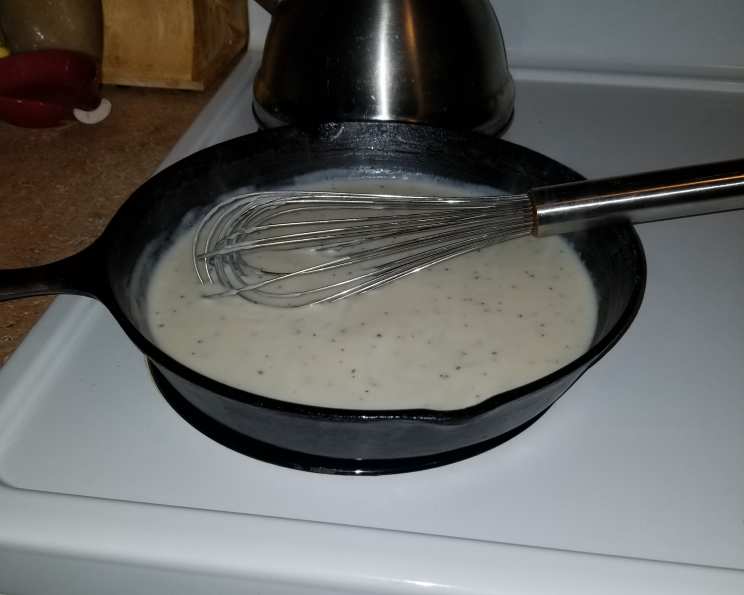
The Ultimate Guide to Basic Milk Gravy: A Culinary Classic
The scent of milk gravy always transports me back to my grandmother’s kitchen. It wasn’t just the taste – creamy, comforting, and subtly seasoned – but the ritual of it all. Every Sunday, without fail, she’d whip up a batch to smother her famous buttermilk biscuits. The rhythmic whisking, the gentle simmer, the satisfied sighs as we devoured it all – those are the memories that make this simple gravy so profoundly special to me. Even now, decades later, a spoonful of milk gravy is a taste of home, a connection to my heritage, and a reminder that the most extraordinary flavors often come from the simplest ingredients.
Recipe Overview
- Prep Time: 5 minutes
- Cook Time: 5 minutes
- Total Time: 10 minutes
- Servings: 1
- Yield: About 1 cup
- Dietary Type: Vegetarian
Ingredients
- 1 cup whole milk
- 2 tablespoons margarine or 2 tablespoons butter
- ½ teaspoon salt
- ¼ teaspoon black pepper or ¼ teaspoon white pepper
- ½ cup cold water
- 1 tablespoon cornstarch
Equipment Needed
- Small saucepan
- Whisk
Instructions
-
In a small saucepan, combine the milk, margarine or butter, salt, and pepper. Place the saucepan over medium heat and bring the mixture to a simmer. Watch carefully to prevent the milk from scorching on the bottom of the pan; stir occasionally as the mixture heats.
-
While the milk mixture is heating, prepare the cornstarch slurry. In a small bowl or measuring cup, whisk together the cold water and cornstarch until the cornstarch is fully dissolved and the mixture is smooth. This ensures no lumps form in the gravy.
-
Once the milk begins to simmer gently, slowly pour the cornstarch slurry into the saucepan while continuously whisking. It is crucial to whisk constantly and thoroughly to prevent lumps from forming.
-
Continue to cook the gravy, whisking constantly, until it thickens to your desired consistency. This should happen almost immediately after adding the cornstarch slurry. The gravy should coat the back of a spoon. If it’s too thick, add a tablespoon or two of milk to thin it out. If it’s too thin, whisk a teaspoon of cornstarch with a teaspoon of cold water and add it to the gravy, cooking for another minute while whisking.
-
Remove the saucepan from the heat. The gravy is now ready to serve.
Expert Tips & Tricks
- Preventing Lumps: The key to a smooth milk gravy is a well-mixed cornstarch slurry and constant whisking. Make sure the cornstarch is completely dissolved in cold water before adding it to the hot milk.
- Flavor Infusion: For a richer flavor, try browning the butter before adding the milk. This adds a nutty depth to the gravy. You could also infuse the milk with herbs like thyme or rosemary while it simmers. Remove the herbs before adding the cornstarch slurry.
- Seasoning Adjustment: Always taste the gravy and adjust the seasoning to your liking. A pinch of nutmeg can add a subtle warmth, while a dash of hot sauce can give it a little kick.
- Texture Perfection: If your gravy is too thick, whisk in a little more milk until you reach the desired consistency. If it’s too thin, simmer it for a few more minutes, whisking constantly, to allow it to thicken. Be careful not to overcook it, as it can become gummy.
- Make Ahead: Milk gravy is best served immediately, but you can make it ahead of time. Store it in an airtight container in the refrigerator for up to 2 days. Reheat gently over low heat, whisking frequently, and add a little milk if needed to thin it out.
Serving & Storage Suggestions
This classic milk gravy is incredibly versatile and can be served over a variety of dishes. The most common pairing is with warm, fluffy biscuits, but it’s also delicious over fried chicken, mashed potatoes, french fries, or even potato pancakes. For a hearty breakfast, try pouring it over scrambled eggs or a breakfast casserole.
To store leftover gravy, allow it to cool completely before transferring it to an airtight container. It can be stored in the refrigerator for up to 2 days. Reheat gently over low heat, whisking frequently. You may need to add a splash of milk to restore its creamy consistency. Freezing is not recommended, as the gravy may separate and become grainy upon thawing.
Nutritional Information
(Estimated for 1 serving, based on margarine)
| Nutrient | Amount per Serving | % Daily Value |
|---|---|---|
| Calories | 381 kcal | – |
| Calories from Fat | – | – |
| Total Fat | 30.6 g | 47% |
| Saturated Fat | 8.5 g | 42% |
| Cholesterol | 24.4 mg | 8% |
| Sodium | 1529.6 mg | 63% |
| Total Carbohydrate | 18.9 g | 6% |
| Dietary Fiber | 0.2 g | 0% |
| Sugars | 12.8 g | 51% |
| Protein | 8.2 g | 16% |
(Note: Percent Daily Values are based on a 2,000 calorie diet.)
Variations & Substitutions
- Sausage Gravy: The most popular variation is sausage gravy. Brown ½ pound of crumbled sausage in the saucepan before adding the milk and other ingredients.
- Cheese Sauce: For a quick and easy cheese sauce, add 1 cup of shredded cheese (cheddar, Monterey Jack, or your favorite) to the gravy after it has thickened. Stir until the cheese is melted and smooth.
- Southwestern Queso: To make a Southwestern-inspired queso, add ½ teaspoon of cumin, diced green chilies (finely chopped), and ¼ cup of salsa to the cheese sauce. This is fantastic for nachos or as a dip for tortilla chips.
- Dairy-Free Gravy: While this recipe is traditionally made with milk and butter/margarine, you can adapt it to be dairy-free. Substitute the whole milk with unsweetened almond milk or soy milk. Use a plant-based butter substitute or olive oil in place of the butter/margarine. Be aware that the flavor and texture may differ slightly.
- Gluten-Free Gravy: This recipe is already gluten-free as it uses cornstarch as the thickening agent. Always double-check the labels of your ingredients to ensure they are certified gluten-free, especially if you have a severe gluten intolerance.
FAQs (Frequently Asked Questions)
Q: Why is my milk gravy lumpy?
A: Lumpy gravy is usually caused by the cornstarch not being fully dissolved or not whisking constantly while adding the cornstarch slurry to the hot milk. Always whisk the cornstarch with cold water until smooth before adding it to the milk, and whisk continuously as it cooks.
Q: Can I use all-purpose flour instead of cornstarch?
A: Yes, you can use all-purpose flour, but the process is slightly different. Melt the butter in the saucepan, then whisk in an equal amount of flour (about 2 tablespoons). Cook for a minute or two, stirring constantly, to create a roux. Then, gradually whisk in the milk until smooth and continue cooking until thickened.
Q: How do I fix gravy that is too salty?
A: If your gravy is too salty, you can try adding a small amount of sugar or a squeeze of lemon juice to balance the flavors. You can also add a bit more milk to dilute the saltiness.
Q: Can I add other seasonings to the gravy?
A: Absolutely! Feel free to experiment with different seasonings. Garlic powder, onion powder, paprika, and dried herbs like thyme or rosemary can all add depth and complexity to the flavor.
Q: How can I make the gravy richer and creamier?
A: To make the gravy richer, you can use half-and-half or heavy cream instead of whole milk. You can also add a tablespoon of cream cheese or sour cream at the end for extra richness and tang.
Final Thoughts
Milk gravy is more than just a recipe; it’s a culinary hug, a taste of nostalgia, and a testament to the power of simple ingredients. Don’t be intimidated by its humble nature – this gravy is a blank canvas for your creativity. Whether you stick to the classic recipe or experiment with different flavors and variations, I encourage you to give it a try. Gather your ingredients, put on some music, and immerse yourself in the process. And most importantly, share your creation with loved ones. After all, the best meals are those that are enjoyed together. I’d love to hear about your milk gravy adventures, so feel free to share your feedback and creations! Bon appétit!