
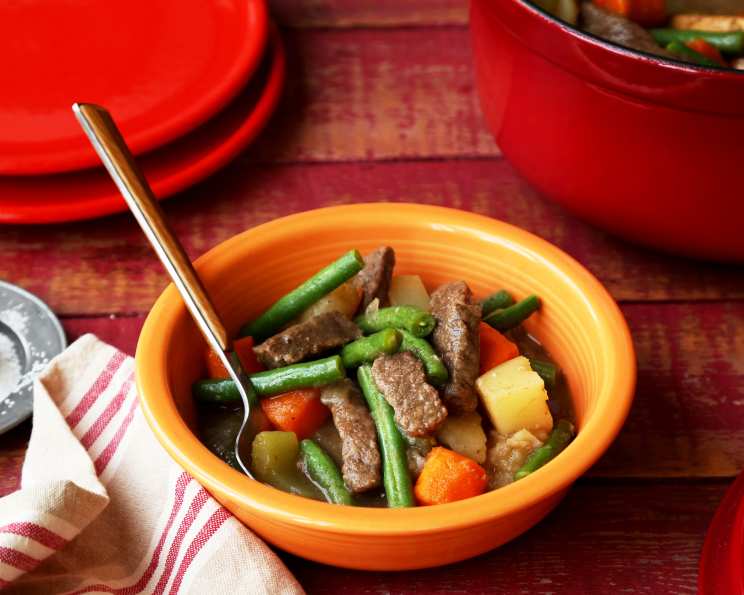
Classic Comfort: A Hearty Beef Stew (No Tomatoes!)
The aroma of beef stew always takes me back to my grandmother’s kitchen. It was a place filled with warmth, laughter, and the comforting smells of slow-cooked meals. Her beef stew was legendary, a simple yet incredibly flavorful dish that always seemed to appear on chilly autumn evenings. While most stews rely on tomatoes for their base, her secret was simplicity itself: rich beef broth, perfectly browned meat, and just the right combination of root vegetables. It’s a taste of home I’ve carried with me, and one I’m excited to share with you.
Recipe Overview
- Prep Time: 20 minutes
- Cook Time: 2 hours 30 minutes
- Total Time: 2 hours 50 minutes
- Servings: 4
- Yield: 4 servings
- Dietary Type: Dairy-Free
Ingredients
- 3 tablespoons all-purpose flour
- 1 1/2 – 2 lbs lean stewing beef (cubed round or your preferred cut)
- 2 -3 tablespoons cooking oil
- 3 1/2 cups beef broth (or 3 cups beef broth plus 1/2 cup dry red wine)
- 1 medium onion, sliced
- 2 garlic cloves, minced
- 1/2 teaspoon dried basil, crushed
- 1/2 teaspoon dried thyme, crushed
- 2 1/4 cups peeled cubed potatoes
- 2 cups carrots, sliced thickly
- 1 cup sliced celery (optional)
- 2 cups sliced green beans (OR 1 1/2 cups peas)
- Salt and pepper to taste
Equipment Needed
- Dutch oven or large saucepan
- Plastic bag
- Measuring spoons and cups
- Cutting board
- Knife
Instructions
-
Start by preparing the beef. Place the all-purpose flour in a plastic bag. Add a few pieces of beef at a time, shaking well to coat each piece thoroughly. This step helps to create a rich, thickened gravy as the stew simmers. Don’t overcrowd the bag; working in batches ensures even coating.
-
Heat the cooking oil in a Dutch oven or large saucepan over medium-high heat. Ensure the oil is shimmering before adding the meat to get a good sear. A good sear will develop the flavour of the stew.
-
Add the floured meat and sliced onions to the hot oil. Brown the meat well on all sides. This browning process, also known as the Maillard reaction, is crucial for developing the deep, savory flavor of the stew. Don’t rush this step; it’s the foundation of a truly delicious stew. Work in batches if necessary to avoid overcrowding the pot, which can lower the temperature and prevent proper browning.
-
Pour in the beef broth (and dry red wine, if using). Add the minced garlic, crushed dried basil, and crushed dried thyme. The aroma at this stage is incredibly enticing! Stir well to combine all the ingredients, scraping up any browned bits from the bottom of the pot. Those bits are packed with flavor and will add depth to your stew.
-
Bring the mixture to a boil over medium-high heat. Once boiling, reduce the heat to low, cover the pot, and simmer for 1 1/4 – 1 1/2 hours (or until the beef is tender). Check the beef periodically to ensure it’s not sticking to the bottom of the pot. If the liquid reduces too quickly, add a little more beef broth. The goal is to have the beef slowly braise in the flavorful liquid until it’s melt-in-your-mouth tender.
-
Add the peeled cubed potatoes, thickly sliced carrots, and sliced celery (if using) to the pot. Cover the pot again and simmer for about 20-30 minutes (or until the potatoes are almost done). The timing will depend on the size of the potatoes and carrots, so check for tenderness with a fork.
-
Stir in the sliced green beans (or peas) and simmer for 10-15 minutes more, or until the green beans are tender and the peas are heated through. Be careful not to overcook the green beans or peas, as they can become mushy.
-
Season with salt and pepper to taste. Adjust the seasoning as needed to bring out the flavors of the stew. Remember that flavors will continue to meld as the stew sits, so it’s always best to taste and adjust at the end.
Expert Tips & Tricks
- Browning the Beef: Achieving a deep, rich brown color on the beef is key to developing maximum flavor. Pat the beef dry before coating it in flour to ensure a better sear.
- Deglazing the Pot: Don’t forget to scrape up those browned bits from the bottom of the pot when you add the beef broth. These bits are packed with flavor and will add depth to your stew.
- Thickening the Stew: If you prefer a thicker stew, you can mix a tablespoon of cornstarch with a tablespoon of cold water and stir it into the stew during the last 15 minutes of cooking.
- Vegetable Size: Cut the vegetables into evenly sized pieces to ensure they cook at the same rate.
- Herbs: Feel free to experiment with different herbs to customize the flavor of your stew. Rosemary, bay leaf, and parsley are all excellent additions. Add fresh herbs towards the end of cooking to preserve their flavor.
Serving & Storage Suggestions
Serve the beef stew hot, ladled into bowls. A hunk of crusty bread is perfect for soaking up the flavorful gravy. For a complete meal, consider serving it with a simple green salad or a side of mashed potatoes.
Leftover beef stew can be stored in an airtight container in the refrigerator for up to 3-4 days. For longer storage, freeze the stew in freezer-safe containers for up to 2-3 months. Thaw the stew in the refrigerator overnight before reheating.
To reheat, gently warm the stew in a saucepan over low heat, stirring occasionally. You may need to add a little beef broth or water if the stew has thickened too much. Alternatively, you can reheat it in the microwave, stirring every minute or so until heated through.
Nutritional Information
| Nutrient | Amount per Serving | % Daily Value |
|---|---|---|
| Calories | 480 kcal | 24% |
| Total Fat | 25g | 38% |
| Saturated Fat | 9g | 45% |
| Cholesterol | 120mg | 40% |
| Sodium | 800mg | 33% |
| Total Carbohydrate | 30g | 10% |
| Dietary Fiber | 6g | 24% |
| Sugars | 7g | 14% |
| Protein | 40g | 80% |
Note: Nutritional information is an estimate and may vary based on specific ingredients and cooking methods.
Variations & Substitutions
- Gluten-Free: Use a gluten-free all-purpose flour blend or cornstarch to coat the beef. Ensure your beef broth is also gluten-free.
- Vegetarian/Vegan: Substitute the beef with hearty mushrooms (like cremini or portobello) or plant-based protein alternatives. Use vegetable broth instead of beef broth.
- Different Vegetables: Feel free to add other root vegetables like parsnips, turnips, or sweet potatoes.
- Spice it Up: Add a pinch of red pepper flakes or a dash of hot sauce for a little heat.
- Herbs: Rosemary and bay leaf are excellent additions for a more robust flavour.
- Wine: You can use any dry red wine. Burgundy, Cabernet Sauvignon, or Merlot will all work well.
FAQs (Frequently Asked Questions)
Q: Can I use a slow cooker for this recipe?
A: Yes, you can adapt this recipe for a slow cooker. Brown the beef as directed, then transfer all ingredients to the slow cooker. Cook on low for 6-8 hours, or on high for 3-4 hours. Add the green beans or peas during the last hour of cooking.
Q: How can I prevent the beef from becoming tough?
A: Slow, gentle cooking is key to tender beef. Ensure the stew is simmering gently, not boiling vigorously. Also, use a good quality cut of stewing beef.
Q: Can I make this stew ahead of time?
A: Absolutely! In fact, beef stew often tastes even better the next day after the flavors have had a chance to meld. Store it in the refrigerator and reheat gently before serving.
Q: What kind of potatoes work best in beef stew?
A: Waxy potatoes like Yukon Gold or red potatoes hold their shape well in stew. Starchy potatoes like Russets tend to fall apart more easily.
Q: Can I add other vegetables to this stew?
A: Yes, feel free to add other vegetables you enjoy, such as parsnips, turnips, or mushrooms. Just be sure to adjust the cooking time accordingly.
Final Thoughts
This basic beef stew recipe is a blank canvas for your culinary creativity. Don’t be afraid to experiment with different herbs, spices, and vegetables to create your own signature version. Whether you follow the recipe exactly or put your own spin on it, I hope this hearty and comforting stew brings warmth and satisfaction to your table. Gather your loved ones, share a bowl, and savor the simple pleasure of a home-cooked meal. And please, let me know how it turns out! I always love hearing about your culinary adventures. Enjoy!