
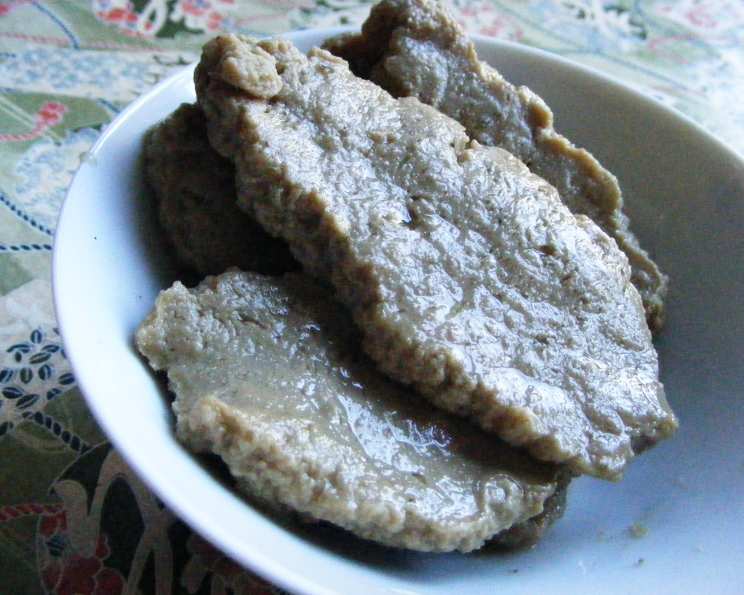
Basic Seitan – Chicken Flavor: A Chef’s Guide
The aroma of savory broth simmering on the stove instantly transports me back to my grandmother’s kitchen. I remember watching her, a whirlwind of purposeful motion, as she crafted dishes that nourished both body and soul. While her recipes were steeped in tradition, mine often lean towards plant-based creations, and this “chicken” flavored seitan is a tribute to those comforting flavors of my childhood, reimagined for a modern palate. This recipe is surprisingly simple, delivering a tender and flavorful protein perfect for everything from stir-fries to hearty stews.
Recipe Overview
- Prep Time: 15 minutes
- Cook Time: 50-60 minutes
- Total Time: 1 hour 5 minutes – 1 hour 15 minutes
- Servings: 4
- Yield: Varies depending on cut size
- Dietary Type: Vegan
Ingredients
- ½ cup vital wheat gluten flour
- ½ cup water
For the Broth:
- 2 cups water
- ¼ cup nutritional yeast
- 2 tablespoons soy sauce
- 1 teaspoon onion powder
- 1 teaspoon sage
- ½ teaspoon dried thyme
- ½ teaspoon salt
- ¼ teaspoon celery seed (or celery salt)
Equipment Needed
- Medium bowl
- Medium saucepan with lid
Instructions
- In a medium bowl, stir together the vital wheat gluten flour and water until a dough forms. The mixture will become elastic as you work it.
- Knead the dough in the bowl anywhere from 1 to 5 minutes. This develops the gluten and gives the seitan its characteristic chewy texture. Don’t over-knead; the goal is to form a cohesive dough.
- Cut the dough into your desired shapes and sizes. This could be small nuggets, strips, or larger cutlet-sized pieces, depending on how you plan to use the seitan.
- In a medium saucepan, bring all of the broth ingredients (2 cups water, ¼ cup nutritional yeast, 2 tablespoons soy sauce, 1 teaspoon onion powder, 1 teaspoon sage, ½ teaspoon dried thyme, ½ teaspoon salt, ¼ teaspoon celery seed/celery salt) to a boil over medium-high heat. Stir to ensure the nutritional yeast is fully dissolved.
- Add the prepared seitan pieces into the boiling broth. Be careful not to overcrowd the pan; work in batches if necessary.
- Reduce the heat to low, cover the saucepan with a lid, and let simmer for 50-60 minutes.
- During the simmering process, stir the seitan every 10 minutes to prevent sticking and ensure even cooking. Gently turn the pieces over as you stir.
- Continue simmering until MOST, but not all, of the broth has reduced. This can take anywhere from 30 to 60 minutes after you initially reduce the heat. You want a small amount of flavorful liquid remaining. The exact timing will depend on the size of your pan and the heat level.
- Remove the seitan from the broth. At this stage, the seitan can be used immediately in your dish of choice, or stored for later.
- Store the seitan in an airtight container in the refrigerator for up to 6 days, or in the freezer for up to 6 months.
Expert Tips & Tricks
- Kneading Time: The kneading time can affect the final texture of the seitan. Shorter kneading times result in a more tender, less chewy seitan, while longer kneading produces a chewier texture. Experiment to find your preferred consistency.
- Broth Reduction: Keep a close eye on the broth during the final simmering stages. You want the broth to reduce and concentrate the flavor, but you don’t want it to completely dry out. A small amount of flavorful liquid is ideal.
- Flavor Boost: For a richer, more complex flavor, add a bay leaf or a few slices of fresh ginger to the broth during simmering. Remember to remove them before serving.
- Browning: For extra flavor, you can pan-fry or bake the seitan pieces after simmering. This will give them a nice browned crust.
Serving & Storage Suggestions
This chicken-flavored seitan is incredibly versatile. Serve it in stir-fries, soups, stews, sandwiches, or salads. It’s also delicious simply sautéed with vegetables.
If using the seitan immediately after simmering, it will be quite soft and tender. If you allow it to cool and then use it in a dish, it will have a bit more texture to it.
Store leftover seitan in an airtight container in the refrigerator for up to 6 days. For longer storage, freeze it for up to 6 months. Thaw the seitan in the refrigerator overnight before using. To reheat, pan-fry, bake, or microwave until heated through. You may want to add a little broth or water to prevent it from drying out.
Nutritional Information
| Nutrient | Amount per Serving | % Daily Value |
|---|---|---|
| Calories | 99.9 kcal | N/A |
| Calories from Fat | 8 g | 8% |
| Total Fat | 0.9 g | 1% |
| Saturated Fat | 0.1 g | 0% |
| Cholesterol | 0 mg | 0% |
| Sodium | 807.4 mg | 33% |
| Total Carbohydrate | 7.9 g | 2% |
| Dietary Fiber | 2.9 g | 11% |
| Sugars | 0.4 g | 1% |
| Protein | 16.9 g | 33% |
Variations & Substitutions
- Gluten-Free: This recipe relies on vital wheat gluten, so it’s not suitable for those avoiding gluten.
- Soy-Free: Substitute the soy sauce with tamari, coconut aminos, or a soy-free seasoning sauce.
- Herb Variations: Experiment with different herbs and spices to create your own unique flavor profiles. Try adding rosemary, oregano, or paprika to the broth.
- Spicy Seitan: Add a pinch of red pepper flakes or a dash of your favorite hot sauce to the broth for a spicy kick.
- Smoked Paprika: Include a teaspoon of smoked paprika for a smokey flavor.
FAQs (Frequently Asked Questions)
Q: What is vital wheat gluten, and why is it important in this recipe?
A: Vital wheat gluten is the protein component of wheat flour. It provides the structure and chewy texture of seitan.
Q: Can I use all-purpose flour instead of vital wheat gluten?
A: No, all-purpose flour will not work in this recipe. Vital wheat gluten is essential for creating the characteristic texture of seitan.
Q: How do I know when the seitan is cooked through?
A: The seitan is cooked through when it has a firm, slightly springy texture. It should no longer be soft and doughy.
Q: Can I freeze the seitan after simmering?
A: Yes, you can freeze the seitan for up to 6 months. Make sure to store it in an airtight container to prevent freezer burn.
Q: What can I do if my seitan is too tough?
A: If your seitan is too tough, try simmering it for a longer period of time or kneading the dough for a shorter amount of time next time you make it.
Final Thoughts
This basic seitan recipe is a fantastic starting point for exploring the world of plant-based protein. The “chicken” flavor is wonderfully versatile, and with a little experimentation, you can customize it to suit your own taste preferences. Don’t be afraid to get creative with the herbs and spices, and most importantly, have fun in the kitchen! Share your creations and feedback – I’d love to hear how this recipe inspires you.