
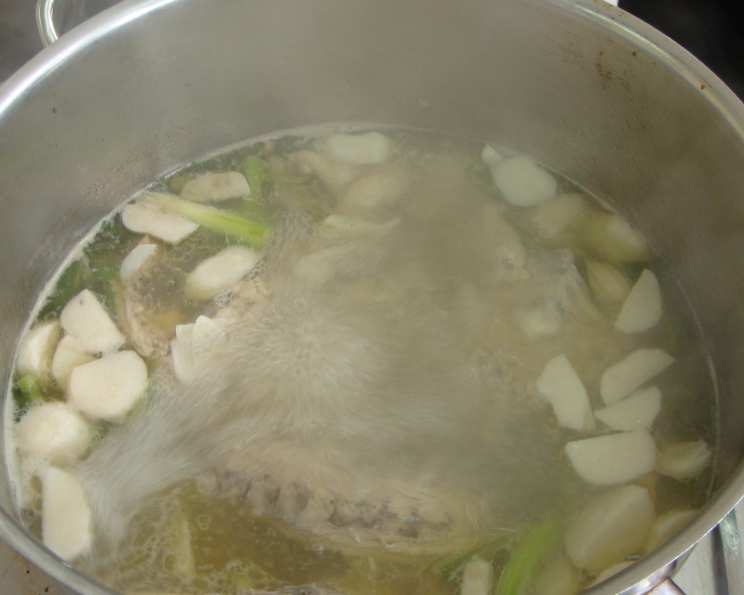
Mastering the Art of Basic White Stock: A Culinary Foundation
The scent of simmering stock is, for me, the olfactory embodiment of home. I remember being a young cook, intimidated by the seemingly simple process of making stock. My grandmother, a woman who could coax flavor from the humblest ingredients, would stand over a bubbling pot, patiently skimming away impurities, whispering secrets about balance and depth. It wasn’t just about the ingredients; it was about the time, the attention, the love poured into every drop. That aromatic, gelatinous liquid became the base for countless comforting meals, each carrying a hint of her warmth and unwavering dedication to the craft of cooking.
Recipe Overview
- Prep Time: 30 minutes
- Cook Time: 6-8 hours
- Total Time: 6 hours 30 minutes to 8 hours 30 minutes
- Yields: 5 quarts
- Dietary Type: Dairy-Free, Gluten-Free
Ingredients
- 5-6 lbs veal bones or 5-6 lbs beef bones
- 5-6 quarts cold water
- 8 ounces onions, chopped medium
- 4 ounces carrots, cubed medium
- 4 ounces celery, cubed medium
For the Sachet:
- ½ bay leaf
- ⅛ teaspoon thyme
- ⅛ teaspoon peppercorn
- 3-4 parsley stems
- 1 whole clove
- Cheesecloth
Equipment Needed
- Stock pot (at least 8-quart capacity)
- China cap or fine-mesh sieve
- Cheesecloth
- String
- Large bowl or container for cooling
- Large spoon or ladle for skimming
Instructions
- Prepare the Bones: If using beef or veal bones, ensure they are cut into 3-4 inch pieces. This allows for maximum surface area for flavor extraction.
- Rinse the Bones: Rinse the bones thoroughly in cold water. This helps remove any impurities and excess blood that could cloud the stock.
- Blanch the Bones (Optional but Recommended): Place the bones in the stock pot, cover with cold water, and bring to a boil over high heat. This blanching process further removes impurities, resulting in a cleaner, clearer stock.
- Drain and Rinse Again: Once the water reaches a rolling boil, immediately drain the bones and rinse them thoroughly under cold running water. Rinse the stockpot as well to remove any residue.
- Return to the Pot: Place the blanched bones back into the cleaned stock pot and cover with 5-6 quarts of fresh cold water. Using cold water initially helps to slowly extract the collagen from the bones, which is crucial for a rich, gelatinous stock.
- Bring to a Simmer: Bring the water to a boil over medium-high heat. As soon as it reaches a boil, immediately reduce the heat to the lowest possible setting to maintain a gentle simmer. This is crucial for extracting the most flavor and preventing the stock from becoming cloudy.
- Skim the Scum: As the stock simmers, impurities will rise to the surface in the form of a foamy scum. Use a large spoon or ladle to carefully skim this scum off the surface. This step is essential for a clear and flavorful stock. Continue skimming regularly for the first hour or two of simmering.
- Prepare the Sachet: While the stock is simmering, prepare the sachet d’épices. This is a bundle of herbs and spices that adds subtle flavor to the stock without overpowering it. Place the ½ bay leaf, ⅛ teaspoon thyme, ⅛ teaspoon peppercorns, 3-4 parsley stems, and 1 whole clove in a square of cheesecloth.
- Tie the Sachet: Gather the edges of the cheesecloth together and tie them tightly with a piece of string, creating a small pouch. Leave one end of the string long enough to tie to the handle of the stockpot. This makes it easy to remove the sachet later.
- Add Aromatics and Sachet: Add the 8 ounces of chopped onions, 4 ounces of cubed carrots, and 4 ounces of cubed celery to the stock pot. Then, add the prepared sachet, tying the string to the handle of the pot so it’s easily retrievable.
- Simmer Patiently: Simmer the stock for the required length of time, maintaining a very gentle simmer. For beef and veal stock, this is typically 6-8 hours. Do not rush the process; the long simmering time is necessary to extract all the flavor and collagen from the bones and vegetables.
- Monitor and Adjust: During the simmering process, continue to skim off any scum that rises to the surface. Also, add water as necessary to keep the bones covered. This ensures maximum flavor extraction.
- Strain the Stock: Once the stock has simmered for the appropriate time, carefully remove the sachet from the pot and discard it. Line a china cap or fine-mesh sieve with several layers of cheesecloth. Place the sieve over a large bowl or container.
- Strain Thoroughly: Carefully pour the stock through the cheesecloth-lined sieve, straining out all the solids. Discard the bones and vegetables. The cheesecloth will filter out any remaining particles, resulting in a clear, pristine stock.
- Cool the Stock: Cool the strained stock quickly in a water bath. To do this, place the bowl or container of stock in a larger bowl filled with ice water. Stir the stock occasionally to help it cool evenly. This rapid cooling prevents the growth of bacteria and ensures the stock stays fresh.
- Refrigerate: Once the stock has cooled to room temperature, transfer it to an airtight container and refrigerate immediately.
Expert Tips & Tricks
- Roast the Bones: For a richer, deeper flavor, roast the bones in a 400°F (200°C) oven for 30-45 minutes before simmering. This caramelizes the bones and adds a depth of flavor to the stock.
- Don’t Boil: Avoid boiling the stock, as this can emulsify the fats and create a cloudy, less flavorful result. Simmering gently is key.
- Salt Judiciously: It’s best to avoid adding salt during the simmering process. Season the stock once it’s finished, or better yet, season the final dish you’re using the stock in. This gives you more control over the saltiness.
- Defatting: Once the stock is chilled, the fat will solidify on the surface. Skim off this layer of fat before using the stock. This will result in a leaner, cleaner-tasting stock. The fat can be reserved for other cooking purposes if desired.
- Gelatin Check: A well-made stock should be gelatinous when chilled. This is a sign that you’ve extracted plenty of collagen from the bones. If your stock isn’t gelatinous, you can try simmering it for a longer period of time with additional bones.
Serving & Storage Suggestions
Basic white stock is a culinary building block, ready to elevate countless dishes. Use it as the base for soups, stews, sauces, braises, and risottos. It’s also excellent for deglazing pans and adding depth to vegetable dishes.
- Room Temperature: Do not leave stock at room temperature for more than 2 hours.
- Refrigeration: Store cooled stock in an airtight container in the refrigerator for up to 3-4 days.
- Freezing: For longer storage, freeze the stock in freezer-safe containers or ice cube trays. Frozen stock will keep for up to 2-3 months. To thaw, transfer the stock to the refrigerator overnight or heat it gently on the stovetop.
Nutritional Information
| Nutrient | Amount per Serving (1 cup) | % Daily Value* |
|---|---|---|
| Calories | 31 kcal | 2% |
| Total Fat | 0.1g | 0% |
| Saturated Fat | 0g | 0% |
| Cholesterol | 0mg | 0% |
| Sodium | 64mg | 3% |
| Total Carbohydrate | 7.1g | 3% |
| Dietary Fiber | 1.8g | 6% |
| Sugars | 3.4g | N/A |
| Protein | 0.9g | 2% |
*Percent Daily Values are based on a 2,000 calorie diet.
Variations & Substitutions
- Chicken Stock: Substitute chicken bones for beef or veal bones. Simmer for 3-4 hours instead of 6-8.
- Vegetable Stock: Omit the bones entirely and use a variety of vegetables, such as leeks, mushrooms, and parsnips. Simmer for 1-2 hours.
- Herb Variations: Experiment with different herbs in the sachet, such as rosemary, sage, or tarragon.
- Spice Variations: Add other spices to the sachet, such as star anise, fennel seeds, or coriander seeds, for a unique flavor profile.
- Wine Addition: For a richer, more complex flavor, add a splash of dry white wine or sherry to the stock during the last hour of simmering.
FAQs (Frequently Asked Questions)
Q: Why is it important to blanch the bones?
A: Blanching the bones helps to remove impurities and excess blood, resulting in a cleaner, clearer stock with a purer flavor.
Q: Can I use leftover cooked bones to make stock?
A: Yes, you can use leftover cooked bones, but the flavor will be less intense than using raw bones. Reduce the simmering time accordingly.
Q: How do I know if my stock is properly seasoned?
A: It’s best to season the final dish you’re making with the stock rather than the stock itself. This gives you more control over the saltiness and allows you to adjust the seasoning to complement the other ingredients in the dish.
Q: My stock is cloudy. What did I do wrong?
A: Cloudy stock can be caused by boiling the stock too vigorously, not skimming the scum properly, or adding salt during the simmering process. Ensure you simmer gently and skim frequently.
Q: Can I make stock in a slow cooker?
A: Yes, you can make stock in a slow cooker. Simply combine all the ingredients in the slow cooker and cook on low for 8-10 hours.
Final Thoughts
Making your own basic white stock is a rewarding culinary experience that will elevate your cooking to new heights. Don’t be intimidated by the long simmering time; it’s mostly hands-off. The flavor you achieve is incomparable to store-bought versions, and the possibilities are endless. So, gather your ingredients, embrace the process, and prepare to be amazed by the depth and complexity of homemade stock. Share your creations with friends and family, and don’t hesitate to experiment with different variations to create your own signature stock. Pair a hearty beef stew made with your fresh stock with crusty bread and a glass of red wine for a truly comforting and satisfying meal. Bon appétit!