
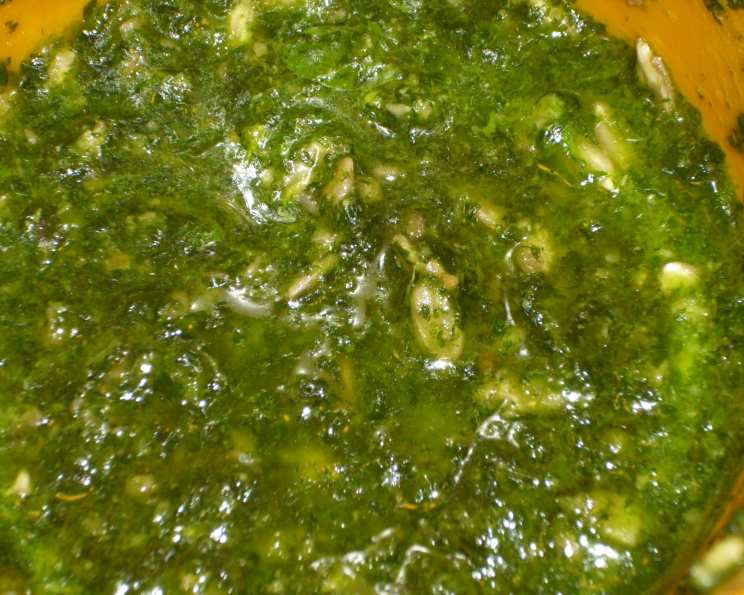
The Vibrant Symphony of Basil Parsley Pesto
The aroma of freshly made pesto always transports me back to my first summer working in a tiny trattoria in Florence. Every morning, the kitchen would be filled with the scent of basil as the head chef, a formidable woman named Nonna Emilia, would begin her pesto preparations. She’d shoo away any helpers, declaring that pesto was a dish that demanded respect and a personal touch. I watched, fascinated, as she meticulously layered basil, parsley, garlic, and cheese, coaxing out the vibrant green sauce that would later grace countless plates of pasta. That summer, I learned that pesto wasn’t just a sauce; it was a labor of love, a celebration of fresh ingredients, and a taste of pure sunshine.
Recipe Overview
- Prep Time: 10 minutes
- Cook Time: 0 minutes (No cooking required)
- Total Time: 10 minutes
- Yields: 3/4 cup
- Dietary Type: Vegetarian (easily adaptable to vegan – see variations below)
Ingredients
- 1 cup tightly packed fresh basil leaves or 1 cup tightly packed fresh cilantro leaves (or a combination)
- 1 cup tightly packed fresh parsley leaves
- 1-2 garlic cloves, peeled
- 1/2 cup olive oil or 1/2 cup vegetable oil
- 1/2 cup grated Parmesan cheese
- 1/4 teaspoon salt
Equipment Needed
- Food processor
Instructions
- Combine all the ingredients in a food processor. It’s important to pack the basil and parsley tightly into the measuring cup to ensure accurate proportions in the final pesto.
- Cover the food processor and puree the ingredients until the mixture is smooth. You may need to stop the food processor periodically and scrape down the sides of the bowl to ensure everything is evenly incorporated. The consistency should be a vibrant green paste. If the pesto seems too thick, add a tablespoon or two more of olive oil until it reaches your desired consistency.
- Once smooth, the Basil Parsley Pesto is ready to use. Toss it with hot cooked pasta or vegetables for a quick and flavorful meal. Spread it on French bread for a delicious appetizer. You can also use it as an ingredient in other recipes that call for pesto, like stirred into scrambled eggs or as a pizza topping.
Expert Tips & Tricks
- Flavor Boost: Toast the garlic cloves lightly in a dry pan before adding them to the food processor for a deeper, nuttier flavor. Be careful not to burn them.
- Freshness Matters: Use the freshest herbs possible. Older herbs will have a duller color and a less intense flavor.
- Oil Quality: Opt for a good quality extra virgin olive oil for the best flavor. Its fruity notes will enhance the pesto. If using vegetable oil, choose a neutral-tasting variety like canola oil.
- Prevent Browning: To prevent the pesto from oxidizing and turning brown, pour a thin layer of olive oil over the surface before refrigerating or freezing.
- Cheese Alternatives: If you don’t have Parmesan cheese on hand, you can substitute Pecorino Romano or Asiago cheese.
- Blade Awareness: Ensure your food processor blade is sharp for a smoother pesto. A dull blade can result in a pesto that is coarsely chopped rather than pureed.
- Taste As You Go: Taste the pesto after processing and adjust the salt accordingly. You may also want to add a pinch of black pepper or a squeeze of lemon juice for extra brightness.
Serving & Storage Suggestions
Serving: Serve the Basil Parsley Pesto immediately for the freshest flavor and brightest color. Toss it with freshly cooked pasta, such as spaghetti, linguine, or penne. Use approximately 1/4 cup of pesto per serving of pasta. Garnish with extra Parmesan cheese and a sprinkle of fresh herbs. Pesto is also delicious served with grilled vegetables, roasted chicken, or as a spread for sandwiches and wraps.
Storage: Store leftover Basil Parsley Pesto in an airtight container in the refrigerator for up to 5 days. To prevent browning, pour a thin layer of olive oil over the surface before sealing the container. Alternatively, freeze the pesto in ice cube trays for easy portioning. Once frozen, transfer the pesto cubes to a freezer bag and store for up to 3 months. Thaw in the refrigerator before using. Reheating is not typically necessary, as pesto is usually served cold or at room temperature.
Nutritional Information
| Nutrient | Amount per Serving (approx. 2 tbsp) | % Daily Value* |
|---|---|---|
| Calories | 268 | N/A |
| Total Fat | 26.5g | 34% |
| Saturated Fat | 6.4g | 32% |
| Cholesterol | 11mg | 4% |
| Sodium | 308mg | 13% |
| Total Carbohydrate | 1.9g | 1% |
| Dietary Fiber | 0.8g | 3% |
| Sugars | 0.3g | N/A |
| Protein | 3.9g | 8% |
*Percent Daily Values are based on a 2,000 calorie diet.
Variations & Substitutions
- Vegan Pesto: Substitute the Parmesan cheese with nutritional yeast for a cheesy, umami flavor. You can also add a handful of toasted pine nuts or walnuts for added richness and texture.
- Nut-Free Pesto: Omit the Parmesan cheese and substitute it with sunflower seeds or pumpkin seeds for a nut-free alternative.
- Lemon Pesto: Add the zest and juice of one lemon to the food processor for a bright, citrusy twist.
- Spicy Pesto: Add a pinch of red pepper flakes or a small, seeded jalapeno pepper to the food processor for a spicy kick.
- Sun-Dried Tomato Pesto: Add 1/2 cup of oil-packed sun-dried tomatoes, drained, to the food processor for a rich and savory pesto. Reduce the amount of olive oil accordingly.
- Arugula Pesto: Replace half of the parsley with arugula for a peppery and slightly bitter flavor.
- Cilantro-Lime Pesto: Use all cilantro instead of basil and parsley, and add the zest and juice of one lime for a vibrant and refreshing pesto, perfect for Mexican-inspired dishes.
FAQs (Frequently Asked Questions)
Q: Can I use dried herbs instead of fresh herbs?
A: While you can use dried herbs in a pinch, the flavor won’t be as vibrant or fresh as when using fresh herbs. Fresh herbs are highly recommended for the best pesto flavor.
Q: My pesto turned brown. What did I do wrong?
A: Pesto can oxidize and turn brown when exposed to air. To prevent this, pour a thin layer of olive oil over the surface of the pesto before storing it. Also, be sure to store it in an airtight container.
Q: Can I make pesto ahead of time?
A: Yes, you can make pesto ahead of time. Store it in the refrigerator for up to 5 days or freeze it for longer storage.
Q: My pesto is too thick. How can I thin it out?
A: Add a tablespoon or two of olive oil to the food processor and pulse until it reaches your desired consistency. You can also add a splash of water or lemon juice.
Q: Can I use a blender instead of a food processor?
A: While a food processor is ideal for making pesto, you can use a blender if necessary. You may need to add more olive oil to help the ingredients blend smoothly. Also, be sure to stop the blender periodically and scrape down the sides to ensure everything is evenly incorporated.
Final Thoughts
Creating your own Basil Parsley Pesto is an incredibly rewarding experience. The vibrant flavors of fresh herbs and garlic, combined with the richness of Parmesan cheese and olive oil, create a sauce that is both versatile and delicious. Don’t be afraid to experiment with different variations and substitutions to create a pesto that is perfectly suited to your taste. Whether you toss it with pasta, spread it on bread, or use it as a marinade, this Basil Parsley Pesto is sure to elevate any dish. So, gather your ingredients, fire up your food processor, and prepare to be amazed by the symphony of flavors that awaits! Share your creations with friends and family, and don’t hesitate to let me know what you think. Buon appetito!