
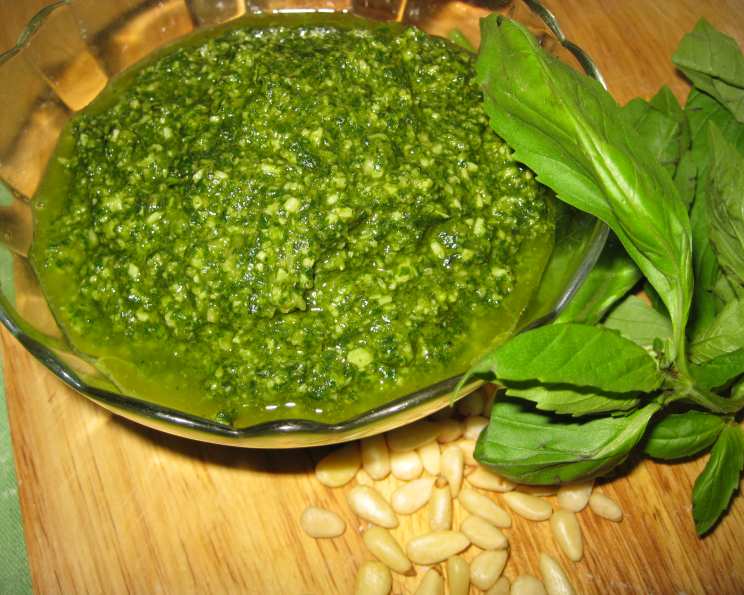
Vibrant Basil Pesto: A Taste of Italian Sunshine
The aroma of fresh basil always transports me back to a tiny trattoria nestled in the hills of Tuscany. Sunlight streamed through the window as I watched Nonna Maria expertly blend fragrant basil with simple ingredients, creating a vibrant green sauce that tasted like summer itself. That pesto, tossed with perfectly al dente pasta, was a revelation – a testament to the magic of simple, fresh ingredients transformed by a skilled hand. This recipe attempts to capture that same sun-drenched, herbaceous magic.
Recipe Overview
- Prep Time: 10 minutes
- Cook Time: 0 minutes
- Total Time: 10 minutes
- Servings: 8
- Yield: About 1 cup
- Dietary Type: Vegetarian (easily adaptable to vegan – see variations)
Ingredients
- 2 cups fresh basil leaves
- ¼ cup pine nuts, toasted
- 2 garlic cloves, peeled
- ½ teaspoon salt
- ¼ teaspoon fresh ground black pepper
- ⅓ – ½ cup extra virgin olive oil
- ½ cup parmesan cheese, grated (omit for vegan)
Equipment Needed
- Blender or Food Processor
- Medium Bowl
Instructions
- Begin by gathering all of your ingredients. Proper mise en place ensures a smooth and efficient pesto-making process.
- In a blender or food processor, combine the basil leaves, toasted pine nuts, garlic cloves, salt, and pepper.
- Pulse the mixture until the ingredients are finely chopped. You may need to scrape down the sides of the blender a few times to ensure even processing. The goal is to create a coarse, slightly chunky mixture. Avoid over-processing at this stage, as it can result in a bitter pesto.
- With the blender still running on low speed, gradually drizzle in the extra virgin olive oil. Continue adding oil until the pesto reaches a smooth and thick consistency. You may not need to use the full ½ cup of oil; the exact amount will depend on the size and moisture content of your basil leaves.
- Transfer the pesto to a medium bowl.
- Stir in the grated parmesan cheese. Ensure the cheese is evenly distributed throughout the pesto.
- Season the pesto with more salt and pepper, to taste. Remember that the parmesan cheese is already salty, so add salt judiciously.
- The pesto can be made up to 2 days ahead of time. Transfer it to an airtight container, cover the surface with a thin layer of olive oil to prevent oxidation, and refrigerate.
Expert Tips & Tricks
- Toast the Pine Nuts: Toasting the pine nuts beforehand is crucial for bringing out their nutty flavor and adding depth to the pesto. Toast them in a dry pan over medium heat, stirring frequently, until they are lightly golden and fragrant. Watch them carefully, as they can burn easily.
- Use High-Quality Olive Oil: The quality of your olive oil will significantly impact the flavor of the pesto. Opt for a high-quality, extra virgin olive oil with a robust and fruity flavor profile.
- Don’t Over-Process: Over-processing the basil can release bitter compounds. Pulse the ingredients in short bursts rather than running the blender continuously.
- Freeze for Later: Pesto freezes beautifully. Portion it into ice cube trays for easy use in sauces, soups, or as a topping for grilled meats and vegetables. Once frozen solid, transfer the pesto cubes to a freezer bag for longer storage.
- Freshness is Key: Use the freshest basil possible for the best flavor. Avoid basil that is wilted or has brown spots.
- Garlic Intensity: For a milder garlic flavor, blanch the garlic cloves in boiling water for a few seconds before adding them to the blender.
Serving & Storage Suggestions
Basil pesto is incredibly versatile. The classic pairing is with pasta, particularly penne or trofie, but it’s also delicious as a spread for sandwiches and paninis, a topping for pizza, or a flavorful addition to soups and sauces. Serve it dolloped over grilled chicken, fish, or vegetables, or use it as a marinade for meats.
Store leftover pesto in an airtight container in the refrigerator for up to 3-4 days. To prevent oxidation and browning, cover the surface of the pesto with a thin layer of olive oil. You can also freeze pesto for longer storage. Spoon it into ice cube trays or small freezer-safe containers. Frozen pesto will keep for several months. Thaw it in the refrigerator before using.
Do not leave pesto at room temperature for more than a few hours as it can spoil quickly.
Nutritional Information
| Nutrient | Amount per Serving | % Daily Value |
|---|---|---|
| Calories | 139 kcal | N/A |
| Calories from Fat | 123 kcal | N/A |
| Total Fat | 13.7 g | 21% |
| Saturated Fat | 2.5 g | 12% |
| Cholesterol | 5.5 mg | 1% |
| Sodium | 241.8 mg | 10% |
| Total Carbohydrate | 1.6 g | 0% |
| Dietary Fiber | 0.6 g | 2% |
| Sugars | 0.2 g | 1% |
| Protein | 3.3 g | 6% |
Note: Nutritional information is an estimate and may vary based on specific ingredients and portion sizes.
Variations & Substitutions
- Vegan Pesto: Omit the parmesan cheese and add 2-3 tablespoons of nutritional yeast for a cheesy flavor. You can also add a tablespoon of lemon juice for brightness.
- Nut-Free Pesto: Substitute the pine nuts with sunflower seeds, pumpkin seeds (pepitas), or walnuts. Toast them as you would pine nuts.
- Herb Variations: Experiment with different herbs, such as parsley, cilantro, or mint, in combination with the basil.
- Sun-Dried Tomato Pesto: Add ½ cup of sun-dried tomatoes (oil-packed, drained) to the blender along with the basil and other ingredients.
- Arugula Pesto: Use a combination of basil and arugula for a peppery kick.
- Lemon Pesto: Add the zest and juice of one lemon for a bright and citrusy flavor.
FAQs (Frequently Asked Questions)
Q: Can I use a food processor instead of a blender?
A: Absolutely! A food processor works just as well, if not better, for making pesto. It gives you more control over the texture.
Q: How can I prevent my pesto from turning brown?
A: Exposure to air causes oxidation. To prevent browning, cover the surface of the pesto with a thin layer of olive oil. You can also add a squeeze of lemon juice, which acts as a natural preservative.
Q: Can I use pre-grated parmesan cheese?
A: While pre-grated cheese is convenient, it often contains cellulose, which can affect the texture and flavor of the pesto. Freshly grated parmesan cheese will give you the best results.
Q: How long does homemade pesto last?
A: Homemade pesto will last for 3-4 days in the refrigerator. You can also freeze it for longer storage.
Q: What is the best way to thaw frozen pesto?
A: Thaw frozen pesto in the refrigerator overnight or at room temperature for a few hours. You may need to stir it to recombine the ingredients after thawing.
Final Thoughts
This vibrant basil pesto is more than just a sauce; it’s a celebration of fresh, simple ingredients and the joy of creating something delicious from scratch. Don’t be intimidated by the process – it’s incredibly easy and rewarding. Experiment with different variations, find your favorite pairings, and share your creations with friends and family. And most importantly, savor the taste of sunshine in every bite. Buon appetito!