
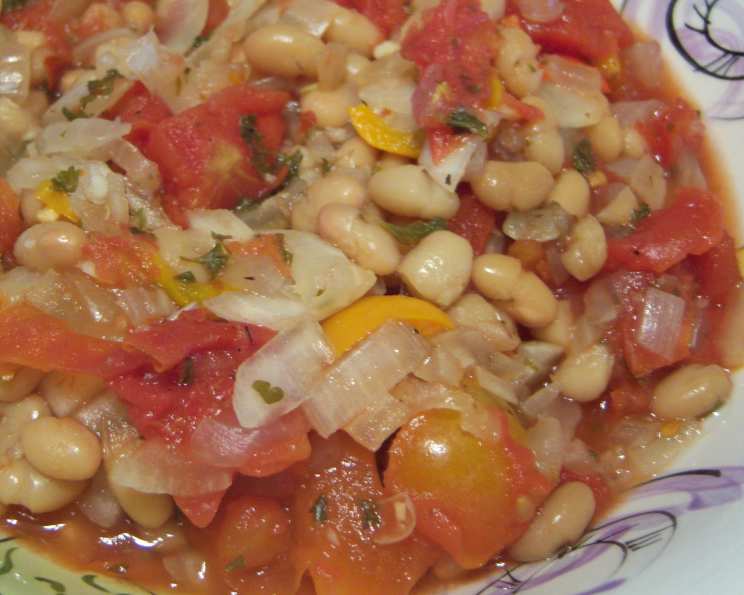
Basque Beans: A Hearty Taste of the Pyrenees
The aroma of simmering beans, mingling with garlic and smoked paprika, always transports me back to a small, family-run restaurant nestled in the foothills of the Pyrenees. During a culinary tour of Northern Spain, I stumbled upon this hidden gem and savored a bowl of their rustic bean stew. It was a revelation – deeply flavorful, comforting, and worlds away from the sugary baked beans I knew growing up. This Basque bean recipe captures that essence, offering a taste of authentic Spanish cuisine, simplified for the home cook.
Recipe Overview
- Prep Time: 20 minutes
- Cook Time (Stovetop): 2 hours 20 minutes – 3 hours 20 minutes
- Cook Time (Crock Pot): 10-12 hours
- Total Time (Stovetop): 3 hours 40 minutes
- Total Time (Crock Pot): 10-12 hours
- Servings: 6-8
- Dietary Type: Gluten-Free
Ingredients
- 2 cups dry white beans or navy beans
- ¼ cup oil
- 2 large onions, sliced
- 4 garlic cloves, crushed
- 1 (2 lb) can tomatoes
- 4 tablespoons chopped fresh parsley
- 1 green pepper, chopped
- 1 bay leaf
- ½ teaspoon red pepper flakes
- ½ teaspoon dried thyme
Equipment Needed
- Large pot or Dutch oven
- Crock pot (optional)
- Large casserole dish (optional for oven method)
Instructions
-
Begin by soaking the beans overnight. This step is crucial for ensuring even cooking and reducing cooking time. Place the beans in a large bowl, cover generously with cold water, and let them sit for at least 8 hours, or preferably overnight.
-
The next day, drain the soaked beans and transfer them to a large pot. Cover the beans with fresh cold water and bring to a boil. Once boiling, reduce the heat and simmer until the beans are nearly tender, approximately 1 ½ hours. If you are using a pressure cooker, this step can be reduced to about 30 minutes. Remember, you want the beans to be almost done, as they will continue to cook in the sauce.
-
Drain the beans again and set aside. This step can be done a day ahead to break up the cooking process.
-
In a large casserole dish or Dutch oven, heat the oil over medium heat. Add the sliced onions and cook until soft and translucent, about 8-10 minutes. This process mellows the onion’s flavor and creates a sweet base for the dish.
-
Stir in the crushed garlic and cook for another minute until fragrant. Be careful not to burn the garlic, as it can become bitter.
-
Add the canned tomatoes, chopped fresh parsley, cooked beans, red pepper flakes, dried thyme, and 1 cup of water to the pot. Stir well to combine all the ingredients.
-
Bring the mixture to a simmer. Then, either simmer, covered, over medium-low heat for 2-3 hours, or bake, uncovered, in a preheated 340°F (170°C) oven for 2-3 hours. The goal is to cook the beans until they are tender and most of the liquid has been absorbed, creating a rich and flavorful sauce. Stir occasionally to prevent sticking. If the beans are drying out too quickly in the oven, add a little more water.
-
Once the beans are tender and the sauce has thickened, stir in the chopped green pepper and continue to cook, uncovered, for an additional 20 minutes. This allows the green pepper to soften slightly while retaining some of its crispness.
-
Season to taste with salt and pepper. Remember to taste as you go and adjust the seasoning accordingly.
For Crock Pot Version:
-
Prepare the beans as outlined in steps 1 and 2 above.
-
Add all the remaining ingredients, including the cooked beans, onions, garlic, tomatoes, parsley, green pepper, bay leaf, red pepper flakes, thyme, and 1 cup of water, to your crock pot.
-
Cook on low for 10-12 hours. No further attention is needed!
Expert Tips & Tricks
- Bean Selection: While white beans or navy beans are traditional, you can experiment with other varieties like cannellini or Great Northern beans.
- Spice Level: Adjust the amount of red pepper flakes to your liking. If you prefer a milder flavor, reduce the amount or omit them entirely. For extra heat, consider adding a pinch of cayenne pepper.
- Liquid Control: Keep an eye on the liquid level during cooking. If the beans are drying out too quickly, add more water or broth, a little at a time.
- Flavor Boost: For a richer flavor, add a smoked ham hock or chorizo sausage to the pot during cooking. Remove the ham hock before serving.
- Make-Ahead: This dish is perfect for making ahead of time. The flavors meld and intensify as the beans sit, making them even more delicious the next day.
- Fixing Thin Sauce: If your sauce is too thin at the end of the cooking time, remove the lid and simmer over medium heat until it thickens to your desired consistency. You can also mash some of the beans to help thicken the sauce.
Serving & Storage Suggestions
Basque Beans are incredibly versatile and can be served in a variety of ways. They make a fantastic side dish to grilled meats, fish, or poultry. They’re also delicious served as a main course, especially with a side of crusty bread for soaking up the flavorful sauce.
For a heartier meal, consider topping the beans with a fried egg or a dollop of sour cream or Greek yogurt. Garnish with a sprinkle of fresh parsley or cilantro for a pop of color and freshness.
Leftover Basque Beans can be stored in an airtight container in the refrigerator for up to 3-4 days. They can also be frozen for longer storage. To reheat, simply warm the beans in a saucepan over medium heat or in the microwave. Add a little water or broth if they seem too dry.
Nutritional Information
| Nutrient | Amount per Serving | % Daily Value |
|---|---|---|
| Calories | 361.4 kcal | N/A |
| Calories from Fat | N/A | 25% |
| Total Fat | 10.1 g | 15% |
| Saturated Fat | 1.6 g | 8% |
| Cholesterol | 0 mg | 0% |
| Sodium | 22.3 mg | 0% |
| Total Carbohydrate | 53.5 g | 17% |
| Dietary Fiber | 13.3 g | 53% |
| Sugars | 8.2 g | 32% |
| Protein | 17.9 g | 35% |
Note: Nutritional information is an estimate and may vary based on specific ingredients and portion sizes.
Variations & Substitutions
- Vegetarian: This recipe is naturally vegetarian. To make it vegan, ensure the oil you use is plant-based.
- Spicy: For extra heat, add a chopped chili pepper along with the red pepper flakes.
- Smoked Flavor: Enhance the smoky flavor by using smoked paprika instead of regular paprika, and by adding smoked sausage or bacon.
- Herb Variations: Experiment with different herbs such as rosemary, oregano, or marjoram.
- Bean Variety: Try using other types of beans like borlotti, kidney, or black beans for a different flavor profile.
FAQs (Frequently Asked Questions)
Q: Do I really need to soak the beans overnight?
A: Yes, soaking the beans is crucial for reducing cooking time and ensuring they cook evenly. It also helps to remove some of the indigestible sugars that can cause digestive discomfort.
Q: Can I use canned beans instead of dry beans?
A: While dry beans are preferred for their flavor and texture, you can use canned beans in a pinch. Be sure to drain and rinse them thoroughly before adding them to the recipe. Reduce the cooking time accordingly.
Q: How do I know when the beans are done?
A: The beans are done when they are tender and easily pierced with a fork. The sauce should also be thick and flavorful.
Q: Can I freeze Basque Beans?
A: Yes, Basque Beans freeze well. Allow them to cool completely before transferring them to an airtight container or freezer bag. They can be stored in the freezer for up to 3 months.
Q: What can I serve with Basque Beans?
A: Basque Beans are delicious served with crusty bread, grilled meats, fish, or poultry. They also make a great vegetarian main course.
Final Thoughts
I hope you’ll give this Basque Bean recipe a try and experience the authentic flavors of Northern Spain. It’s a dish that’s both comforting and satisfying, perfect for a cozy night in or a potluck gathering. Feel free to experiment with different variations and substitutions to make it your own. Don’t hesitate to share your feedback and let me know how it turns out! Serve with a glass of Rioja for a truly authentic experience.