
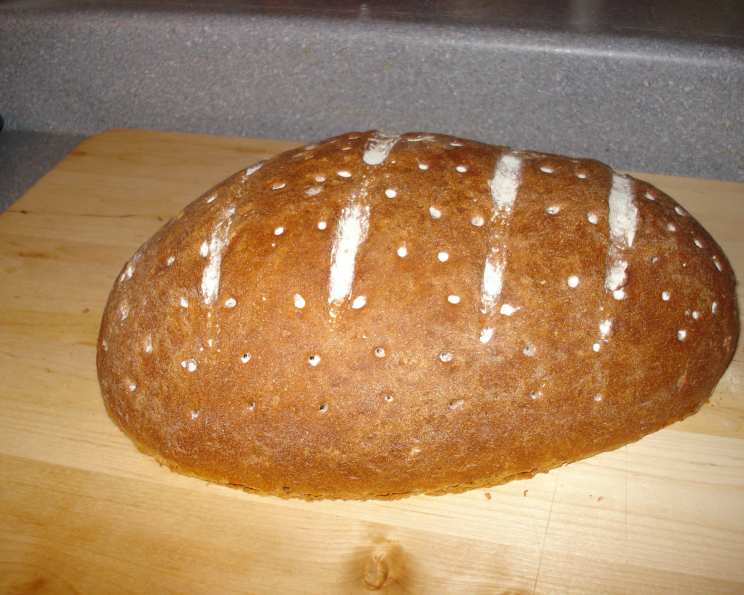
The Soul of Bavaria: Baking Bauernbrot
The scent of caraway, the warmth of a wood-fired oven, the robust chew of the crust… my mind instantly transports me back to a tiny Bäckerei in the foothills of the Alps. It was a family trip, years ago, and I still remember the little old woman behind the counter, her smile as warm as the bread she offered. That first bite of Bauernbrot – dense, earthy, and profoundly satisfying – sparked a lifelong love affair with baking and a deep appreciation for the simple beauty of rustic, honest bread.
Recipe Overview
- Prep Time: 1 hour
- Cook Time: 40-45 minutes
- Total Time: 2 hours 30 minutes
- Yields: 1 Loaf
- Serves: 12
- Dietary Type: Vegetarian
Ingredients
- 5 ½ cups unbleached all-trumps high gluten bread flour (or King Wheat bread flour)
- 2 ½ cups dark rye flour
- 3 ¼ teaspoons salt
- 2 tablespoons dry yeast
- 2 teaspoons sugar
- 22 ounces water
Equipment Needed
- Large Mixing Bowl
- Small Mixing Bowl
- Measuring Cups and Spoons
- Damp Cloth
- Baking Sheet
- Broiler Pan
Instructions
-
In a large mixing bowl, combine the unbleached bread flour and dark rye flour. Mix well to ensure even distribution.
-
In a separate, smaller bowl, mix the dry yeast with the sugar.
-
Add ½ cup of lukewarm water to the yeast mixture and stir until the sugar has completely dissolved. It’s important to use lukewarm water – too hot, and you’ll kill the yeast; too cold, and it won’t activate properly.
-
Create a small indentation in the center of the flour mixture in the large bowl. Pour the yeast mixture into this well. Cover the bowl and let it sit for 15 minutes. This allows the yeast to begin its work, creating the foundation for a beautifully risen loaf.
-
After the 15-minute resting period, add the salt to the flour mixture. It’s crucial to add the salt after the yeast has had a chance to activate. Salt can inhibit yeast activity if added too early.
-
Begin kneading the mixture. Gradually add the remaining lukewarm water (20 fluid ounces) while kneading. The goal is to achieve a dough that no longer sticks to the sides of the bowl. If the dough seems too sticky, add a small amount of flour, a tablespoon at a time, until it reaches the desired consistency.
-
Important: Knead the dough for a minimum of 15 minutes. This is where the magic happens! Kneading develops the gluten in the flour, resulting in a smooth, sleek dough that will give the Bauernbrot its characteristic texture. You can use a stand mixer with a dough hook, but kneading by hand is a deeply satisfying experience.
-
Once the dough is smooth and elastic, cover the bowl and place it in a warm spot. Let the dough rise for approximately 30 minutes. The rising time may vary depending on the temperature of your environment. The dough should roughly double in size.
-
After the first rise, gently knead the dough one more time. This step helps to redistribute the yeast and create a more even crumb structure. Form the dough into a loaf or a ball shape.
-
Cover the shaped dough with a damp cloth and place it in a preheated oven set to 50°C (120°F) for 40 minutes. This low-temperature proofing helps to accelerate the second rise.
-
After the low-temperature proofing, remove the Bauernbrot from the oven and place it on a lightly greased baking sheet. Brush the top of the loaf with water. This will help create a beautiful, crusty exterior.
-
Preheat the oven to 250°C (480°F). High heat is essential for achieving the signature crust of Bauernbrot.
-
Place the baking sheet with the bread on the second rack from the bottom in the preheated oven.
-
Carefully pour 2 cups of water into a broiler pan on the bottom rack of the oven to create steam. Important: Immediately close the oven door to trap the steam. The steam helps to keep the surface of the bread moist during the initial baking period, which contributes to a crispier crust.
-
After 10 minutes, reduce the oven temperature to 190°C (375°F) and continue baking for an additional 30-35 minutes. Watch the loaf closely during this final baking phase, as oven temperatures can vary. The bread is done when it’s deeply golden brown and sounds hollow when tapped on the bottom.
-
Remove the Bauernbrot from the oven and let it cool completely on a wire rack.
-
For an authentic touch, rub a bit of flour onto the surface of the cooled bread.
Expert Tips & Tricks
- For an even deeper flavor, try using a sourdough starter in addition to the dry yeast. This will add a tangy complexity to the bread.
- If you don’t have a broiler pan, you can use any oven-safe dish to create steam.
- To ensure a truly crispy crust, try spritzing the bread with water a few times during the first 10 minutes of baking.
- If the crust starts to brown too quickly, you can tent the bread with foil to prevent burning.
- Don’t be afraid to experiment with different types of flour! You can substitute some of the bread flour with whole wheat flour for a nuttier flavor.
Serving & Storage Suggestions
Bauernbrot is best served sliced and enjoyed with a generous slathering of butter, a smear of liverwurst, or alongside a hearty bowl of soup. Its robust flavor also pairs well with strong cheeses and cured meats.
Store leftover Bauernbrot in a bread box or wrapped in a clean kitchen towel at room temperature for up to 3 days. For longer storage, you can freeze the bread. Wrap it tightly in plastic wrap and then in foil, or place it in a freezer bag. Frozen Bauernbrot will keep for up to 2 months. To thaw, simply leave it at room temperature for a few hours. To refresh the crust, you can briefly reheat the bread in a preheated oven at 350°F (175°C) for a few minutes.
Nutritional Information
| Nutrient | Amount per Serving | % Daily Value |
|---|---|---|
| Calories | 317.3 kcal | N/A |
| Calories from Fat | 14 g | 5% |
| Total Fat | 1.6 g | 2% |
| Saturated Fat | 0.2 g | 1% |
| Cholesterol | 0 mg | 0% |
| Sodium | 634.7 mg | 26% |
| Total Carbohydrate | 65.2 g | 21% |
| Dietary Fiber | 9.5 g | 38% |
| Sugars | 1.5 g | 5% |
| Protein | 12.6 g | 25% |
Variations & Substitutions
- For a gluten-free version, experiment with a blend of gluten-free flours, such as brown rice flour, tapioca starch, and sorghum flour. You may need to add a binding agent like xanthan gum to help hold the bread together.
- Add seeds! Incorporate sunflower seeds, pumpkin seeds, or flax seeds into the dough for added texture and nutritional value.
- Spice it up! Add a teaspoon of caraway seeds or fennel seeds to the dough for a more traditional Bavarian flavor.
- Sweeten it slightly: Add a tablespoon of honey or molasses to the dough for a hint of sweetness.
FAQs (Frequently Asked Questions)
Q: Why is it important to knead the dough for so long?
A: Kneading develops the gluten in the flour, which gives the bread its structure and chewy texture. Insufficient kneading will result in a dense, crumbly loaf.
Q: Can I use active dry yeast instead of instant dry yeast?
A: Yes, but you’ll need to activate the active dry yeast in warm water for about 5-10 minutes before adding it to the flour.
Q: What if my dough doesn’t rise properly?
A: Make sure your yeast is fresh and that the water you’re using is lukewarm, not hot. Also, the temperature of your environment can affect rising time.
Q: How do I know when the bread is done baking?
A: The bread should be deeply golden brown and sound hollow when tapped on the bottom. You can also use a thermometer to check the internal temperature; it should be around 200-210°F (93-99°C).
Q: Can I freeze Bauernbrot?
A: Yes! Bauernbrot freezes well. Wrap it tightly in plastic wrap and then in foil, or place it in a freezer bag.
Final Thoughts
Baking Bauernbrot is more than just following a recipe; it’s an experience. It’s about connecting with tradition, embracing simplicity, and creating something truly special with your own two hands. Don’t be intimidated by the long kneading time or the high baking temperature. Trust the process, and you’ll be rewarded with a loaf of bread that will transport you straight to the heart of Bavaria. So, preheat your oven, gather your ingredients, and get ready to experience the soul of Bavarian baking. I encourage you to try this recipe, share your feedback, and enjoy the aroma of freshly baked Bauernbrot wafting through your home. Pair it with a dark German beer for the full experience!