
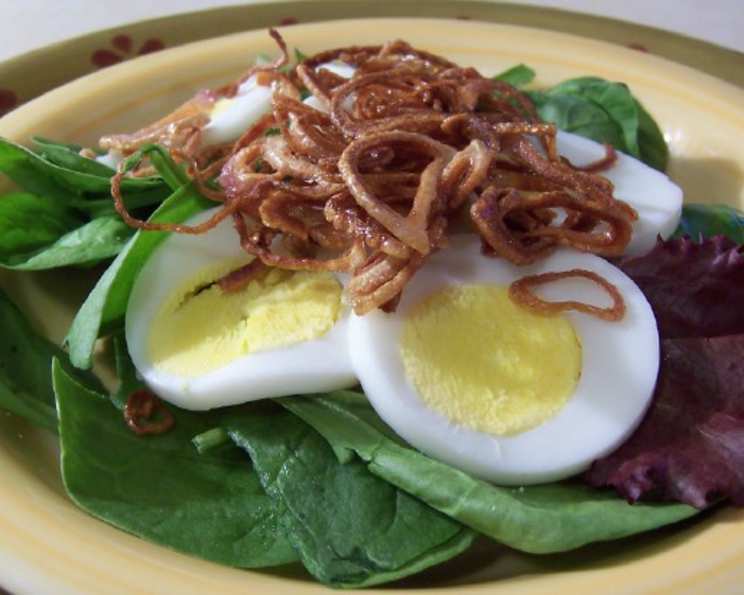
Bawang Goreng: The Crispy, Golden Magic of Fried Shallots
I’ll never forget the first time I tasted truly exceptional bawang goreng. It wasn’t in a fancy restaurant, but at a bustling night market in Jakarta. The air was thick with the scent of spices and grilling meats, but one aroma cut through it all: the sweet, savory fragrance of shallots sizzling in hot oil. The vendor sprinkled a generous handful over a bowl of soto ayam, a fragrant chicken soup, and the crispy shallots transformed the dish from simple comfort food into an explosion of flavor and texture. That night, I understood the true power of this humble ingredient.
Recipe Overview
- Prep Time: 15 minutes
- Cook Time: 10 minutes
- Total Time: 25 minutes
- Servings: Varies
- Yield: About 2 cups
- Dietary Type: Vegan, Gluten-Free, Dairy-Free
Ingredients
- 6 shallots
- Peanut oil, for frying (enough to fill a small, heavy saucepan to a depth of 1 inch)
Equipment Needed
- Mandoline or very sharp knife
- Large sheet tray
- Small, heavy saucepan
- Deep-fry thermometer
- Slotted spoon
- Paper towel-lined plate
Instructions
-
Begin by preparing the shallots. Peel them carefully and slice them as thinly as possible. A mandoline is highly recommended for achieving uniform slices, but a very sharp knife and a steady hand will also work. The key is consistency, as slices of varying thickness will cook unevenly.
-
Next, spread the sliced shallots out in a thin, even layer on a large sheet tray. Try to avoid overlapping the slices as much as possible. This prevents them from clumping together during frying and ensures that each slice crisps up individually. Air drying them for about 15 mins at this stage will also help.
-
Pour peanut oil into a small, heavy saucepan to a depth of about 1 inch. Using a smaller saucepan helps to conserve oil and maintain a more consistent temperature.
-
Heat the peanut oil over medium-high heat until it reaches a temperature of 325°F (160°C). Use a deep-fry thermometer to monitor the temperature accurately. Maintaining the correct oil temperature is crucial for achieving crispy, golden-brown shallots without burning them. If the oil isn’t hot enough, the shallots will absorb too much oil and become soggy. If it’s too hot, they’ll burn before they crisp.
-
Working in small batches of about 5-6 at a time, carefully add the sliced shallots to the hot oil. Frying in batches prevents overcrowding the pan, which can lower the oil temperature and result in uneven cooking.
-
Fry the shallots, stirring constantly with a slotted spoon, until they turn a light golden brown color, which should take approximately 1 1/2 minutes per batch. Constant stirring is important to ensure even cooking and prevent burning.
-
Remove the shallots from the oil a few seconds before they appear perfectly done. They will continue to darken slightly as they cool, so it’s better to err on the side of undercooking rather than overcooking.
-
Use a slotted spoon to transfer the fried shallots to a plate lined with paper towels. This will help absorb excess oil and keep them crisp. Spread them out in a single layer on the paper towels to prevent them from steaming and becoming soggy.
-
Let the fried shallots cool completely before storing them. This will allow them to crisp up fully.
-
To store, transfer the cooled bawang goreng to an airtight container and refrigerate for up to 1 week. They will lose some of their crispness over time, but they will still retain their delicious flavor.
Expert Tips & Tricks
- Uniform Slicing: Invest in a mandoline slicer for consistent, paper-thin shallot slices. This is the single most important factor in achieving uniformly crisp bawang goreng.
- Oil Temperature is Key: Monitor the oil temperature closely. If it drops too low, increase the heat slightly. If it gets too high, reduce the heat or remove the pan from the burner temporarily.
- Don’t Overcrowd the Pan: Fry the shallots in small batches to maintain the oil temperature and ensure even cooking.
- Watch the Color: Remove the shallots from the oil just before they reach your desired color. They will continue to darken as they cool.
- Save the Oil: The peanut oil infused with shallot flavor is liquid gold! Strain it through a fine-mesh sieve and store it in an airtight container in the refrigerator. Use it for vinaigrettes, sautéing vegetables, or adding a savory depth to other dishes.
Serving & Storage Suggestions
Bawang goreng is incredibly versatile. Use it as a topping for:
- Soups and stews (like the soto ayam that sparked my love for it!)
- Salads
- Noodle dishes (such as mie goreng or ramen)
- Rice dishes (like nasi goreng or plain steamed rice)
- Grilled meats and vegetables
To store, keep the cooled bawang goreng in an airtight container in the refrigerator for up to a week. While they are best enjoyed fresh, refrigeration will help preserve them for longer. Note that they will lose some of their crispness in the refrigerator but will still add a lovely flavor boost to your meals. Reheating isn’t recommended as it can make them soggy, but if you must, a quick toast in a dry pan on low heat may help restore some of their crispness.
Nutritional Information
(Estimated, per 1 tablespoon serving, assuming minimal oil absorption)
| Nutrient | Amount per Serving | % Daily Value |
|---|---|---|
| Calories | 20 kcal | 1% |
| Total Fat | 1.5 g | 2% |
| Saturated Fat | 0.2 g | 1% |
| Cholesterol | 0 mg | 0% |
| Sodium | 1 mg | 0% |
| Total Carbohydrate | 1 g | 0% |
| Dietary Fiber | 0 g | 0% |
| Sugars | 0.5 g | 1% |
| Protein | 0.2 g | 0% |
Variations & Substitutions
- Different Oils: While peanut oil is traditionally used and provides a great flavor and high smoke point, you can substitute it with other neutral oils like canola oil, vegetable oil, or grapeseed oil.
- Garlic Bawang: Add thinly sliced garlic to the shallots during frying for a garlicky twist.
- Spice it Up: Sprinkle a pinch of chili flakes into the oil while frying for a little heat.
- Sweet Bawang: Add a tiny pinch of sugar to the oil while frying to enhance the sweetness of the shallots.
FAQs (Frequently Asked Questions)
Q: How do I prevent the shallots from burning?
A: Maintain a consistent oil temperature (325°F) and stir the shallots constantly during frying. Remove them from the oil a few seconds before they appear fully cooked, as they will continue to darken as they cool.
Q: Can I use a different type of onion?
A: While you can use other onions, shallots are preferred for their delicate flavor and crisp texture. Red onions will work in a pinch, but their flavor is much stronger.
Q: How can I tell if the oil is hot enough?
A: Use a deep-fry thermometer to monitor the temperature. If you don’t have one, you can test the oil by dropping a single shallot slice into it. If it sizzles immediately and floats to the surface, the oil is ready.
Q: Why are my fried shallots soggy?
A: This is usually caused by overcrowding the pan, frying at too low of a temperature, or not drying the shallots sufficiently before frying. Ensure you are working in small batches and that your oil temperature is correct. Air dry them for about 15 mins before hand to remove excess moisture.
Q: Can I make these ahead of time?
A: Yes, you can make bawang goreng ahead of time and store them in an airtight container in the refrigerator for up to a week. However, they are best enjoyed fresh, as they will lose some of their crispness over time.
Final Thoughts
Now that you’ve mastered the art of making bawang goreng, I encourage you to try it! This simple yet transformative ingredient has the power to elevate countless dishes, adding a burst of flavor and texture that will leave you wanting more. Don’t be afraid to experiment with different variations and serving suggestions. And, as always, I’d love to hear about your experience. Let me know how your bawang goreng turned out and what dishes you paired it with. Selamat makan! (Enjoy your meal!)