
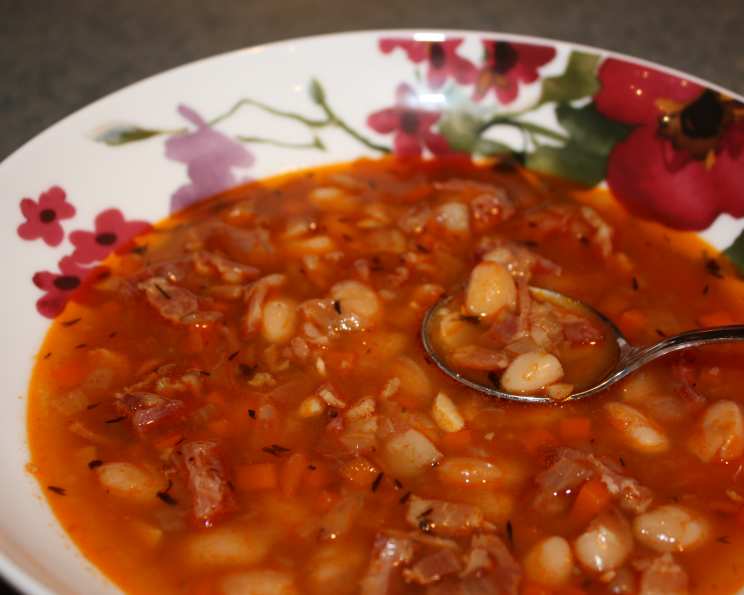
Bean and Bacon Soup: A Hearty Classic
The scent of bean and bacon soup instantly transports me back to my grandmother’s kitchen. I remember the aroma filling the house on blustery autumn days, a promise of warmth and comfort simmering on the stove. The hearty, smoky flavors were pure magic, a testament to simple ingredients transformed into something truly special. It was more than just soup; it was love in a bowl.
Recipe Overview
- Prep Time: 1 hour (plus soaking time)
- Cook Time: 2 hours
- Total Time: 3 hours
- Servings: 20
- Yield: Approximately 20 (6 oz) portions
- Dietary Type: Not Vegetarian
Ingredients
- 1 lb dried beans (see note about soaking)
- 1/2 lb bacon ends and pieces, chopped fine
- 4 medium onions, chopped
- 4 stalks celery, chopped
- 4 large carrots, peeled and diced
- 1 lb plum tomatoes, diced
- 1 gallon stock or 1 gallon water
- 1 smoked ham hock
- 1 bay leaf
- 1 teaspoon thyme, leaf
- Salt and pepper, to taste
- 1 lb smoked sausage, sliced (optional)
Equipment Needed
- Large Pot or Dutch Oven
- Cutting Board
- Knife
- Measuring Cups and Spoons
Instructions
-
Prepare the Beans: Begin by carefully inspecting the dried beans for any small stones or debris. Place the beans in a large bowl and cover them with boiling water. Let them stand for at least 1 hour to quickly soak, or for best results, soak them overnight in cold water and drain thoroughly before proceeding. This soaking process helps to soften the beans and reduces cooking time.
-
Render the Bacon: In a large pot or Dutch oven, cook the chopped bacon ends and pieces over medium heat. The goal here is to render the fat, creating a flavorful base for the soup. Ensure that the bacon bits become nicely browned and crisp, similar to crispy bacon. This step is crucial for developing the soup’s signature smoky flavor.
-
Sauté the Vegetables: Add the chopped onions, celery, and diced carrots to the pot with the rendered bacon fat. Sauté the vegetables until they begin to soften and become translucent, about 5-7 minutes. Feel free to adjust the amounts of vegetables to your preference and even add other vegetables, such as parsnips or leeks, for extra depth of flavor. You can also add a few cloves of mashed garlic for extra savory depth.
-
Combine Ingredients: Drain and rinse the soaked beans, then add them to the pot with the sautéed vegetables and rendered bacon. Pour in the stock or water, ensuring the beans and vegetables are fully submerged. Add the diced plum tomatoes, smoked ham hock, bay leaf, and thyme.
-
Simmer the Soup: Bring the soup to a boil, then reduce the heat to low and simmer gently for 1 1/2 to 2 hours, or even longer, depending on the type of beans used. The beans should be very tender and easily mashed. Check occasionally and add more liquid if needed to maintain the desired consistency.
-
Shred the Ham Hock: Once the ham hock is cooked, remove it from the pot. Allow it to cool slightly, then cut away the fat and skin. Dice the meat from the ham hock and return it to the soup.
-
Season and Finish: Season the soup with salt and pepper to taste. Remember to taste as you go and adjust the seasoning accordingly. You can skim off any excess fat from the surface of the soup, although some people prefer the richness it adds, especially during colder months.
-
Puree (Optional): For a creamier consistency, allow the soup to cook longer so the beans begin to break down and puree naturally. The starches from the beans will thicken the soup and create a velvety texture.
-
Add Sausage (Optional): If desired, add the sliced smoked sausage to the soup during the last 30 minutes of cooking time to heat through.
Expert Tips & Tricks
- Bean Soaking Secrets: Soaking the beans is essential for reducing cooking time and improving their texture. If you’re short on time, the quick-soak method (boiling water for 1 hour) works well, but an overnight soak in cold water yields the best results.
- Bacon Fat is Flavor: Don’t discard the rendered bacon fat! It’s liquid gold that adds a ton of flavor to the soup. If you’re concerned about the fat content, you can skim some off after the soup has cooked, but a little fat contributes to the richness and mouthfeel.
- Spice it Up: For a touch of heat, add a pinch of red pepper flakes or a dash of hot sauce to the soup.
- Deglaze the Pot: After cooking the bacon, deglaze the pot with a splash of wine or vinegar to release any browned bits stuck to the bottom. This adds extra flavor to the soup.
Serving & Storage Suggestions
Serve the bean and bacon soup hot, garnished with a dollop of sour cream or plain yogurt (if not dairy-free), fresh parsley, and crusty bread for dipping. Leftovers can be stored in an airtight container in the refrigerator for up to 3-4 days. For longer storage, freeze the soup in individual portions for up to 2-3 months. Reheat gently on the stovetop or in the microwave.
Nutritional Information
| Nutrient | Amount per Serving | % Daily Value* |
|---|---|---|
| Calories | 72 kcal | N/A |
| Calories from Fat | 46 kcal | 65% |
| Total Fat | 5.2g | 8% |
| Saturated Fat | 1.7g | 8% |
| Cholesterol | 7.7mg | 2% |
| Sodium | 112.8mg | 4% |
| Total Carbohydrate | 4.6g | 1% |
| Dietary Fiber | 1.2g | 4% |
| Sugars | 2.4g | N/A |
| Protein | 1.9g | 3% |
*Percent Daily Values are based on a 2,000 calorie diet. Your daily values may be higher or lower depending on your calorie needs.
Variations & Substitutions
- Vegetarian Option: Omit the bacon and ham hock and use vegetable broth instead of chicken broth. Add a smoked paprika for a smoky flavor.
- Spicy Bean Soup: Add a chopped jalapeño pepper or a pinch of cayenne pepper for a kick.
- White Bean Soup: Use Great Northern or Cannellini beans instead of mixed beans for a creamier texture and milder flavor.
- Ham Hock Substitute: If you can’t find a ham hock, use smoked ham shanks or leftover ham bone.
FAQs (Frequently Asked Questions)
Q: Do I really need to soak the beans?
A: Yes, soaking the beans is highly recommended. It reduces cooking time and helps to remove some of the indigestible carbohydrates that can cause gas.
Q: Can I use canned beans instead of dried beans?
A: While dried beans offer the best flavor and texture, you can use canned beans in a pinch. Reduce the cooking time significantly if using canned beans, as they are already cooked. Add them during the last 30-45 minutes of simmering.
Q: How do I thicken the soup if it’s too thin?
A: You can thicken the soup by mashing some of the beans with a fork or using an immersion blender to partially puree the soup. Alternatively, you can mix a tablespoon of cornstarch with a little cold water to create a slurry and stir it into the soup while simmering.
Q: Can I make this soup in a slow cooker?
A: Yes, you can! Sauté the bacon and vegetables as directed, then transfer everything to a slow cooker. Cook on low for 6-8 hours or on high for 3-4 hours.
Q: What kind of beans are best for bean and bacon soup?
A: You can use a variety of beans, such as navy beans, Great Northern beans, pinto beans, or a mix of different types.
Final Thoughts
Bean and bacon soup is a timeless classic that’s perfect for chilly days. It’s a deeply satisfying and adaptable recipe that invites experimentation and personal touches. Don’t be afraid to tweak the ingredients and seasonings to suit your preferences. Gather your ingredients, embrace the process, and savor the comforting flavors of homemade goodness. I hope this recipe brings as much warmth and joy to your kitchen as it has to mine. Pair it with a simple green salad and a glass of hearty red wine for a complete and unforgettable meal.