
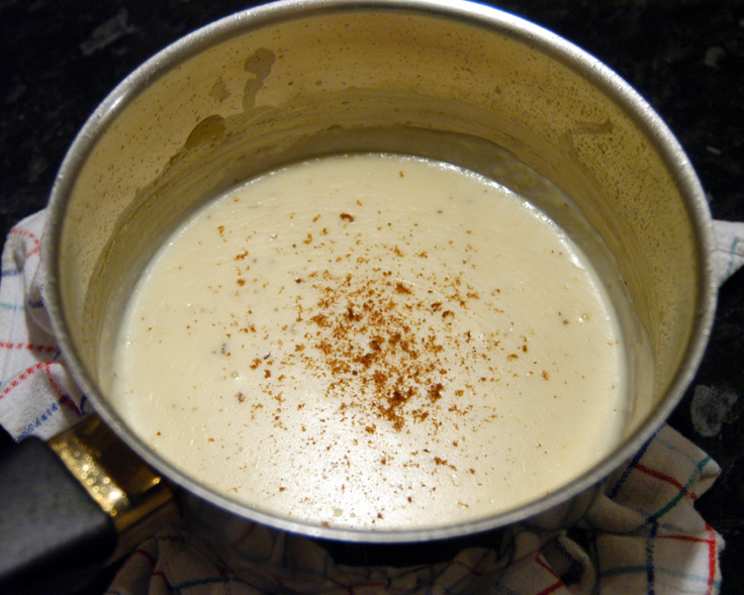
The Ultimate Guide to Béchamel: Mastering the Mother of White Sauces
The first time I tasted true béchamel, I was a wide-eyed culinary student shadowing a classically trained French chef. He whisked, simmered, and seasoned with an almost reverent grace, transforming simple ingredients into a velvety, ethereal sauce. The aroma alone was intoxicating – warm milk, sweet butter, and a whisper of nutmeg – and the taste, oh, the taste! It was far more than just “white sauce”; it was comfort, elegance, and the very essence of French cuisine. From that moment on, I was determined to master this fundamental sauce, to unlock its secrets and share its magic with the world.
Recipe Overview
- Prep Time: 5 minutes
- Cook Time: 20 minutes
- Total Time: 25 minutes
- Yields: 2 cups
- Serves: 6-8
- Dietary Type: Vegetarian
Ingredients
- 2 cups milk
- 1 large slice of onion
- 1 bay leaf
- ½ teaspoon peppercorns
- 3 tablespoons unsalted butter
- 3 tablespoons flour
- 1 pinch nutmeg
- Salt to taste
- White pepper to taste
Equipment Needed
- Heavy-based saucepan
- Whisk
- Fine-mesh sieve or strainer
Instructions
- Infuse the milk: In a saucepan, gently scald the milk with the slice of onion, bay leaf, and peppercorns. “Scalding” means heating the milk until just before it boils – you’ll see small bubbles forming around the edges of the pan.
- Flavor Infusion: Remove the pan from the heat, cover, and let the mixture infuse for 10-15 minutes. This allows the flavors of the onion and spices to permeate the milk, creating a more complex and aromatic sauce. Don’t skip this step!
- Prepare the Roux: In a separate heavy-based saucepan, melt the butter over medium heat. Once melted, whisk in the flour until smooth. This mixture is called a roux, the foundation of béchamel.
- Cook the Roux: Continue to cook the roux, stirring constantly, for about 1 minute, until the flour is foaming but not browned. This step is crucial to cook out the raw flour taste. Be careful not to burn the butter, or the roux will become bitter.
- Combine Milk and Roux: Remove the roux from the heat. Carefully strain the hot infused milk into the roux, discarding the onion, bay leaf, and peppercorns. Straining ensures a smooth and lump-free sauce.
- Whisk and Thicken: Whisk the milk and roux together vigorously until smooth. Then, return the saucepan to medium heat and bring the sauce to a gentle boil, whisking constantly. Continue to whisk as the sauce thickens.
- Simmer and Season: Once the sauce has thickened enough to coat the back of a spoon, reduce the heat to low and let it simmer slowly for 1-2 minutes, stirring occasionally to prevent scorching. Season with salt, white pepper, and a pinch of nutmeg. White pepper is preferred in béchamel to avoid dark specks in the white sauce.
- Adjust Consistency (Optional): If the sauce is too thick, add a little more warm milk until you reach your desired consistency. If it is too thin, continue simmering for a few more minutes.
Important Note: This recipe yields a “MEDIUM” béchamel.
- For a “THIN” béchamel, use 2 tablespoons of butter and 2 tablespoons of flour.
- For a “THICK” béchamel, use 4 tablespoons of butter and 4 tablespoons of flour.
Expert Tips & Tricks
- Lump-Free Guarantee: To avoid lumps, make sure the milk is hot when you add it to the roux. Whisk vigorously and continuously, especially in the beginning, to ensure the flour is fully incorporated.
- Nutmeg is Key: Don’t underestimate the power of fresh nutmeg! A small grating of fresh nutmeg adds a warm, aromatic depth to the sauce. Pre-ground nutmeg loses its potency quickly.
- Don’t Brown the Roux: The roux for béchamel should be cooked just enough to remove the raw flour taste, but not browned. A browned roux will change the flavor and color of the sauce.
- Infusion Variations: Experiment with different aromatics in your milk infusion. A clove of garlic, a sprig of thyme, or a piece of Parmesan rind can add subtle but delicious nuances.
- Make-Ahead Magic: Béchamel can be made ahead of time and stored in the refrigerator for up to 3 days. To prevent a skin from forming, press a piece of plastic wrap directly onto the surface of the sauce.
Serving & Storage Suggestions
Béchamel is incredibly versatile. Use it as a base for creamy soups, sauces, and gratins. It’s the star of classic dishes like lasagna, macaroni and cheese, and croque monsieur. Serve it warm, spooned generously over your favorite dishes.
- Storage: Store leftover béchamel in an airtight container in the refrigerator for up to 3 days.
- Reheating: To reheat, gently warm the sauce in a saucepan over low heat, whisking frequently to prevent sticking. You may need to add a splash of milk to restore its original consistency.
- Freezing: While not ideal, béchamel can be frozen. However, the texture may change slightly upon thawing. To minimize this, cool the sauce completely before freezing in an airtight container. Thaw in the refrigerator overnight and whisk vigorously while reheating.
Nutritional Information
| Nutrient | Amount per Serving | % Daily Value |
|---|---|---|
| Calories | 119 kcal | 6% |
| Total Fat | 9g | 13% |
| Saturated Fat | 6g | 28% |
| Cholesterol | 27mg | 9% |
| Sodium | 41mg | 2% |
| Total Carbohydrate | 7g | 3% |
| Dietary Fiber | 0g | 0% |
| Sugars | 0g | 0% |
| Protein | 3g | 6% |
Variations & Substitutions
- Gluten-Free Béchamel: Substitute the all-purpose flour with a gluten-free flour blend or cornstarch. Use equal amounts.
- Dairy-Free Béchamel: Use plant-based milk, such as almond, soy, or oat milk, and dairy-free butter. Be aware that the flavor may be slightly different.
- Cheese Béchamel (Mornay Sauce): Stir in grated Gruyere, Parmesan, or cheddar cheese after the sauce has thickened for a richer, cheesier flavor.
- Herb Infused Béchamel: Add fresh herbs, such as thyme, rosemary, or parsley, to the milk during the infusion process for a fragrant twist.
FAQs (Frequently Asked Questions)
Q: What is the secret to a perfectly smooth béchamel?
A: The key is to whisk constantly while adding the hot milk to the roux. This prevents lumps from forming and ensures a smooth, velvety texture. Using a heavy-bottomed saucepan also helps prevent scorching.
Q: Can I use salted butter instead of unsalted butter?
A: Yes, you can, but be sure to adjust the amount of salt you add to the sauce. Taste as you go and season accordingly.
Q: My béchamel is too thick. How can I thin it out?
A: Simply whisk in a little more warm milk, a tablespoon at a time, until you reach your desired consistency.
Q: Can I make béchamel without the onion and bay leaf?
A: Yes, you can, but the onion and bay leaf add a subtle but important layer of flavor. If you omit them, the sauce will be less complex.
Q: How can I prevent a skin from forming on the surface of the béchamel while it cools?
A: Press a piece of plastic wrap directly onto the surface of the sauce. This will prevent air from reaching the sauce and forming a skin.
Final Thoughts
Mastering béchamel is a culinary rite of passage, a gateway to countless delicious dishes. Don’t be intimidated by its apparent simplicity; with a few basic techniques and a little practice, you’ll be whipping up velvety smooth béchamel in no time. So, grab your whisk, gather your ingredients, and prepare to experience the magic of this classic sauce. I encourage you to experiment with different variations and flavor combinations to create your own signature béchamel. And, of course, I’d love to hear about your culinary creations – share your feedback and photos in the comments below! Bon appétit!