
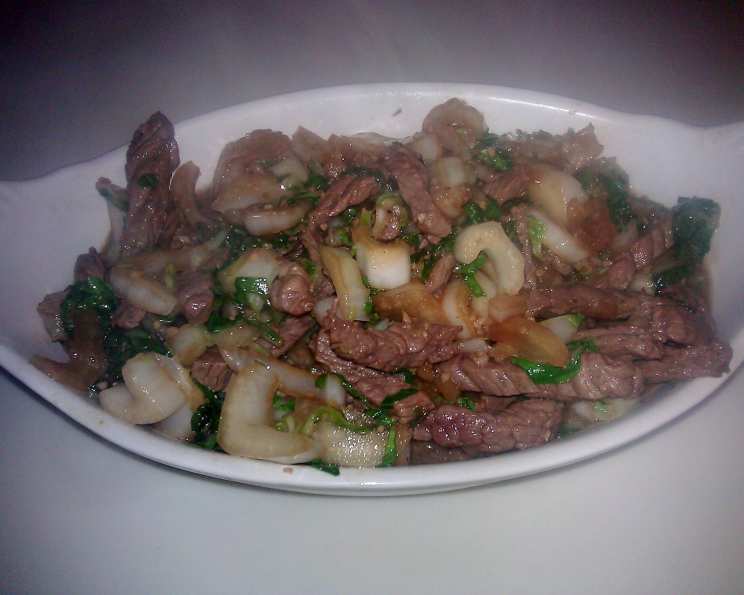
Beef and Bok Choy: A Stir-Fry Sensation
My grandmother, a woman whose kitchen was a perpetual source of delicious mystery, used to make a version of this dish. I can still picture her, deftly wielding her cleaver as she chopped the vibrant green bok choy, a stark contrast to the weathered wooden cutting board. The air would fill with the savory aroma of soy sauce and garlic, a comforting promise of the meal to come. This recipe, though not hers exactly, always brings me back to those warm, fragrant evenings spent in her bustling kitchen.
Recipe Overview
- Prep Time: 15 minutes
- Cook Time: 15 minutes
- Total Time: 30 minutes
- Servings: 4
- Dietary Type: Adaptable (see variations)
Ingredients
- 1 lb bok choy
- 2 tablespoons oil
- 2 garlic cloves, crushed
- 8 ounces rump steak, thinly sliced
- 2 tablespoons soy sauce
- 1 tablespoon sweet sherry
- 2 tablespoons fresh basil, chopped
- 2 teaspoons sesame oil
- Optional: Strips of red pepper, for garnish
Equipment Needed
- Frying pan or wok
- Cutting board
- Sharp knife
- Spatula or tongs
Instructions
-
Begin by preparing the bok choy. Wash it thoroughly to remove any dirt or grit. Drain well. Then, using a sharp knife, cut the leaves into thin strips. This ensures even cooking and makes it easier to eat.
-
Heat 1 tablespoon of oil in a frying pan or wok over medium-high heat. Once the oil is shimmering, add the 2 crushed garlic cloves. Stir-fry for approximately 30 seconds, until fragrant. Be careful not to burn the garlic, as it will become bitter. This step infuses the oil with garlic flavor, which will permeate the entire dish.
-
Add the remaining 1 tablespoon of oil to the pan or wok. Increase the heat to high. Add the thinly sliced rump steak in small batches, ensuring not to overcrowd the pan. Stir-fry the meat for about 3 minutes over high heat, until it has browned but is not completely cooked through. Work in batches to maintain high heat, which promotes browning rather than steaming. Remove the browned meat from the pan and set aside.
-
Now it’s time to cook the bok choy. Add the sliced bok choy to the pan and stir-fry for approximately 30 seconds, or until it is just wilted. The goal is to retain some of the bok choy’s crispness while slightly softening the leaves. Overcooking will result in a mushy texture.
-
Return the browned rump steak to the pan with the bok choy. Add the soy sauce and sweet sherry.
-
Continue to stir-fry the mixture for 2 to 3 minutes, or until the rump steak is tender and the sauce has thickened slightly. Taste and adjust seasoning as needed. The soy sauce provides saltiness, while the sweet sherry adds a touch of sweetness and complexity.
-
Remove the pan from the heat. Add the chopped fresh basil and sesame oil. Toss well to combine, ensuring the herbs and oil are evenly distributed throughout the dish. The fresh basil adds a bright, aromatic note, while the sesame oil contributes a nutty richness.
-
Serve the beef and bok choy immediately. Garnish with strips of red pepper, if desired, for a pop of color and a touch of sweetness.
Expert Tips & Tricks
- Marinate the beef: For even more tender and flavorful beef, marinate the thinly sliced rump steak in a mixture of soy sauce, sherry, and a little cornstarch for at least 30 minutes before cooking. This will help to tenderize the meat and allow it to absorb the flavors of the marinade.
- High heat is key: Stir-frying requires high heat to ensure that the ingredients cook quickly and evenly without becoming soggy. Make sure your pan or wok is properly heated before adding any ingredients.
- Don’t overcrowd the pan: Overcrowding the pan will lower the temperature and cause the ingredients to steam instead of stir-fry. Cook the beef and bok choy in batches to maintain high heat and ensure proper browning.
- Adjust the sauce: Taste the sauce before serving and adjust the seasoning as needed. You can add a touch of honey or sugar for extra sweetness, or a dash of chili flakes for some heat.
- Use quality ingredients: The quality of your ingredients will directly impact the flavor of the dish. Use fresh, high-quality bok choy, rump steak, and soy sauce for the best results.
Serving & Storage Suggestions
Serve the beef and bok choy immediately over steamed rice or noodles for a complete and satisfying meal. The vibrant colors and aromatic flavors make it a visually appealing and delicious dish.
Leftovers can be stored in an airtight container in the refrigerator for up to 3 days. To reheat, simply stir-fry the beef and bok choy in a pan or wok over medium heat until heated through. You may need to add a little water or broth to prevent it from drying out. While freezing is possible, the texture of the bok choy may change upon thawing, so it’s best consumed fresh.
Nutritional Information
| Nutrient | Amount per Serving | % Daily Value |
|---|---|---|
| Calories | 218.2 kcal | N/A |
| Calories from Fat | N/A | 67% |
| Total Fat | 16.2 g | 24% |
| Saturated Fat | 4 g | 19% |
| Cholesterol | 42.6 mg | 14% |
| Sodium | 607.1 mg | 25% |
| Total Carbohydrate | 3.6 g | 1% |
| Dietary Fiber | 1.3 g | 5% |
| Sugars | 1.5 g | 6% |
| Protein | 14.6 g | 29% |
Note: Nutritional information is an estimate and may vary based on specific ingredients and portion sizes.
Variations & Substitutions
- Baby Bok Choy: Substitute regular bok choy with baby bok choy for a milder flavor and more delicate texture.
- Protein Alternatives: If you don’t have rump steak, you can use other cuts of beef, chicken, pork, or even tofu. Adjust the cooking time accordingly.
- Gluten-Free: Use tamari instead of soy sauce to make the dish gluten-free.
- Vegetarian: Omit the beef and add more vegetables, such as mushrooms, bell peppers, or snow peas.
- Spicy: Add a pinch of red pepper flakes or a drizzle of chili oil to the dish for some heat.
- Sweetness: Instead of sweet sherry, you could use rice wine vinegar with a pinch of sugar.
- Herbs: Experiment with different herbs such as cilantro or mint instead of basil.
FAQs (Frequently Asked Questions)
Q: Can I use frozen bok choy?
A: While you can use frozen bok choy, the texture will be softer and less crisp than fresh bok choy. It’s best to use fresh bok choy for the best results.
Q: How can I prevent the beef from becoming tough?
A: Make sure to slice the beef thinly against the grain and don’t overcook it. Marinating the beef beforehand can also help to tenderize it.
Q: Can I make this dish ahead of time?
A: You can prepare the ingredients ahead of time by washing and slicing the bok choy and slicing the beef. However, it’s best to cook the dish just before serving to ensure the best texture and flavor.
Q: What if I don’t have sweet sherry?
A: You can substitute the sweet sherry with dry sherry, rice wine, or even chicken broth with a touch of sugar.
Q: How do I store leftover beef and bok choy?
A: Store leftover beef and bok choy in an airtight container in the refrigerator for up to 3 days. Reheat thoroughly before serving.
Final Thoughts
This Beef and Bok Choy recipe is a testament to the simple yet profound flavors that can be achieved with fresh ingredients and a little bit of skill. Don’t be intimidated by stir-frying – with a little practice, you’ll be whipping up this delicious and nutritious dish in no time. I encourage you to try it, experiment with different variations, and share your feedback. This pairs beautifully with a crisp, dry Riesling, which will complement the savory flavors of the dish. Happy cooking!